PhD Research Fellow in Human Motion Estimation at Home for Upper-Limb after Stroke
Western Norway University of Applied Sciences
- Frist 08.02.2026
- Ansettelsesform Engasjement
PhD Research Fellow to join the HVL Robotics Lab
Western Norway University of Applied Sciences has a vacancy for PhD Research Fellow in Semi-Autonomous Teleoperated Robots
We are looking for a highly motivated and talented PhD research fellow to join the HVL Robotics Lab. The position is associated with the research project “SARHA - data-driven rehabilitation after stroke" - a cross-disciplinary initiative in the Strategic University Program on Digital Health between the Faculty of Technology, Environmental and Social Sciences, the Faculty of Health and Social Sciences, and Helse Førde Hospital. If you are interested in the application of motion measurement technology and data analysis to improve upper-limb rehabilitation after stroke, this position could be for you.
About the PhD project:
More than 12 million people worldwide experience a stroke annually, and the number is expected to rise by 50% over the next few years because of an aging population. Stroke patients are a heterogeneous group and are among the patient groups with the greatest need for long-term and coordinated rehabilitation. Stroke can result in various and extensive functional impairments, including physical, cognitive, and psychological challenges, as well as language and speech difficulties. Stroke is one of the main causes of early death and disability worldwide. Early treatment, close follow-up and monitoring, and motivating patients' rehabilitation efforts are closely linked to the success of regaining motor functions after stroke.
Rehabilitation after stroke consists of several phases: an acute phase (0-7 days) with early mobilisation and assessment, an early phase (1-4 weeks) with intensive follow-up, and further rehabilitation (1-6 months) in municipal services with personalised physical and cognitive training.
Currently, assessments of patients' functional movements are based on therapists' subjective assessments and scoring. There is a large potential for more automatic and objective functional assessment of stroke patients, both for classification, to decide on the best rehabilitation training strategy, and for monitoring, to closely follow up on progress and adjust training plans and difficulty levels for exercises.
The PhD project will develop methods and solutions to measure and analyse sensor data from stroke patients after their follow-up in specialist healthcare services has ended, and the patient is transitioning to less frequent follow-up in municipal healthcare services or at home. This requires that data collection can be carried out either independently by the patient or with minimal assistance from healthcare personnel (in the municipality) or relatives (at home). Therefore, data collection must be based on readily available technology, such as mobile phones, heart rate monitors, or simple wearables, and have a very low user threshold. The project will build on the results and methods of an ongoing project in which sensor fusion from sensor data collected with a wide range of advanced sensors (camera, wearables, EMG) is used to create a systematic progress measurement system for rehabilitation in the initial acute phase at the hospital. The PhD project will develop and improve algorithms and methods that are better adapted to low-cost monitoring with fewer data sources, lower resolution, and suitable for home use with minimal assistance. The project will integrate mobile cameras, heart rate monitors, and dedicated activity trackers for data collection and employ relevant machine learning methods for data analysis and sensor fusion. The PhD Research Fellow will collaborate closely with another PhD Research Fellow at the Faculty of Health and Social Sciences, focusing on incorporating user involvement and obtaining patient feedback to extract meaningful interpretations from the data and analyses.
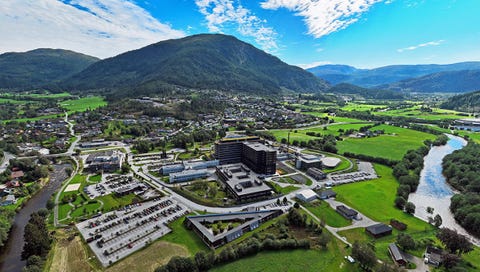
The PhD Research Fellow will have his/her place of work and affiliation with the Faculty of Technology, Environmental and Social Sciences at campus Førde.
Starting Date: 1 March 2026 or before.
Research environment
The PhD Research Fellow will be part of the HVL Robotics Lab (https://www.hvl.no/robotics), a research and innovation centre for robotics at HVL. HVL Robotics has access to state-of-the-art research facilities on robotics at Campus Førde and a field lab for robotic research at Campus Sogndal (Leikanger).
The computer science research environment at Western Norway University of Applied Sciences has a strong focus on use-inspired and applied research and ICT as an enabling technology. The research environment has cooperation with many national and international research groups, and with national and regional industry partners. The research program includes the research themes of software engineering, engineering computing, sensor networks and robotics, grid computing and physics data analysis, machine learning, and interactive and collaborative systems.
The Fellow will also be encouraged to take part in the supervision of MSc and BSc candidates. The PhD research fellow will work closely with the staff members of the HVL robotics group team and other staff members at HVL associated with the “SARHA" project. The candidate will benefit from working with colleagues with expertise at the intersection of robotics, sensors, and machine learning in the HVL Robotics Lab and with experts in health services for physical rehabilitation therapy at Helse Førde Hospital. The candidate will also collaborate with relevant stakeholders in the project, including public sector health services and relevant companies in the health industry.
The PhD research fellow will receive an annual stipend for conference participation, research visits, and equipment. The workplace will be the HVL Robotics Lab at campus Førde. The candidate is expected to spend 3-6 months abroad at an international academic institution during the PhD project.
Qualifications:
The applicant must hold a master's degree in Robotics, Engineering Cybernetics, Automation, Mechatronics, Electrical Engineering, Computer Science, Machine Learning, or a closely related field, with a strong emphasis on computing and estimation. Candidates who have submitted a master's thesis (but who have not yet been awarded a master's degree) may also qualify for the position, provided that the master's degree is awarded within 4 weeks after the application deadline. The candidate should have previous experience working with sensor fusion (Kalman filters or similar) and motion sensors (IMUs or camera-based systems) for motion estimation.
Qualification requirements:
- Master's degree in Robotics, Engineering Cybernetics, Automation, Mechatronics, Electrical Engineering, Computer Science, Machine Learning or a closely related field, with a strong emphasis on computing and estimation
- Experience with sensor fusion (Kalman filters or similar) and motion sensors (IMUs or camera-based systems) for motion estimation
Applicants for the position will be ranked based on the following:
- Relevant research experience and high-quality publications in human motion estimation, robot rehabilitation and machine learning, with a special emphasis on publications on motion estimation and sensor fusion
- Competence and grades on completed course work
- Relevant industry and academic experience in robotics, human motion estimation and health applications
- Previous involvement in relevant research and innovation projects
- The ability to carry out and publish high-quality research in cooperation with industry partners
- The outline of a research plan for the PhD project, if relevant
- Proficiency in English
The following qualifications will be considered advantageous when applicants are ranked:
- Practical programming skills (for example, Matlab, Python, C++)
- Previous experience working with vision and image analysis
- Previous experience working with relevant human motion sensors
- Previous experience with experimental research and prototyping
- Previous experience in supporting relevant MSc and BSc projects
- Proficiency in Norwegian or another Scandinavian language
- Knowledge and understanding of the Norwegian Health Care system
- Possibility to timely start in the position
The following applicant characteristics will also be considered:
- Confidence in working independently as a researcher, and in cross-disciplinary teams with health partners
- Capacity for dissemination and ability to positively contribute to advancement of digital health research at HVL
- Potential for establishing relevant national and international research contacts
- Excellent communication skills
Applicants should explicitly address the qualifications and ranking criteria listed above in their application and provide sufficient documentation in their application to support the listed qualifications.
About the position of PhD Research Fellow:
The position is for 3 years. During the first year of appointment, it will be possible to apply for an extension to 4 years, with 25% of the 4-year period to be designated to duties such as teaching, development and administrative tasks. The candidate must be diligent and display the ability to work independently, supplemented with regular guidance, and is expected to carry out high-quality research and publish the results in international workshops, conferences, and journals. The candidate should be proficient in written and spoken English, and any formal training or proficiency in Norwegian or another Scandinavian language will be considered an advantage when ranking candidates due to close collaboration with Norwegian stakeholders in the project.
Candidates already holding a PhD in a related field are not eligible for this position. The PhD candidate must enrol in the PhD program in Computer Science: Software Engineering, Sensor Networks, and Engineering Computing at Western Norway University of Applied Sciences and must meet the formal admission requirements for admission into the PhD program. Candidates should have a master's thesis work of at least 30 ECTS with a grade of B or stronger and an average grade higher than C on the coursework associated with the master's degree. Candidates who do not fulfil these requirements should explicitly address this in their application for the position. An application for enrolment should first be submitted after an appointment is made and the supervisor(s) will help with this procedure. The candidate must be enrolled as a PhD student within 3 months of the start of employment.
The ability to start the position timely on the project start date will be considered an advantage when candidates are ranked due to the time frame of the project and its link to other research activities conducted in parallel to this PhD project. Engagement is to be made in accordance with the regulations in force concerning State Employees and Civil Servants and the acts relating to the Control of the Export of Strategic Goods, Services, and Technology. Candidates who, by assessment of the application and attachment, are seen to conflict with the criteria in the latter law will be prohibited from recruitment to HVL.
Application procedure:
Applications will be evaluated by an expert panel of three members.
Applicants are asked to submit their application and CV online. Please use the link “Apply for this job" (“Søk stillingen").
The following documentation must be uploaded as an attachment to the online application:
- Relevant diplomas, transcripts, and certificates documenting qualifications from the bachelor´s and master´s degrees.
- If any, copies of selected academic publications (no more than 3)
- Master thesis if in English or a Scandinavian language, or a resume of the thesis in English if written in another language or for candidates who have not yet submitted their master thesis within the application deadline
- A CV with a complete list of academic publications, teaching activities and relevant industry experience
- Documents related to other achievements relevant to the position
- The names of two contacts who are willing to act as references for the applicant
- Optional: Outline of research plan for the PhD project (no more than 2 pages)
Applicants should indicate which publications or parts of publications should be given special consideration in the evaluation. If the documents submitted are not in a Scandinavian language or in English, the applicants must submit certified translations of these. The transcripts must specify the topics, the course works, and the grades at the bachelor`s and master`s degree levels.
Applicants with a degree from a country other than Norway, need to attach a certified translation of the diploma and transcripts of grades to English or a Scandinavian language, in addition to the original documents, if the original is not in any of these languages. It is required that the applicant encloses a recognition document showing that their degree is equivalent to a Norwegian bachelor's degree, master's degree, or PhD. You can read more about applying for recognition of foreign higher education here. (https://hkdir.no/en/foreign-education/education-from-outside-of-norway/recognition-of-foreign-higher-education-bachelor-master-and-phd)
The Norwegian Directorate for Higher Education and Skills (HK-dir) offers an automatic recognition document for certain degrees from selected countries. If the applicant's degree is covered by the automatic recognition, it will be sufficient to attach this document. Read more about automatic recognition here. (https://hkdir.no/en/foreign-education/education-from-outside-of-norway/recognition-of-foreign-higher-education-bachelor-master-and-phd/automatic-recognition-a-quicker-alternative)
As the HK-dir application process may take some time it is recommended to apply to HK-dir as soon as possible. If you have not received a recognition document from HK- dir within the application deadline, please enclose documentation from HK-dir showing that they have received your application.
Applicants should note that the evaluation will be based on the documentation submitted electronically via Jobbnorge within the submission deadline. The applicants are responsible for ensuring that all the documentation is submitted before the closing date. It is of utmost importance that all publications to be considered in the evaluation are uploaded as an attachment with the application, since these are sent electronically to the expert panel. Applications cannot be sent by e-mail or to individuals at the college.
Salary:
- Good occupational pension, insurance and loan schemes from The Norwegian Public Service Pension Fund
- Exciting academic environment with the possibility of competence enhancement and development
- Opportunities for training within the working hours
The Research Fellow position is compensated according to position code 1017 Research Fellow.
There is a compulsory 2 % deduction to the pension fund (see http://www.spk.no (http://www.spk.no )for more information). The successful applicant must comply with the guidelines that apply to the position at any time.
General information:
The appointment will be made in accordance with the regulations for State employees Law in Norway ("Lov om statens ansatte)". Organizational changes and changes in the duties and responsibilities associated with the position must be expected.
State employment shall reflect the multiplicity of the population at large to the highest possible degree. Western Norway University of Applied Sciences has therefore adopted a personnel policy objective to ensure that we achieve a balanced age and gender composition and the recruitment of persons of various ethnic backgrounds.
Information about the applicant may be made public even though the applicant has requested not to be named in the list of applicants. The applicant will be notified if his/her request is not respected.
Short-listed applicants will be called in for an interview.
Employed on condition that you are granted a work and residence permit (must be considered individually).
Western Norway University of Applied Sciences is subjected to The Export Control Regulation. The regulation will be applied in the processing of the applications.
Inclusion, challenging norms, collaboration
Homepage (http://www.hvl.no)
FerdigheterAI-generert
- Analysere data
- Datainnsamling og analyse
- Innsamling og analyse av data
- Kalmanfilter
- Maskinlæringsmetoder
- Robotikk
- Sensorer
JobbMatch
BetaEr du kvalifisert for jobben?
Nysgjerrig på om du kvalifiserer til denne jobben? Med JobbMatch får du umiddelbar tilbakemelding på hvor godt din profil matcher stillingsutlysningen.
Om arbeidsgiveren
With about 17,500 students, Western Norway University of Applied Sciences is one of the largest higher education institutions in Norway. A broad range of academic programmes are offered at Bachelor, Master and PhD levels, spread out on five campuses Førde, Sogndal, Bergen, Stord og Haugesund.
Our ambition is to build stronger and more solid academic and research environments that will interact nationally and internationally. The aim is to become a recognized actor on the international higher education arena. Increased international cooperation and engagement in externally funded projects will work towards this goal.
The Faculty of Engineering and Science has approximately 370 employees and approximately 3,260 students. The faculty has a broad educational offer at both bachelor's and master's level in engineering and science, as well as PhD education in computer science. The research programme in Computer Science currently includes 20 professors and associate professors, more than 30 PhD and post-doctoral fellows, and a large number of master’s students. The research environment has cooperation with many national and international research groups, and with national and regional industry partners.
- Sektor: Offentlig
- Sted: Svanehaugvegen 1, 6812 Førde
- Bransje: Forskning, utdanning og vitenskap, Offentlig administrasjon
- Stillingsfunksjon: Forskning/Stipendiat/Postdoktor
Annonseinformasjon
- FINN-kode 445768674
- Sist endret