Bildegalleri
(1/8)
Dumbo
Til salgs
475 kr
Be om at selgeren sender med Fiks ferdig! Det er trygt, raskt, og du får varen levert til adressen din. Les mer
Beskrivelse av varen
Merke: Disney
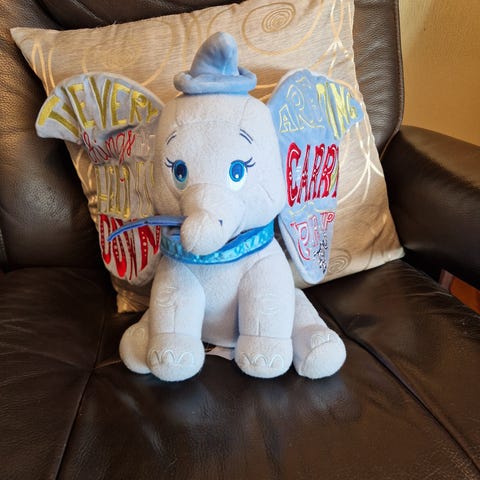
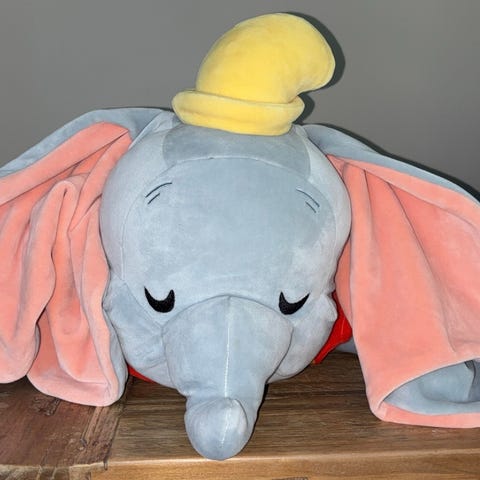
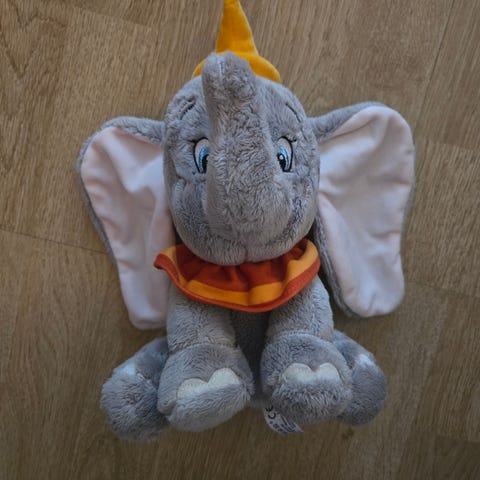
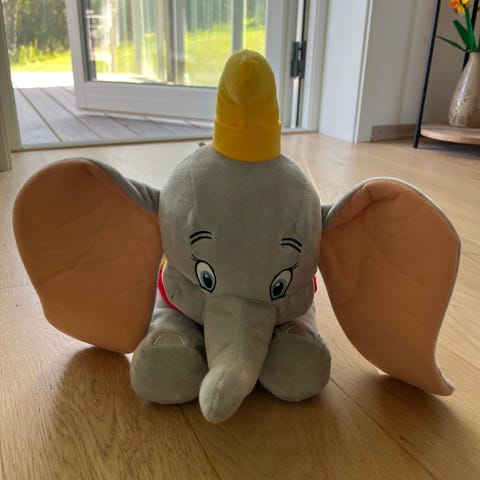
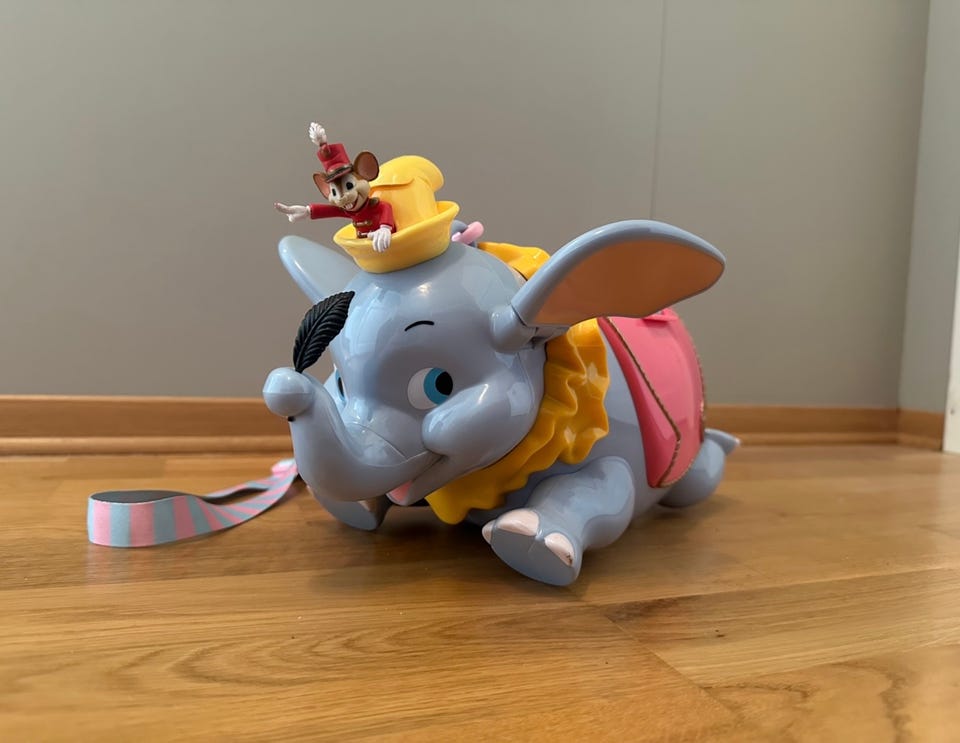
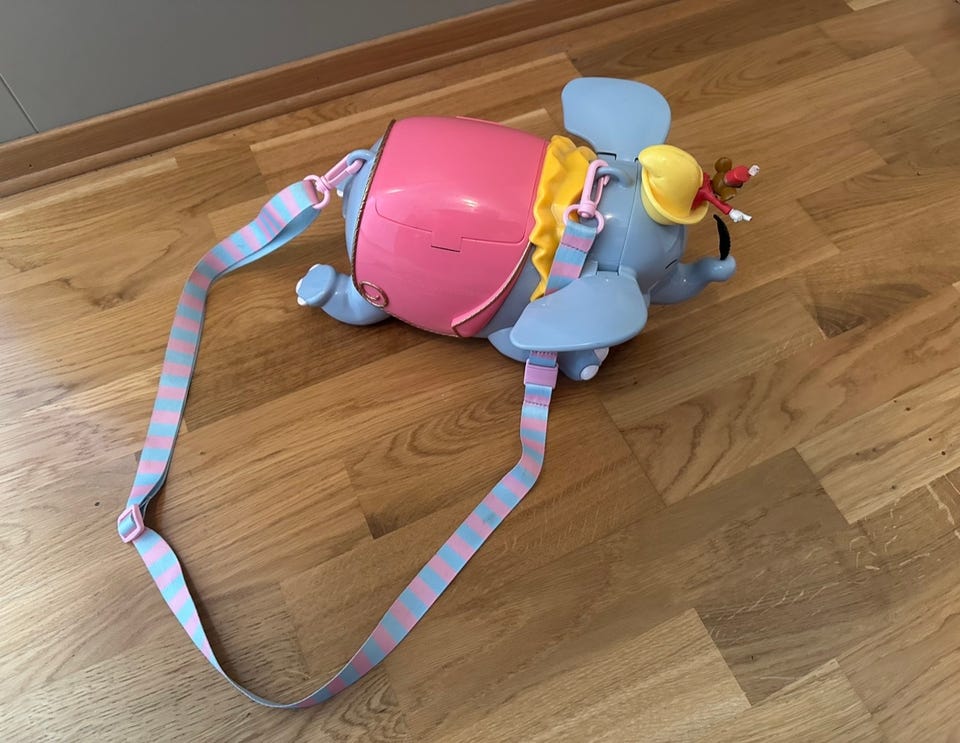
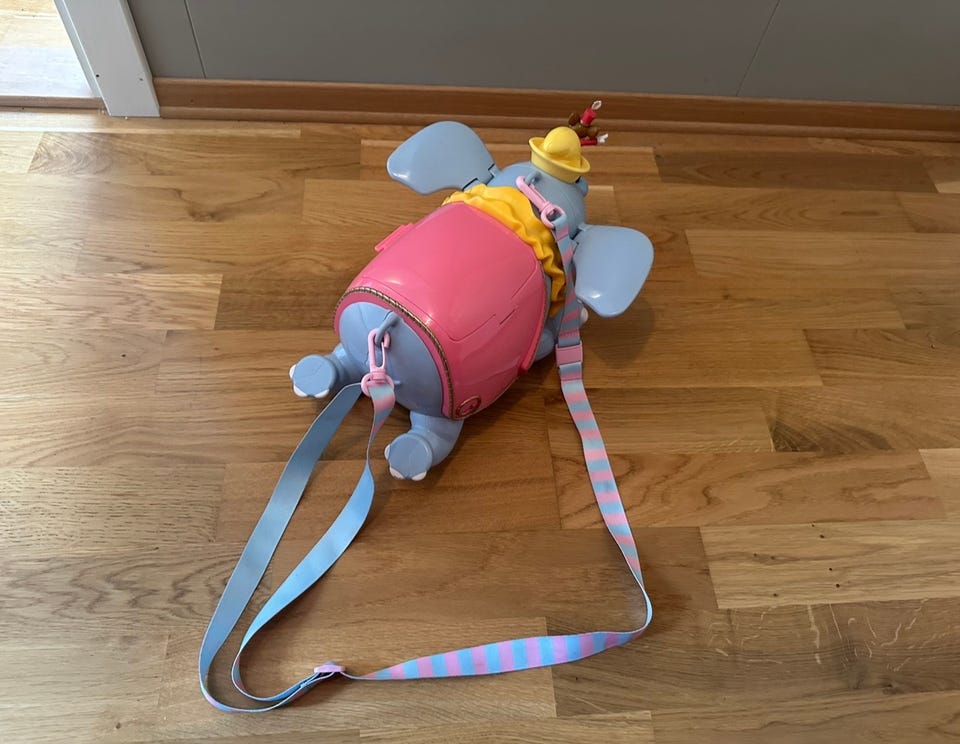
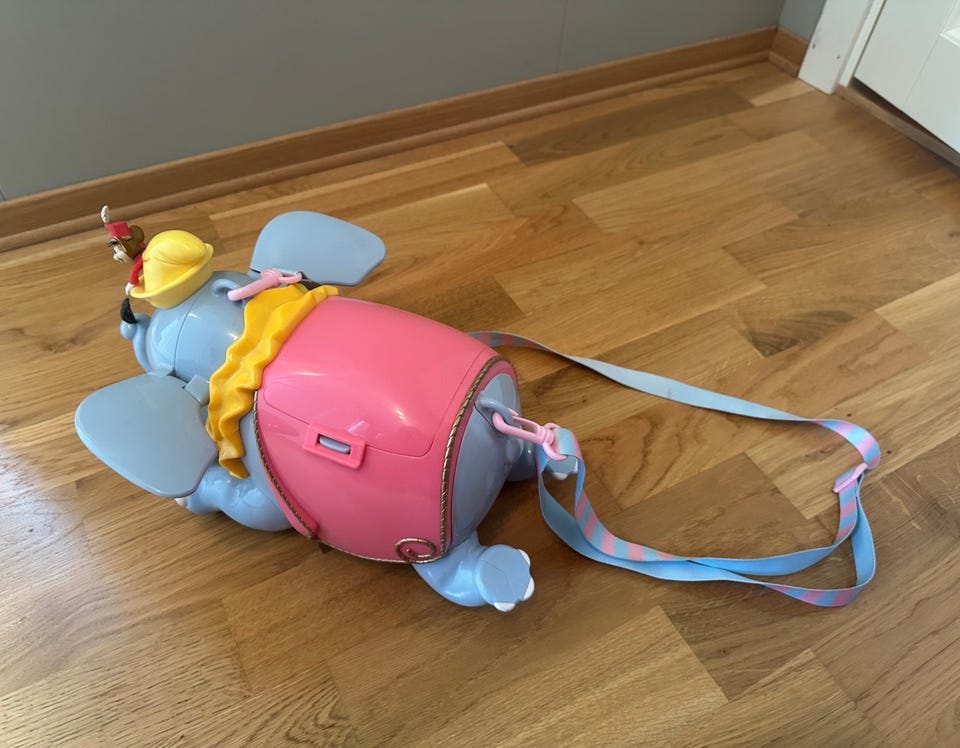
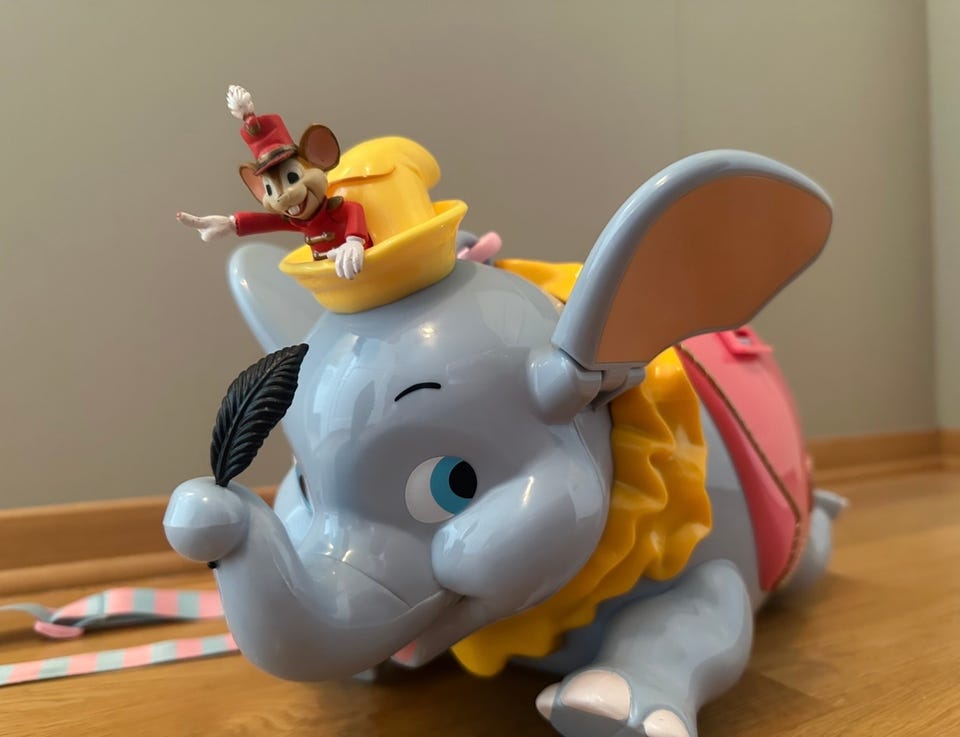
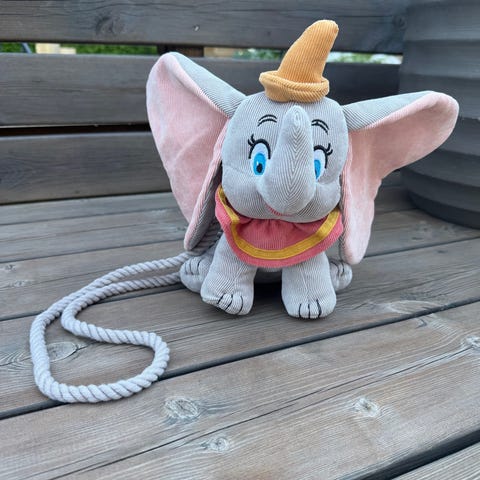
Selger en dumbo figur for kr 475,-
Kan hentes 7584 Selbustrand, ellers sendes frakt med sporing kr 140,-
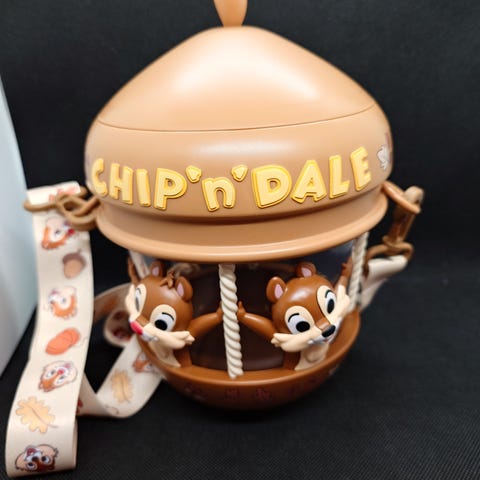
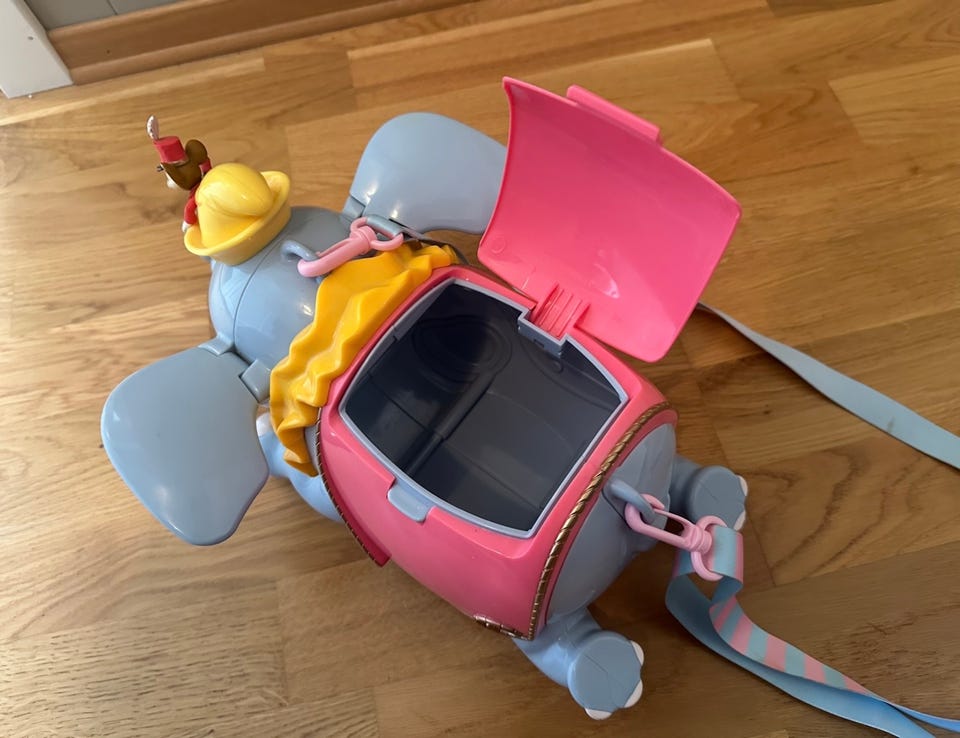
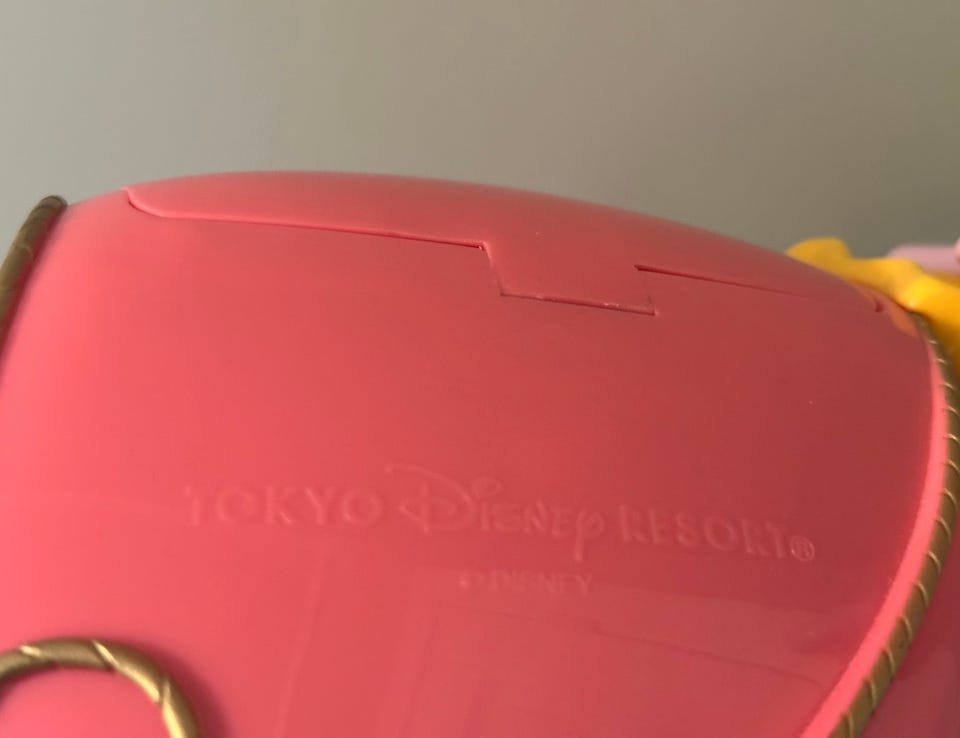
Den har tekst på siden, se bilder, det står Tokyo Disney Resort. Det kan se ut som dette originalt er en popcorn beholder fra Disneyland, har ikke så mye kunnskap om dette.
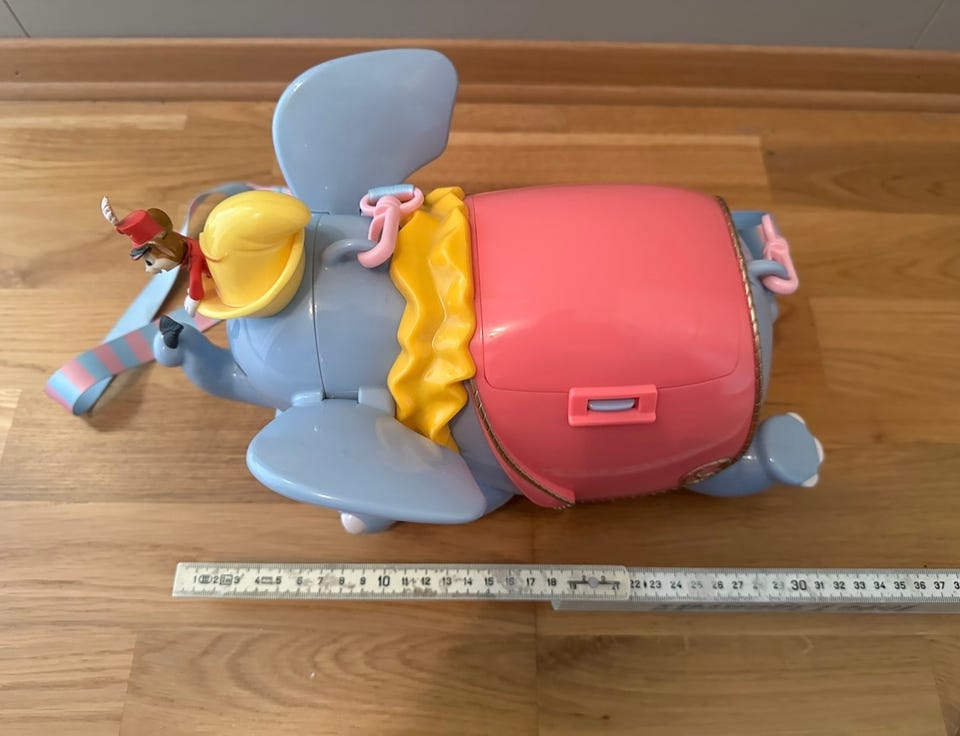
Det kan åpnes et lokk øverst på den, se bilder. Ørene kan beveges opp og ned.
Lengden på denne er omtrentlig 30 cm, og omtrentlig 20 cm høyde.
Den ser ut til å være i fin stand, noe bruksmerker må påregnes.
søkeord / wiki : Et stort sirkus befinner seg i Florida, og en flokk hvite storker leverer babyer til dyrene. Rett etter at sirkuset skal legge ut på en ny turne, kommer en forsinket stork og innhenter toget i bevegelse. Storken slipper den forventede elefant-ungen Jumbo Junior ned til elefant-moren fru Jumbo. De andre elefantene er i utgangspunktet glade, helt til de ser at babyen har alt for store overdimensjonerte ører, og umiddelbart gir de ham kallenavnet «Dumbo»
Men Mrs. Jumbo viser babyen sin stor omsorg og kjærlighet, og forsvarer ham mot erting fra de andre elefantene. Dumbo, klønete på grunn av de alt for store ørene, blir gjort til en egen attraksjon ved sirkuset. Når noen bøllete andre sirkus-dyr begynner å plage Dumbo, tar fru Jumbo igjen. Sirkus-ansatte fjerner Dumbo fra området, og fru Jumbo blir rasende. Men fru Jumbo blir deretter ansett som sprø, og låst inne i et bur. Dumbo får skylden for denne hendelsen, og blir unngått av alle de andre elefantene. Timothy, en liten mus som også reiser med sirkuset, blir snart venn med Dumbo og bestemmer seg for å gjøre ham til en egen stjerne. Timothy planlegger å bruke Dumbo i et eget stunt, på toppen av en elefant-pyramide. Imidlertid snubler Dumbo på grunn av de alt for store ørene under showet og dette velter hele pyramiden. De andre elefantene blir skadd i alt oppstyret. Dumbo får andre roller ved sirkuset, men hater sin nye jobb, og blir deprimert. Popularitet og økonomi Dumbo ble en moderat publikumssuksess i USA og den mest lønnsomme av Disneys tegnefilmer på 1940-tallet. Den innbrakte $1,6 millioner i USA i løpet av 1941. Den ble forøvrig satt opp på nytt i 1949, 1959, 1972 og 1976.
Produksjonskostnadene var på $950 000.[1]
Den ble meget godt mottatt av anmelderne, noe som gjenspeiles i at den har fått 98 % på Rotten Tomatoes[2] og 96 % på Metacritic.[3]
Den ble tildelt Oscar i klassen beste musikk, og under Filmfestivalen i Cannes ble den tildelt en pris for beste animasjon.[4]
I 2017 ble filmen vedtatt bevart av USAs nasjonale filmregister.[4]
Den ble distribuert av RKO Pictures i USA.
Videolanseringer
26. juni 1981 (VHS og Betamax)
Juni 1982 (Laserdisc)
3. desember 1985 (VHS og Betamax – Walt Disney Classics)
12. juli 1991 (VHS og Laserdisc – 50th Anniversary Edition)
28. oktober 1994 (VHS og Laserdisc – Walt Disney Masterpiece Collection)
23. oktober 2001 (VHS og DVD – 60th Anniversary Edition)
17. oktober 2006 (DVD – Big Top Edition)
Februar 2010 (Blu-ray)
Norske stemmer
Øivind Blunck som Musen Tim(my)
Anders Hatlo som Klovn, Prestekråka, Lapsekråka, Sirkustoget, Utroper
Harald Mæle som Forteller, Flunky, Klovn, Hattekråka, Sirkusdirektøren, Storken, Gutter, Utroper
Kari-Ann Grønsund som Giggles og Matriarken
Guri Schanke som Prissy
Ellen Horn som Catty
Christian Barmen som Skinny og Gutt
Martin Bliksrud som Gutt
Ivar Nørve som Klovn, Brillekråka, Tjukkekråka
Referanser
«Dumbo (1941) - Box Office Mojo». www.boxofficemojo.com. Besøkt 20. august 2019.
«Dumbo (1941)». Rotten Tomatoes (på engelsk). Besøkt 20. august 2019.
«Dumbo». Metacritic. Besøkt 20. august 2019.
«Dumbo - IMDb». Besøkt 20. august 2019.
(en) Offisielt nettsted Rediger på Wikidata
(en) Dumbo – kategori av bilder, video eller lyd på Commons Rediger på Wikidata
(en) Dumbo på Internet Movie Database Rediger på Wikidata
(no) Dumbo hos Filmweb Rediger på Wikidata
(no) Dumbo hos Filmfront (arkivert versjon) Rediger på Wikidata
(sv) Dumbo i Svensk Filmdatabas Rediger på Wikidata
(da) Dumbo i Danmark Nationale Filminstitut Rediger på Wikidata
(fr) Dumbo på Allociné Rediger på Wikidata
(nl) Dumbo på MovieMeter Rediger på Wikidata
(en) Dumbo på The Movie Database – film Rediger på Wikidata
(en) Dumbo på American Film Institute Rediger på Wikidata
(en) Dumbo på Rotten Tomatoes Rediger på Wikidata
(en) Wikiquote: Dumbo – sitater
Snehvit og de syv dvergene (1937) Pinocchio (1940) Fantasia (1940) Dumbo (1941) Bambi (1942) Saludos Amigos (1942) Donald møter nye venner (1944) Spill for meg! (1946) Gøy og gammen (1947) Melody Time (1948) The Adventures of Ichabod and Mr. Toad (1949) Askepott (1950) Alice i Eventyrland (1951) Peter Pan (1953) Lady og Landstrykeren (1955) Tornerose (1959) 101 dalmatinere – En sjarmør i pels (1961) Sverdet i stenen (1963) Jungelboken (1967) Aristokattene (1970) Robin Hood (1973) Filmen om Ole Brumm (1977) Bernard og Bianca (1977) To gode venner – Todd og Copper (1981) Taran og den sorte gryte (1985) Mesterdetektiven Basil Mus (1986) Oliver og gjengen (1988) Den lille havfruen (1989) Bernard og Bianca i Australia (1990) Skjønnheten og udyret (1991) Aladdin (1992) Løvenes konge (1994) Pocahontas (1995) Ringeren i Notre Dame (1996) Herkules (1997) Mulan (1998) Tarzan (1999) Fantasia 2000 (1999) Dinosaur (2000) Et kongerike for en lama (2000) Atlantis (2001) Lilo og Stitch (2002) Sjørøverplaneten (2002) Min bror bjørnen (2003) Q-gjengen (2004) Lille kylling (2005) Villdyr (2006) Familien Robinson (2007) Bolt (2008) Prinsessen og frosken (2009) To på rømmen (2010) Ole Brumm – Nye eventyr i Hundremeterskogen (2011) Rive-Rolf (2012) Frost (2013) Big Hero 6 (2014) Zootropolis – Dyreriket (2016) Vaiana (2016) Rive-Rolf krasjer internett (2018) Frost 2 (2019) Raya og den siste dragen (2021) Encanto (2021) Zootropolis 2 (2025)
Den fredsommelige dragen (1941) Victory Through Air Power (1943) Sydens sang (1946) So Dear to My Heart (1949) Mary Poppins (1964) Hokus Pokus Kosteskaft (1971) Peter og draken Elliott (1977) Hvem lurte Roger Rabbit? (1988) Eventyr i New York (2007) Mary Poppins vender tilbake (2018) DisneyToons Ole, Dole og Doffen på eventyr – Jakten på den forsvunne lampe (1990) En langbeint film (1995) Doug's 1st Movie (1999) Tigergutt (2000) Friminutt: Skolefri (2001) Tilbake til drømmeland (2002) Jungelboken 2 (2003) Nasse Nøff (2003) Teacher's Pet (2004) Ole Brumm og Heffalumpen (2005) Bambi 2 (2006) Fly (2013) Fly 2: Brann og Redning (2014) Pixar Walt Disney Animation Studios Kategori:Disney-filmer Encyclopædia Britannica ·
Kategorier: Disney-filmerAnimerte fantasyfilmer fra USAAnimerte filmmusikaler fra USAAnimerte barnefilmer fra USAFilmer fra 1941Engelskspråklige filmerFilmer bevart i USAs nasjonale filmregisterAnimerte filmer med antropomorfe dyr Dumbo is a 1941 American animated musical fantasy film produced by Walt Disney Productions and released by RKO Radio Pictures. It is based upon the storyline written by Helen Aberson and Harold Pearl, and illustrated by Helen Durney for the prototype of a novelty toy ("Roll-a-Book").[4][5]
The main character is Jumbo Jr., an elephant who is ridiculed for his oversized ears and mockingly nicknamed "Dumbo", but in fact he is capable of flying by using his ears as wings. Throughout most of the film, his only true friend, aside from his mother, is a mouse named Timothy – a relationship parodying the stereotypical animosity between mice and elephants.
Produced to recoup the financial losses of both Pinocchio and Fantasia, Dumbo was a deliberate pursuit of simplicity and economy. At 64 minutes, it is one of the studio's shortest animated features. Sound was recorded conventionally using the RCA System. One voice was synthesized using the Sonovox system, but it too was recorded using the RCA System.[citation needed]
Dumbo was released on October 23, 1941, where it was met with critical acclaim for its story, humor, visuals, and music.[6] The film was later criticized for stereotyping of black people. Its accolades include an Academy Award for Best Scoring of a Musical Picture. In 2017, this film was selected for preservation in the United States National Film Registry by the Library of Congress as being "culturally, historically and aesthetically significant".[7]
In the years following its initial release, Dumbo has remained popular, spawning a popular theme park attraction, merchandise products, a television series, and a live-action adaptation.
Plot
In Florida, while a large circus spends the off-season in its winter grounds, a flock of white storks delivers many babies to the animals. One elephant, Mrs. Jumbo, does not receive her baby, and keeps scanning the sky in hope. The next spring, the circus loads up its train, Casey Jr., and sets out on a new tour. A belated stork catches up with the train and drops off the expected baby elephant, Jumbo Jr. The other elephants are initially delighted, until the baby sneezes and reveals far-oversized ears; they then mockingly nickname him "Dumbo". Mrs. Jumbo shows her baby great care and love, defending him from the others' abuse.
Being clumsy due to his ears, Dumbo is made into a sideshow attraction. When some rowdy boys start to bully Dumbo, even breaking into his pen to tug on his ears, the furious Mrs. Jumbo spanks their leader and starts throwing hay bales at other spectators. The Ringmaster and his staff separate Mrs. Jumbo and her baby, causing her to douse the Ringmaster in a water vat and attack the other men. She is eventually restrained in a locked train car as a mad elephant – the other elephants blame the incident on Dumbo being a "freak", and continue to shun him.
Timothy, a mouse that travels with the circus, decides to intervene in the situation; scaring off the adult elephants, he befriends Dumbo and decides to make him a star. He whispers in the ringmaster's ear while the latter sleeps, convincing him to try a new stunt with Dumbo as the top of a pyramid of elephants. Dumbo trips on his ears during the show and knocks over the pyramid, injuring the others and causing the big top to collapse. Dumbo is demoted to being a part of the clowns' fireman act, in which he has to dress as a baby and jump from a burning platform into a vat of pie filling. The other elephants disown Dumbo as an elephant for disgracing himself in this way; despite his newfound popularity with the clowns, Dumbo becomes depressed.
Timothy decides to take Dumbo to see Mrs. Jumbo, but they cannot see each other's faces and can only intertwine trunks. Meanwhile, the clowns decide to increase the popularity of their fireman act by dangerously raising the platform Dumbo jumps from. In celebration of the plan, they drink champagne, and a bottle of it falls into a water vat. Crying after visiting his mother, Dumbo has an unsettling case of the hiccups, so Timothy takes him to the vat for some water, only to discover too late that the water contains champagne. Both of them get drunk, and hallucinate pink elephants.
Dumbo and Timothy are awakened the next morning by Jim and his gang of crows, who discover them sleeping high up in their tree. Initially making fun of Timothy's assertion that Dumbo must have flown into the tree with his ears while being drunk, the crows are soon moved by Dumbo's sad story. They decide to help Timothy, giving him a "magic feather" to help Dumbo fly. Holding the feather, Dumbo does indeed take off a second time. He and Timothy return to the circus with plans to surprise the audience.
During the clowns' fire act, Dumbo jumps off the platform and prepares to fly. He drops the feather, but Timothy assures him it was only a psychological aid. As Dumbo successfully flies about the big top, he uses his trunk and various props to humiliate the clowns, Ringmaster, and other elephants; the audience applauds, believing this to be part of the act. Dumbo gains fame and fortune, Timothy becomes his new manager and signs him to a Hollywood contract, and Mrs. Jumbo is freed. She and Dumbo are given a private coach on Casey Jr., and the crows wave goodbye to the duo as they travel away.
Voice cast
The voice actors are uncredited for their roles in the film.
The title character is Dumbo, whose real name is Jumbo Jr. He is a newborn elephant who has huge ears and is able to use them to fly, carrying what he thinks of as a magic feather. Dumbo is speechless in this film.
Edward Brophy as Timothy Q. Mouse,[8] an anthropomorphic mouse who becomes the only friend of Dumbo after his mother is locked up and does his best to make Dumbo happy again. He is never referred to by name save for a mention in a newspaper article near the end of the film.
Verna Felton as
Elephant Matriarch, the well-meaning but pompous leader of the elephants who is cold toward Dumbo.
Mrs. Jumbo, Dumbo's mother, who not only speaks just once in the film to give Dumbo's name, but also sings her lullaby "Baby Mine" to him.
Cliff Edwards as Dandy Crow[8] (previously named Jim Crow on the original model sheets), the leader of a group of anthropomorphic crows. Though he initially jokes and ridicules Timothy's idea that Dumbo can fly, he hears Dumbo's tragic history and becomes determined to help Dumbo fly for real. He is never mentioned by name in the film.
Herman Bing as the ringmaster, who is the strict, and foolish owner of the circus. Due to being misinformed about Mrs. Jumbo's attack on the rowdy boys, he assumes she simply snapped and locks her up.
Sterling Holloway as Mr. Stork,[8] Dumbo's carrier stork seen at the beginning of the film.
Margaret Wright as Casey Junior, an anthropomorphic 2-4-0 tender locomotive hauling the circus train.
The Hall Johnson Choir as Crow Chorus
Hall Johnson as Deacon Crow
James Baskett as Fats Crow
Nick Stewart as Specks Crow
Jim Carmichael as Dopey Crow
The King's Men as the Roustabout Chorus
Noreen Gammill as Elephant Catty
Dorothy Scott as Elephant Giddy
Sarah Selby as Elephant Prissy
Billy Bletcher as Clown
Malcolm Hutton as Skinny, the boy who taunts Dumbo
John McLeish as the narrator
Production
Development
Dumbo is based upon a children's story written by Helen Aberson-Mayer and Harold Pearl,[4] with illustrations by Helen Durney.[9] The children's book was first brought to the attention of Walt Disney in late 1939 by Kay Kamen, the studio's head of merchandise licensing, who showed a prototype of the Roll-A-Book that included Dumbo. Disney immediately grasped its possibilities and heartwarming story and purchased the rights to it.[10]
Originally intended as a short film, Disney soon realized a decent book adaption needed a feature-length film.[11] At the time, the foreign markets in Europe had been curtailed due to World War II, which caused Pinocchio and Fantasia to fail at the box office. With the film's modest budget, Dumbo was intended to be a low-budget feature designed to bring revenue to the studio.[6] Story artists Dick Huemer and Joe Grant were assigned to develop the plot into a feature-length film. From January 22 to March 21, 1940, they wrote a 102-page script outline in chapters, much like a book, an unusual way of writing a film script. They conceived the stork-delivery and the pink elephants sequences and had Dumbo's mother renamed from "Mother Ella" to "Mrs. Jumbo". They riffed on elephants' fear of mice by replacing a wise robin named "Red" found in the original story with the wisecracking mouse character, Timothy. They also added a "rusty black crow", which was later expanded into five.[12] Regardless of this, very little was changed from the original draft.[13] In March 1940, a story team headed by Otto Englander translated the outline into story sketches.[14]
Animation
From Disney's perspective, Dumbo required none of the special effects that had slowed down production and grew the budgets of Pinocchio, Fantasia, and Bambi.[15] When the film went into production in early 1941, supervising director Ben Sharpsteen was given orders to keep the film simple and inexpensive.[16] As a result, the character designs are simpler, background paintings are less detailed, and a number of held cels (or frames) were used in the character animation. Although the film is more "cartoony" than previous Disney films, the animators brought elephants and other animals into the studio to study their movement.[11]
Watercolor paint was used to render the backgrounds. Dumbo is one of the few Disney features to use the technique, which was also used for Snow White and the Seven Dwarfs, and regularly employed for the various Disney cartoon shorts. The other Disney features used oil paint and gouache. 2002's Lilo & Stitch, which drew influences from Dumbo, also made use of watercolor backgrounds.[17]
For the part in the "Pink Elephants" sequence where the background is black and the elephants are composed of changing color gradations, it is actually the animation cels that are painted black, while the elephant characters are fully transparent, except for the line drawings. The real backgrounds consist of the various color gradations, which are visible through the transparent elephants.[18]
Disney animators' strike
Main article: Disney animators' strike
During a story meeting for Bambi on February 27, 1940, Disney observed that Dumbo was "an obvious straight cartoon" and that the animators that were assigned on Bambi were not appropriate for the look of Dumbo. Animators such as Art Babbitt and Ward Kimball were considered for the film.[15] For that reason, less experienced animators were brought on to animate the characters. Kimball recalled that Disney approached him in a parking lot about Dumbo and summarized the entire story in five minutes. "And listening to him tell that story," Kimball noted, "I could tell that the picture was going to work. Because everything sounded right. It had a great plot." In spite of this, Bill Tytla, who was one of the studio's top animators, animated the title character, but admitted that "it was in the nature of the film to go very fast and get it out in a hurry." To speed up production, Disney used photostats of story sketches instead of full layout artwork for the film, and had experienced animators to supervise the younger, less experienced animators assigned on the film.[19]
Production was interrupted on May 29, 1941, when a significant portion of the Disney animation staff initiated a strike; notably, Kimball continued to work on the film despite his sympathy for the strikers' grievances.[20]
Some have interpreted the clowns' requests to get a raise from their boss being a reference to the Disney animators that went on strike in 1941 (during the creation of the film), demanding higher pay from Walt himself.[21] Animator and strike organizer Art Babbitt denied this, saying he had been assigned to animate the sequence before the strike. "People attached political significance to what happened there. You know, 'Let's go on strike' and so on. We weren't thinking strike at the time. In fact, there never would have been a strike if it hadn't been forced on us."[22][23]
Tokyo Disneyland (Japanese: 東京ディズニーランド, Hepburn: Tōkyō Dizunīrando; local nickname TDL)[1] is a 126-acre (51 ha) theme park at the Tokyo Disney Resort in Urayasu, near Tokyo in Chiba Prefecture, Japan[2] Its main gate is directly adjacent to both Maihama Station and Tokyo Disneyland Station. It was the first Disney park to be built outside the United States and it opened on April 15, 1983. The park was constructed by WED Enterprises in the same style as Disneyland in California and Magic Kingdom in Florida.[2] It is owned by the Oriental Land Company, which licenses intellectual property from the Walt Disney Company. Tokyo Disneyland and its companion park, Tokyo DisneySea, are the only Disney parks in the world not owned or operated by the Walt Disney Company in any capacity.
The park has seven themed areas: the World Bazaar, Adventureland, Westernland, Fantasyland, Tomorrowland, Critter Country and Toontown. Many of these areas mirror those in the original Disneyland as they are based on American Disney films and fantasies. Fantasyland includes Peter Pan's Flight, Snow White's Scary Adventures, and Dumbo the Flying Elephant, based on Disney films and characters.[3] The park is noted for its extensive open spaces to accommodate the large crowds that visit the park.[2] In 2024, Tokyo Disneyland hosted 15.1 million visitors, making it the fourth-most visited theme park in the world and the second-most visited theme park in Asia.
Logo used from 1977 to 1999.
The site for Tokyo Disneyland was part of a 600-acre landfill designated in the 1960s as a recreational area to address the growing demand for entertainment in the Tokyo metropolitan area. This decision set the stage for the eventual establishment of the Tokyo Disney Resort.[5]
The idea of a Japanese Disneyland dates back to the late 1950s when Japanese businessman Kunizo Matsuo approached Walt Disney with the idea of a Disney park in Nara. While it is rumored Walt initially agreed to the idea, he later dropped out of it. Matsuo, still determined to open his Disney-themed park, opened Nara Dreamland in 1961, a near replica of Disneyland except without Disney's characters or intellectual property. This park would continue to operate until 2006, and was eventually demolished in 2017.[6]
In February 1974, the Oriental Land Company (OLC) formally invited Disney executives to Japan for a fact-finding tour. In June of the same year, the company's president, Chiharu Kawasaki, visited Disney's headquarters to reinforce the OLC's desire to bring Disneyland to Japan. Kawasaki once again extended an invitation to the top Disney executives to visit Japan; the offer was taken up in December.[7]
After many years of negotiations Masatomo Takahashi, president of the OLC, signed the initial contract for the construction of Tokyo Disneyland in Chiba Prefecture in April 1979.[8] Japanese engineers and architects visited California to tour Disneyland and prepare to construct the new park.[9] The construction of the park began a year later and was covered by hundreds of reporters as an indication of the high expectations for the park in the future. The final cost of Tokyo Disneyland was 180 billion yen rather than the projected 100 billion yen.[9]
On February 28, 2020, the OLC announced a temporary closure of Tokyo Disneyland and DisneySea from February 29 to combat the COVID-19 pandemic.[10] The closure, originally slated to expire in mid-March, was later extended twice, with the latest extension being until July 1, 2020.
Brukerprofil

Du må være logget inn for å se brukerprofiler og sende meldinger.
Annonsens metadata
Sist endret: 25.8.2026 kl. 10:49 ・ FINN-kode: 473081963