Bildegalleri
(1/14)
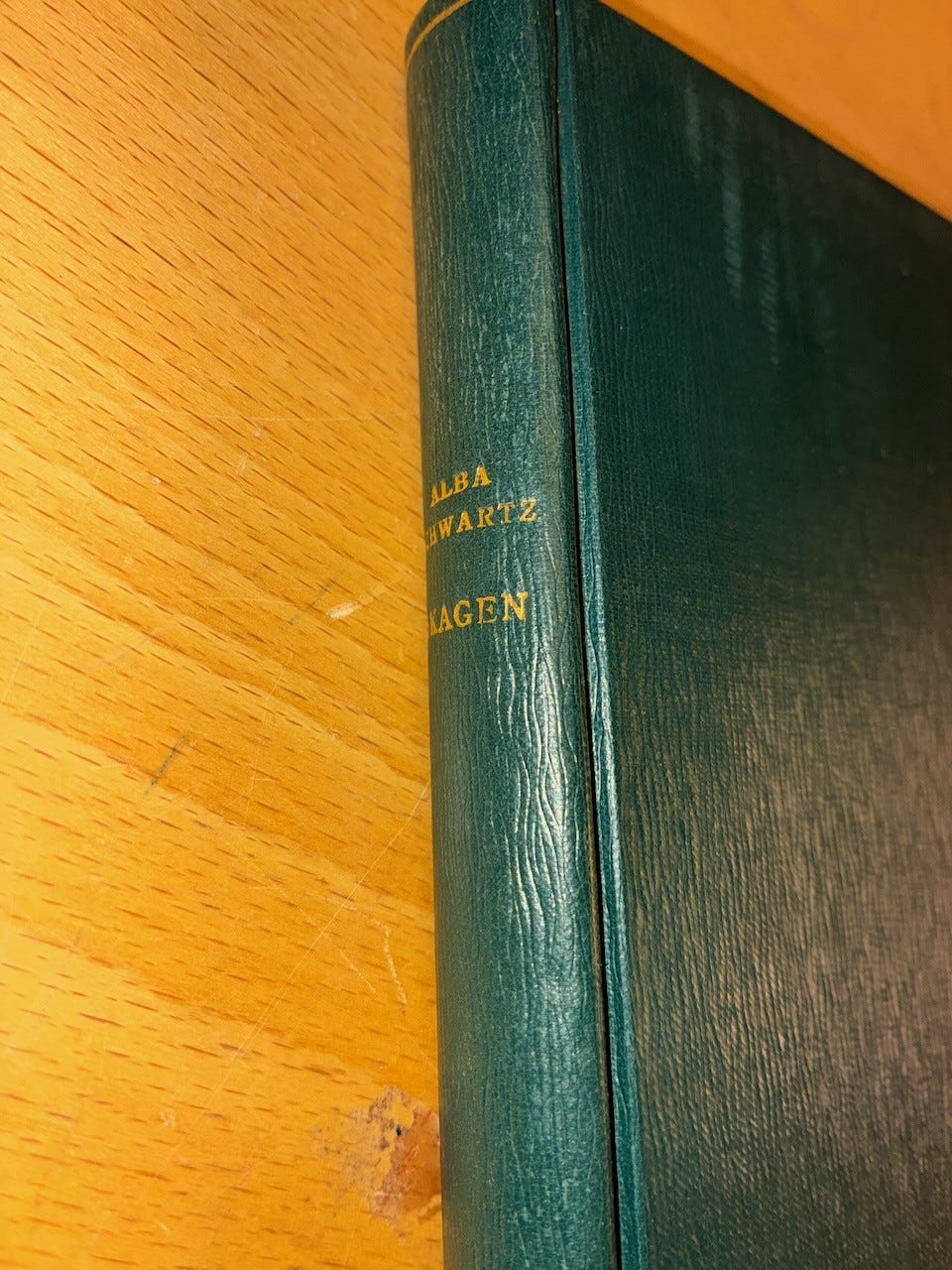

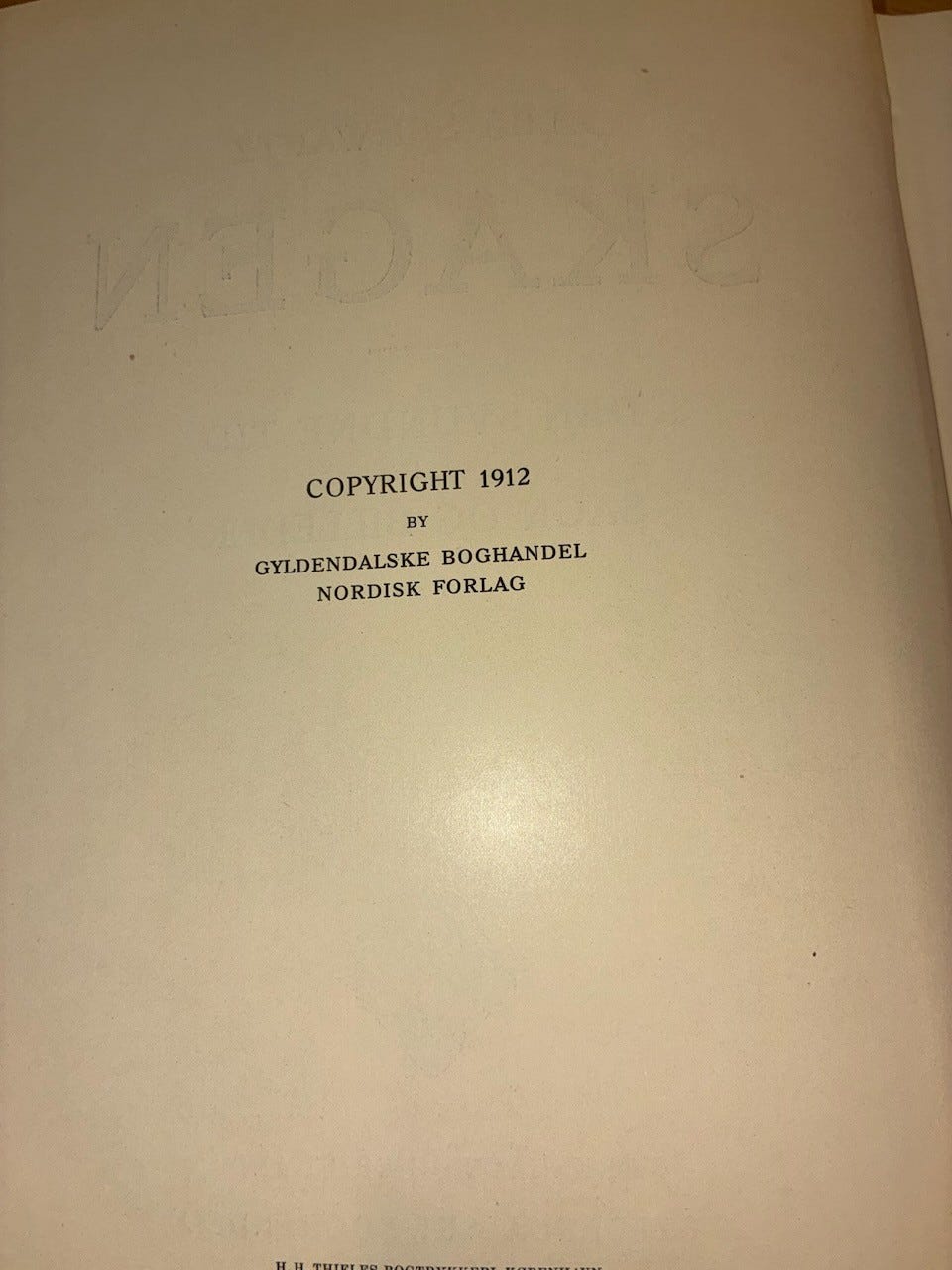
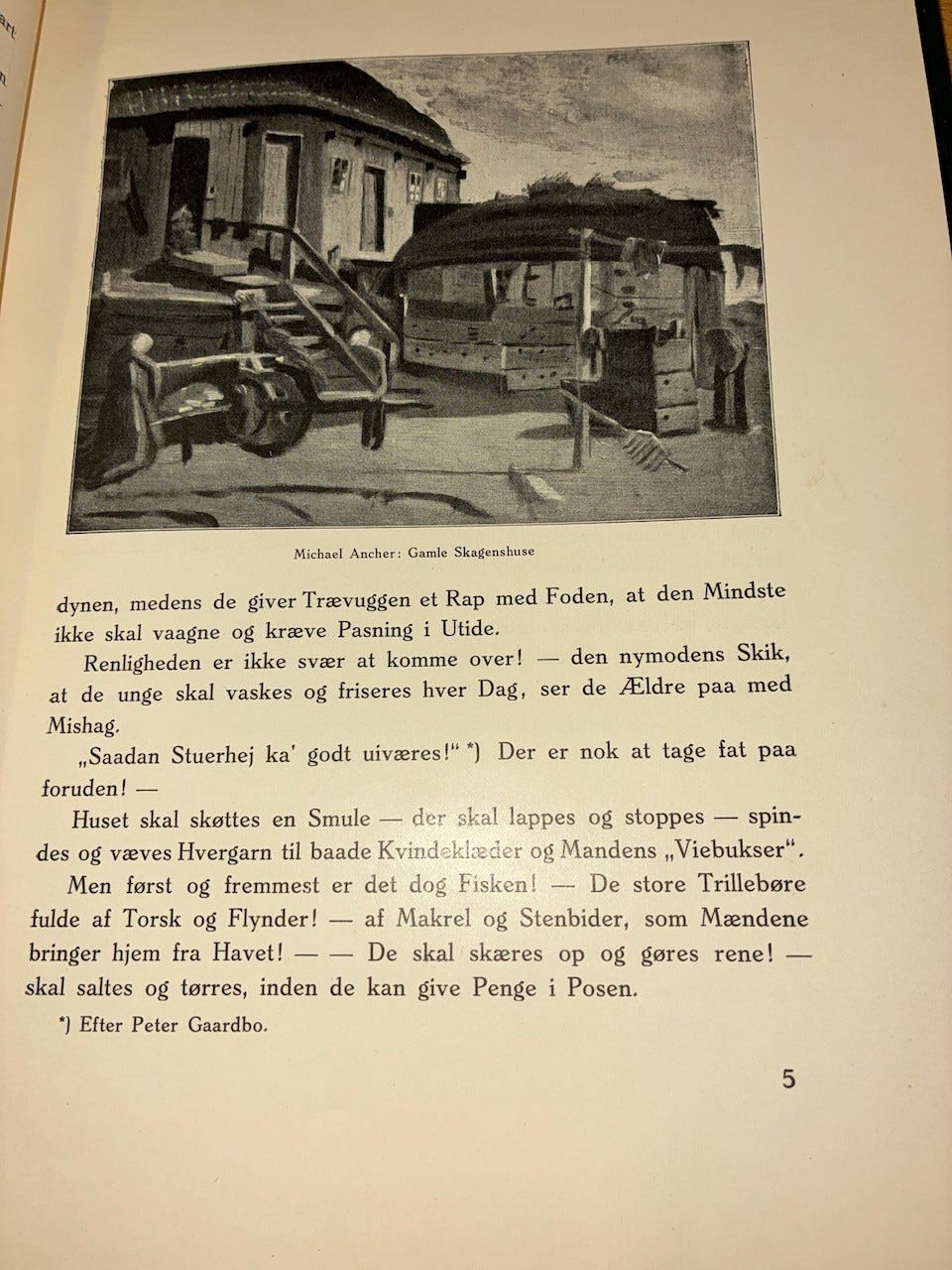
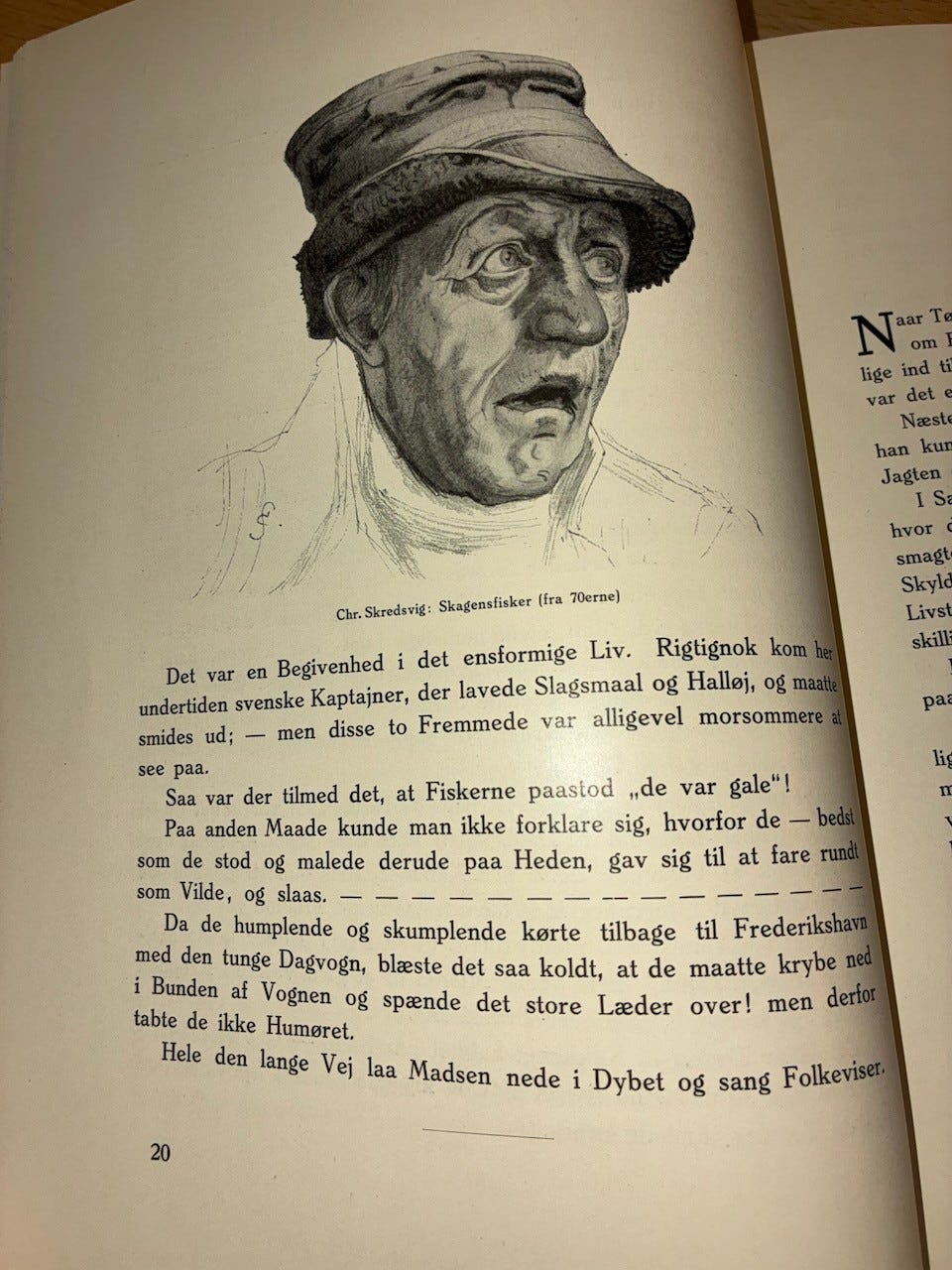
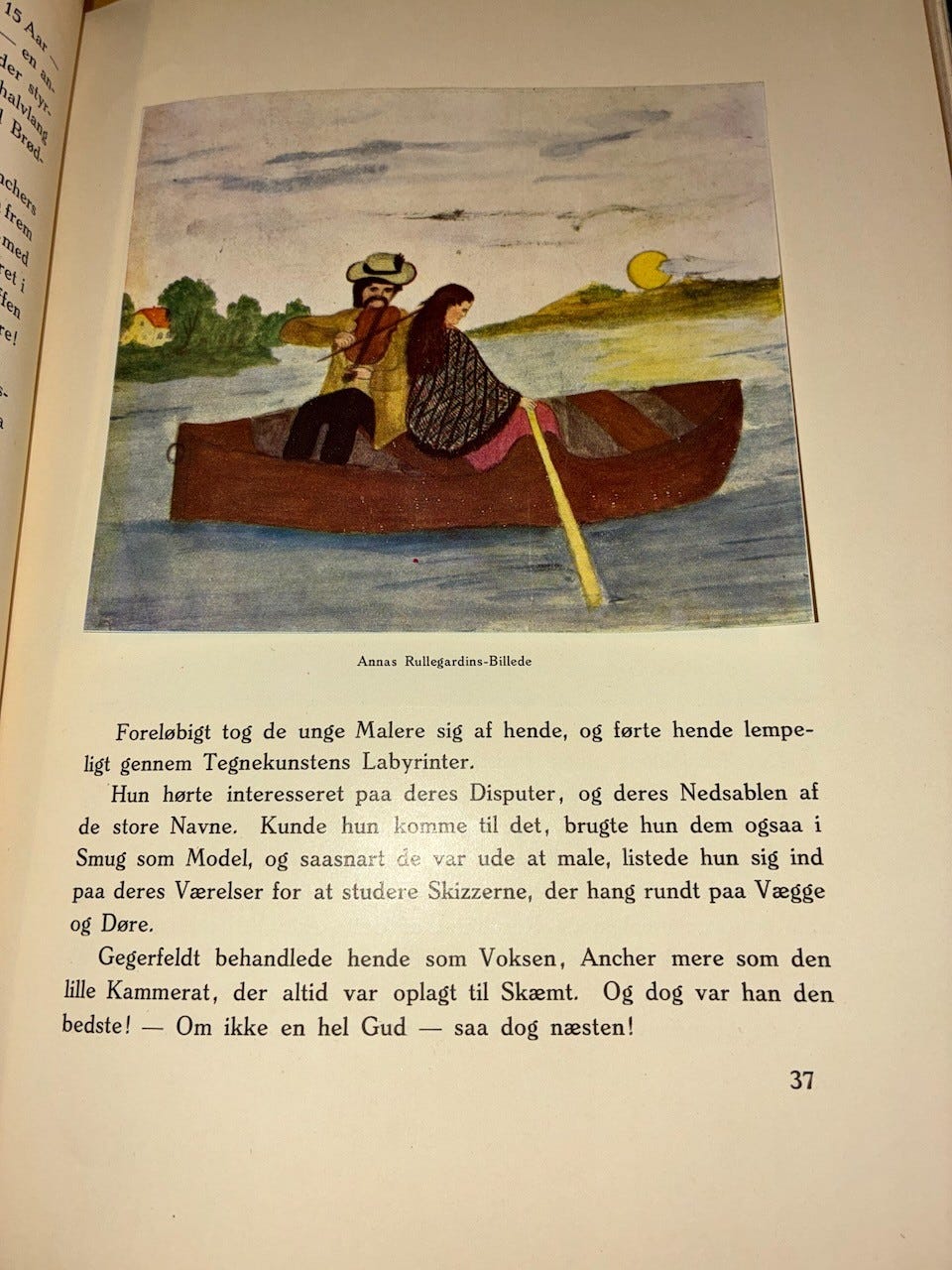
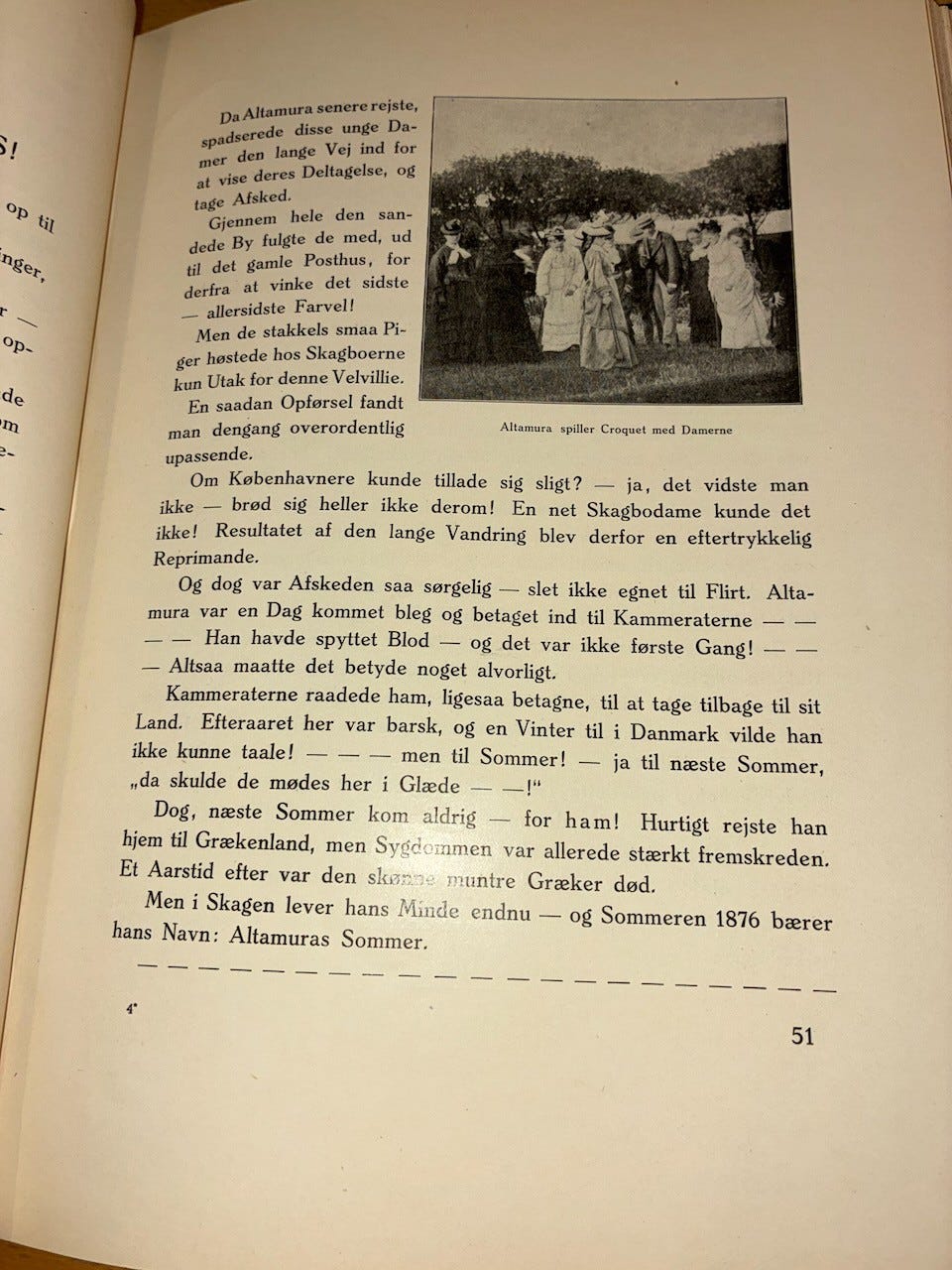
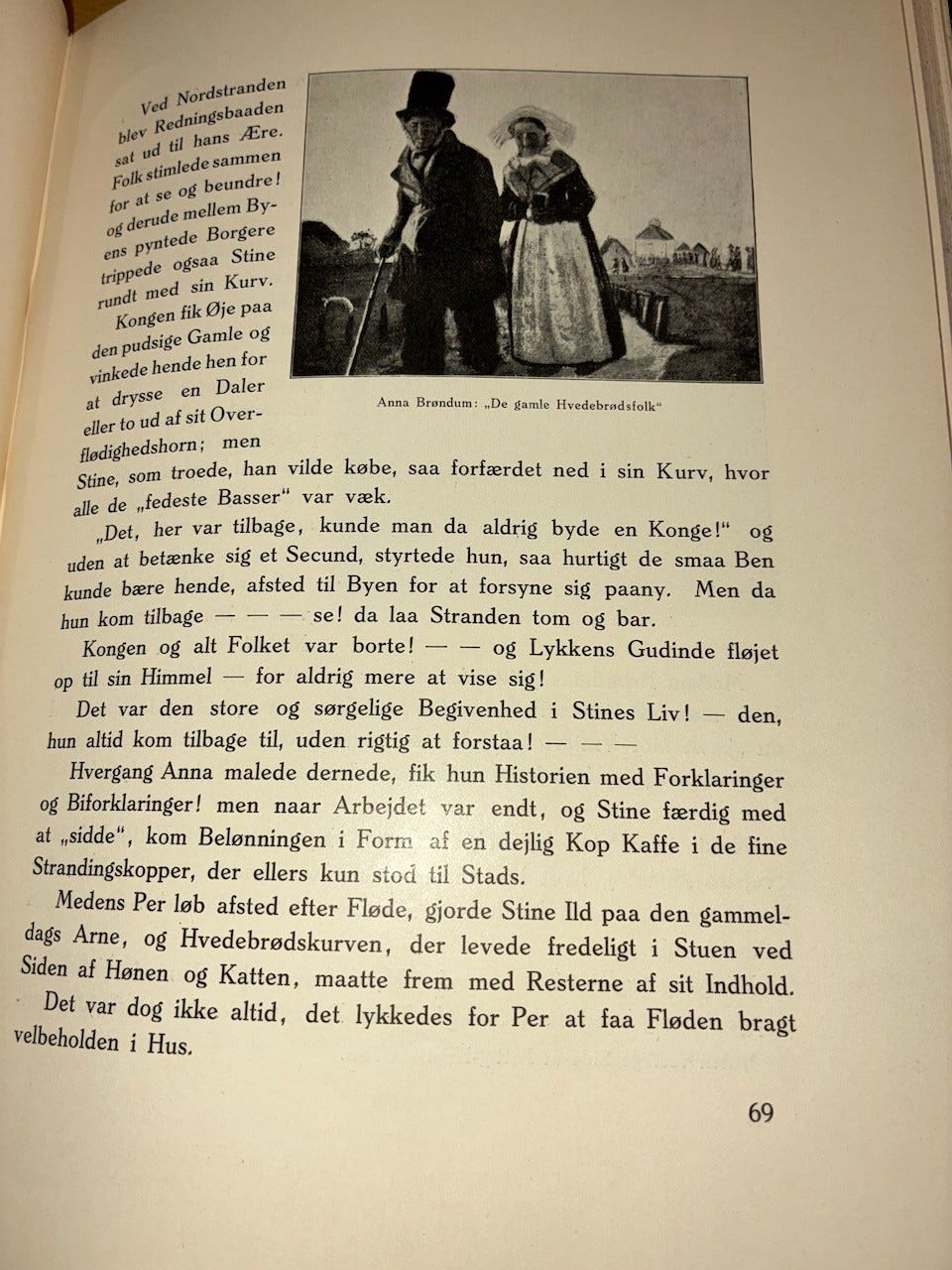
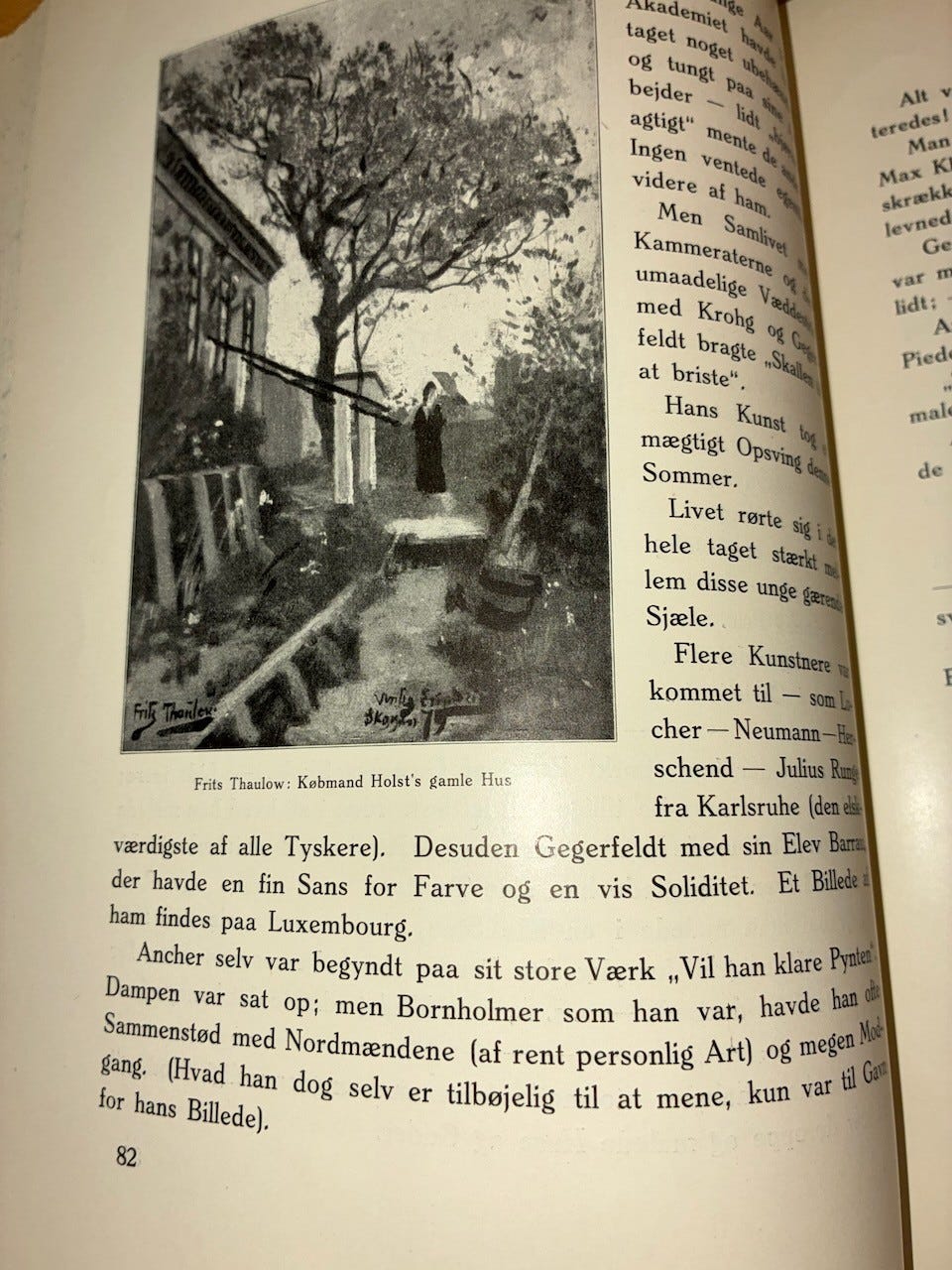
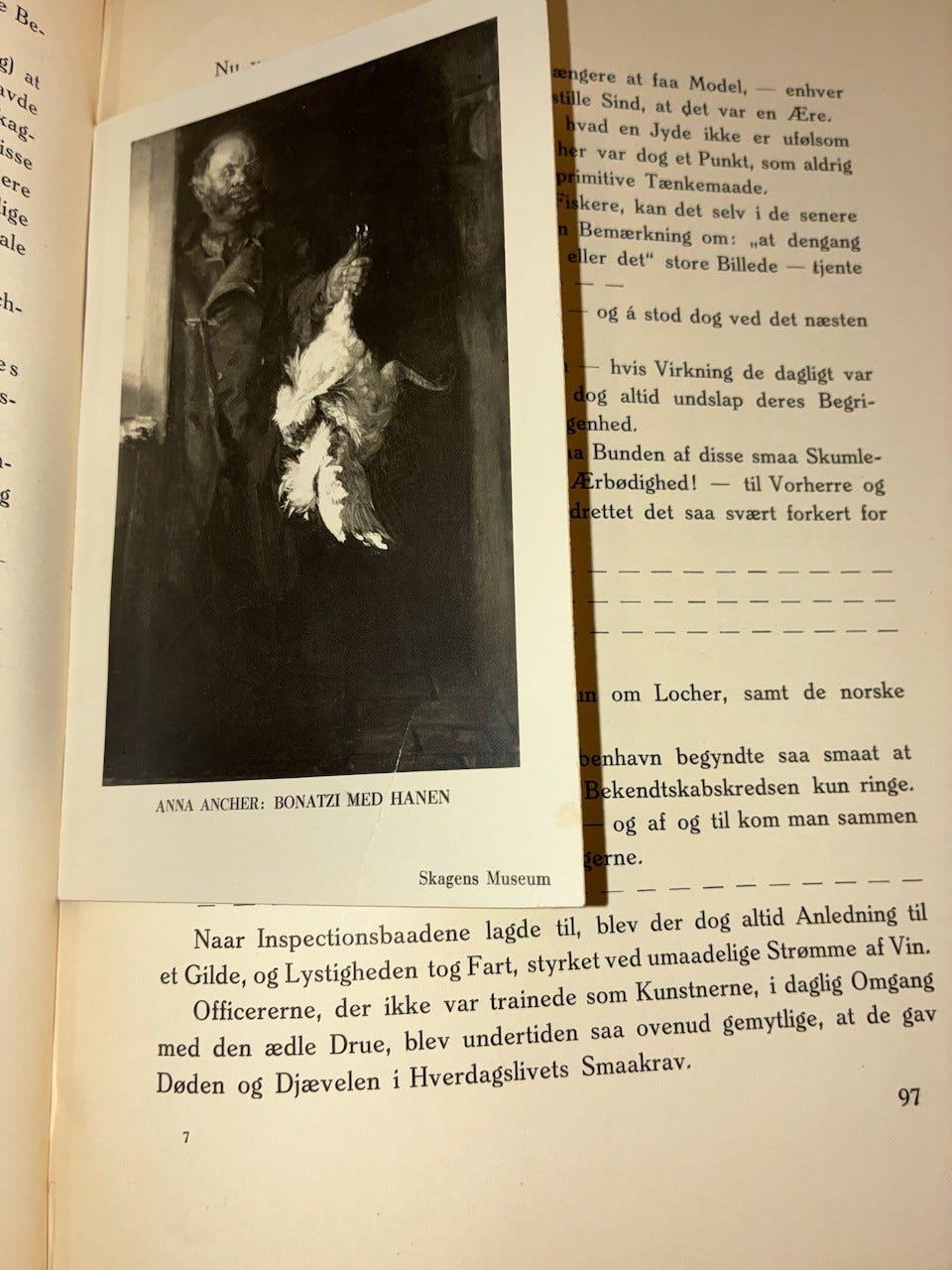
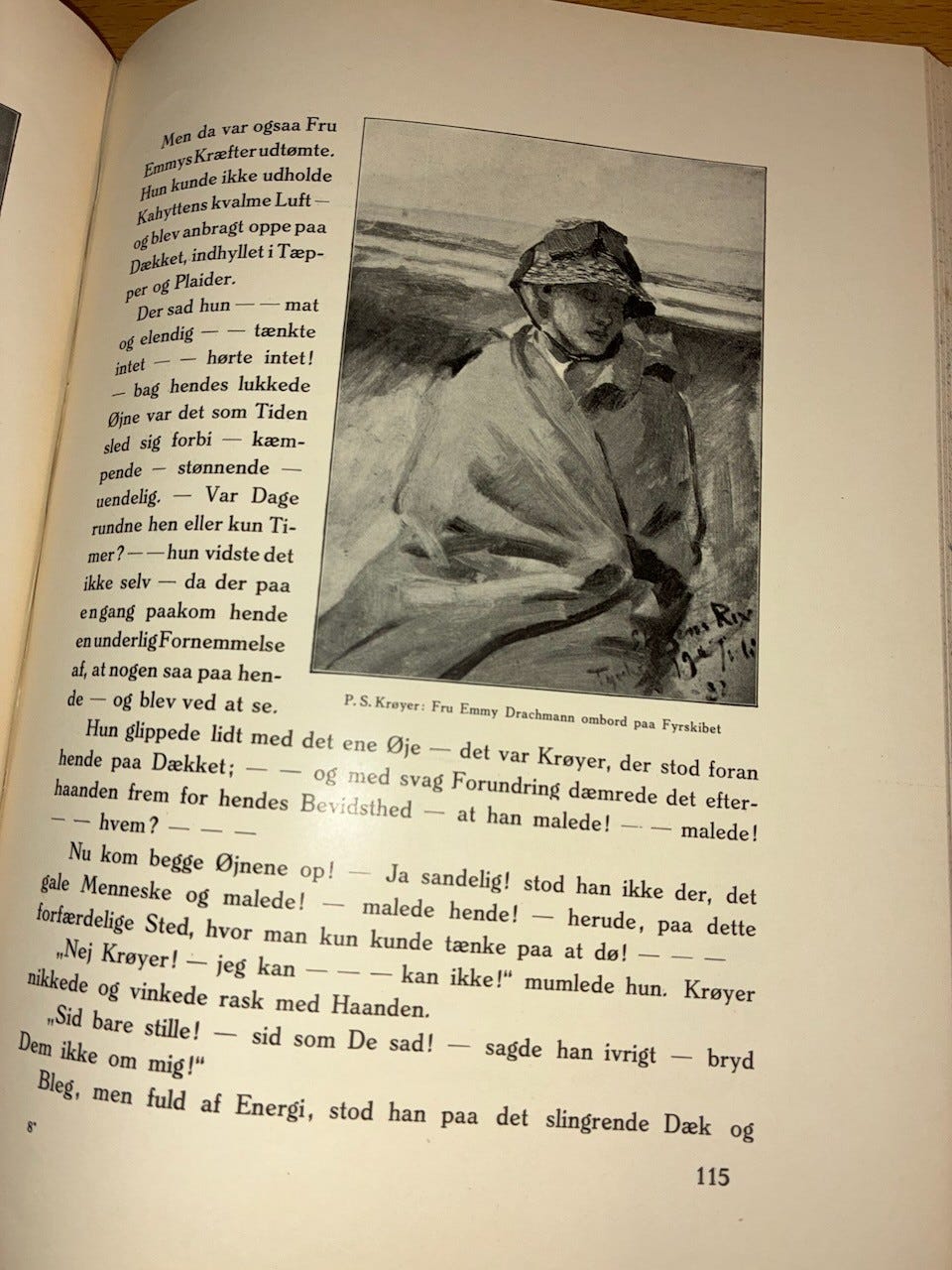
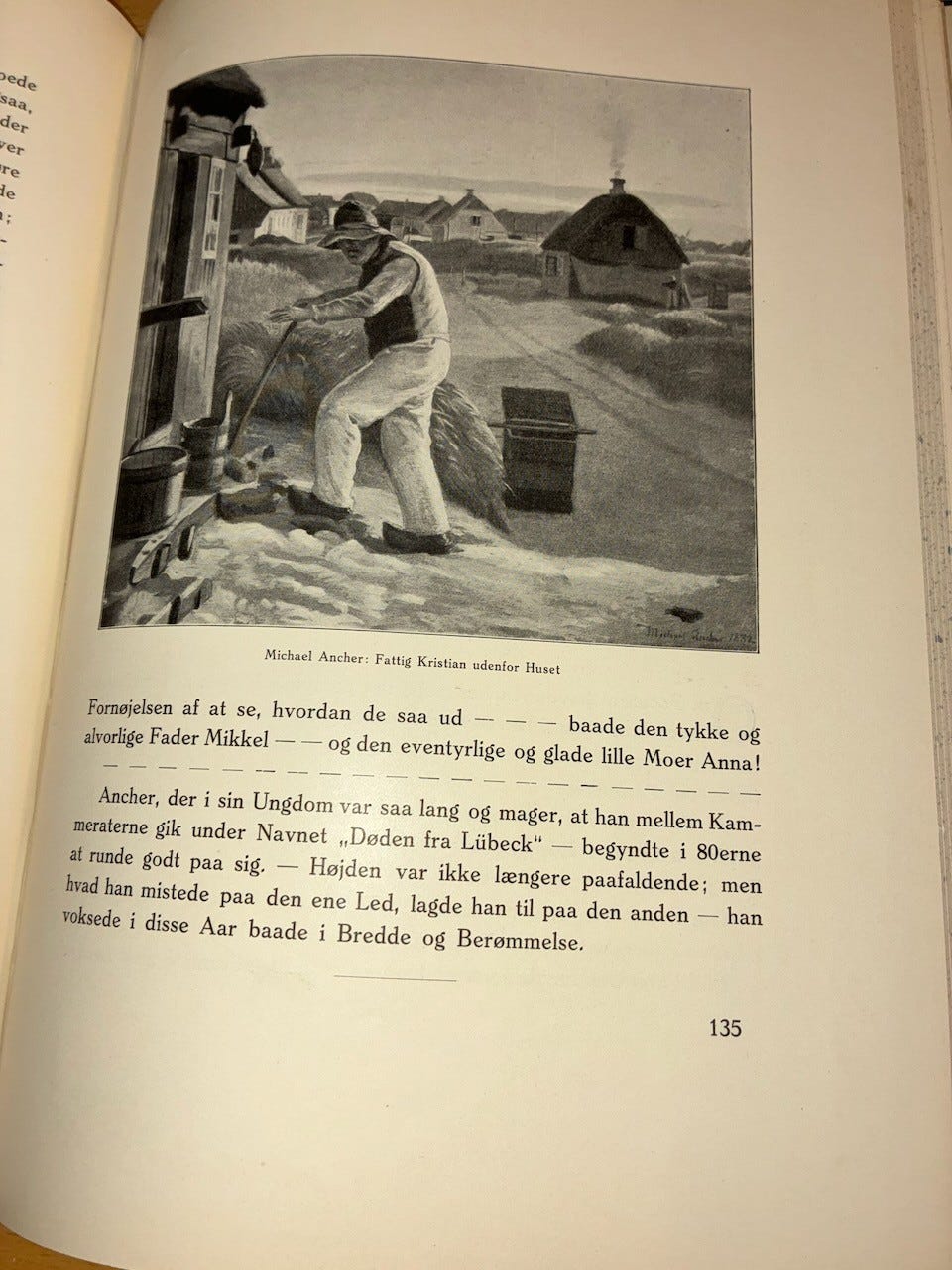

Alba Schwartz. Skagen. 1912 Gyldendalske boghandel Nordisk forlag.
Til salgs750 kr
Beskrivelse
Alba Schwartz. Skagen. 1912 Gyldendalske boghandel Nordisk forlag.
Alba Schwartz (9 December 1857 – 10 January 1942), born Sofie Albertine Larsen, was a Danish writer and cultural figure whose works chronicled the social and artistic life of Skagen, a northern Jutland fishing village turned artist colony, while her later novels addressed themes of family dynamics, motherhood, and societal change.
Born into Copenhagen's upper bourgeoisie as the daughter of physician Søren Eskildsen Larsen and Sophia Albertina Matzen, Schwartz initially pursued acting, training at the Royal Danish Theatre's drama school under Ludvig Phister and even debuting on stage in Holberg's Jeppe på Bjerget. However, social conventions of the era led her to abandon this path after her 1882 marriage to jurist Otto Georg Schwartz, with whom she had two sons: Erik, who died at age 11, and Walter, a painter and art critic. In 1899, following her husband's appointment as mayor of Skagen, the family relocated there, immersing Schwartz in the vibrant community of the Skagen Painters, including Michael and Anna Ancher, P.S. Krøyer, and Holger Drachmann; their home became a hub for these artists, fostering her deep connection to the locale.[1]
Schwartz's literary career began modestly with a 1907 short story debut in the periodical Det ny Aarhundrede, but her most notable contributions emerged later.[2] Between 1912 and 1913, she published the two-volume Skagen før og nu—comprising Den svundne Tid i Sagn og Billeder and Den nye Tid i Oplevelser og Indtryk—offering candid, firsthand accounts of Skagen's transformation from fishing village to artistic haven, including intimate glimpses into the painters' private lives that stirred local interest and remain key historical sources.[2] At age 75, she turned to fiction with novels centered on interpersonal and familial conflicts amid Denmark's modernizing society, including Overlægen (1932), Barnet. Synd – Forsoning – Nemesis (1935), Skilsmissens Børn (1936, adapted into a 1939 film directed by Benjamin Christensen), and Edith søger en Far (1938); these works emphasized traditional values like maternal sacrifice and the impacts of divorce on children, resonating in the interwar era.[2] After her husband's 1915 death, Schwartz returned to Skagen as a widow, building a home that continued to host cultural gatherings until her death in 1942.[1] Her life and writings exemplify a woman's navigation of 19th- and 20th-century constraints, evolving from aspiring actress to influential chronicler of Denmark's artistic heritage.
Early life and education
Childhood in Copenhagen
Sofie Albertine Larsen, who later adopted the name Alba Schwartz, was born on 9 December 1857 at Almindeligt Hospital in Copenhagen.[3] She was the youngest of 14 siblings in a family belonging to Copenhagen's higher bourgeoisie, specifically the civil servant class known as embedsbourgeoisiet.[4] Her father, Søren Eskildsen Larsen (1802–1890), served as an overkirurg (chief surgeon), which immersed the household in a medical environment from her earliest years.[3] Her mother, Sophia Albertina Matzen (1815–1895), completed the parental pair in this educated, professional milieu.[4]
The Larsen family home reflected the stability and cultural refinement of Copenhagen's upper middle class, providing Alba with an upbringing steeped in intellectual and artistic stimuli. One of her older brothers, Sofus Larsen, pursued a career as a philologist and later became the archivist at the University Library, underscoring the family's emphasis on scholarship and learning.[4] While specific details of daily family dynamics or hardships are scarce, the urban setting of Copenhagen exposed her to the city's vibrant literary and theatrical scenes, fostering an early fascination with performance and storytelling that would shape her creative inclinations.[3]
During her formative adolescent years, Alba expressed a strong desire to pursue acting, an interest likely nurtured by Copenhagen's rich cultural life and her family's bourgeois connections. This period laid the groundwork for her initial forays into the arts, though she would soon transition toward literary pursuits amid personal life changes.[4]
Training at the Royal Danish Theatre
Alba Schwartz, born Sofie Albertine Larsen in 1857, pursued her passion for the performing arts by seeking formal training as an actress during her early adulthood in Copenhagen. In the late 1870s, she was admitted to the Elevskole, the student acting school affiliated with the Royal Danish Theatre (Det Kongelige Teater), where she prepared for a potential stage career.[5][6]
Her training focused on foundational acting techniques, including voice modulation, movement, and dramatic interpretation, essential for classical Danish repertoire. Under the guidance of prominent mentor Ludvig Phister, a leading actor and instructor at the theatre known for his rigorous approach to character development and ensemble performance, Schwartz honed her skills in preparation for professional engagements. A pivotal experience during this period was her debut performance in Ludvig Holberg's satirical comedy Jeppe på Bjerget, where she took on a role that showcased her emerging talent in comedic timing and emotional depth.[6]
Despite these promising beginnings, Schwartz's theatrical aspirations were short-lived. In 1882, at the age of 24, she interrupted her training upon marrying jurist Otto Georg Schwartz, opting instead for domestic life that eventually led her family to Skagen. This shift marked the end of her active involvement in theater, though the discipline and narrative insights gained from her time at the Royal Danish Theatre later influenced her development as a writer, evident in her debut novella in 1907 and subsequent novels exploring human relationships.[6][5]
Family and personal life
Marriage and relocation to Skagen
In 1882, Sofie Albertine Larsen, known as Alba, married the jurist Otto Georg Schwartz, marking a significant shift from her urban life in Copenhagen to a future intertwined with provincial administration. She had trained at the Royal Danish Theatre's drama school under Ludvig Phister and debuted on stage in Holberg's Jeppe på Bjerget, but social conventions of the era led her to abandon this path after her marriage.[7] The couple established their household in various locations tied to Otto's career before his appointment as mayor of Skagen in 1899.[8]
The family's relocation to Skagen that year thrust Alba into the rhythms of a remote northern Jutland fishing village, far removed from the cultural vibrancy of the capital. Skagen, with its harsh dunes, shifting sands, and tight-knit community of fishermen and artists, presented initial challenges in adaptation, including the isolation of its northern tip and the stark contrast to Copenhagen's sophistication.[9] As the mayor's wife, Alba quickly navigated these adjustments by leveraging her husband's prominent position, which positioned the Schwartz household at the center of local governance and social affairs.[10]
Otto's role as borgmester facilitated Alba's integration into Skagen's elite circles, where she hosted gatherings and engaged with the burgeoning artist colony, including figures from the Skagen Painters movement. This political leverage not only eased her entry into village life but also shaped her personal path, fostering connections that would later influence her literary pursuits on local history and culture. In the early years, the family settled into a residence befitting the mayor's status, establishing a stable base amid the village's evolving social landscape. Otto died in 1915, after which Alba continued to live in Skagen as a widow, maintaining cultural engagements.[10][8][1]
Children and notable descendants
Alba Schwartz and her husband, Otto Schwartz, had two sons: Erik, born in 1884, and Walter, born in 1889.[4] Erik tragically died at the age of 11 in 1895 following a botched appendectomy, an event that profoundly affected the family. The family relocated to Skagen four years later in 1899 when Otto assumed the role of mayor. Walter, who pursued a career as an artist and painter, grew up partly in the family's Skagen home, where the household nurtured his artistic development, with Alba providing emotional support and encouragement for his creative endeavors.[11]
The family's dynamics were marked by close-knit bonds, though strained by the lingering grief over Erik's loss, which Alba frequently referenced in her personal correspondence. Walter's upbringing in this setting fostered his later connections to the local art community.[12]
Among notable descendants, Walter Schwartz's daughter, Malene Schwartz (born 1949), emerged as a prominent Danish actress and author; she chronicled her grandmother's life and the family history in her 2012 book Alba, highlighting intergenerational artistic influences. Malene's work has preserved the Schwartz lineage's cultural legacy, connecting Alba's literary world to modern Scandinavian performing arts. No other grandchildren or great-grandchildren with significant public profiles in arts or literature are widely documented.[13]
Literary career
Debut and early writings
Alba Schwartz entered the literary scene relatively late in life, making her debut in 1907 at the age of 50 with the short story Den døde Mand, published in the progressive Danish periodical Det ny Aarhundrede.[2][4] This publication represented her first known venture into fiction, following a period dominated by family responsibilities after her 1882 marriage to Otto Georg Schwartz, with the family's relocation to Skagen occurring in 1899 and further curtailing her earlier ambitions as an actress at the Royal Danish Theatre.[4][3]
As a woman navigating the constraints of early 20th-century Danish society, Schwartz encountered significant barriers to professional creative expression; societal norms emphasized domesticity over artistic careers, particularly for married women, which delayed her literary output until this tentative step into short-form writing.[4] Her debut appeared in Det ny Aarhundrede, a journal known for promoting modern literature and social issues, though contemporary reception of the story remains sparsely documented in available records.[2] No additional stories or articles by Schwartz from the 1890s or early 1900s have been identified, underscoring the sporadic nature of her initial efforts before gaining momentum in later decades.[14]
Major works and themes
Alba Schwartz's most prominent contribution to Danish literature is her two-volume historical and autobiographical work Skagen før og nu (Skagen Before and Now), published in 1912–1913 by Gyldendalske Boghandel/Nordisk Forlag. The first volume, Den svundne Tid i Sagn og Billeder (The Bygone Time in Legends and Pictures), chronicles Skagen's folklore, local legends, and visual depictions of its fishing village heritage, drawing on oral traditions and historical anecdotes to evoke the area's pre-modern identity. The second volume, Den nye Tid i Oplevelser og Indtryk (The New Time in Experiences and Impressions), shifts to contemporary observations, documenting the cultural transformation of Skagen into an artist colony in the late 19th and early 20th centuries, including interactions with figures from the Skagen Painters movement. This structure allows Schwartz to juxtapose tradition and modernity, using personal narratives to illustrate socioeconomic shifts from a isolated coastal community to a vibrant cultural hub.[2]
In the 1930s, Schwartz turned to fiction with a focus on family dynamics, producing several novels that addressed children's perspectives on adult conflicts, beginning with her debut novel Overlægen (1932). Other notable works from this period include Barnet. Synd – Forsoning – Nemesis (The Child: Sin – Reconciliation – Nemesis, 1935), which explores guilt and atonement in disrupted households; Skilsmissens Børn (Children of Divorce, 1936), which examines the psychological toll of parental separation on offspring, portraying the protagonists' struggles with abandonment, identity, and reconciliation amid societal stigma, and was adapted into a film directed by Benjamin Christensen in 1939; and Edith søger en Far (Edith Seeks a Father, 1938), depicting a young girl's quest for paternal connection post-divorce. These works gained widespread attention for their empathetic portrayal of familial breakdown, emphasizing themes of emotional resilience and the need for social support systems, and reflect Schwartz's engagement with theater, evident in her dramatic character development and dialogue-driven scenes, likely influenced by her training at the Royal Danish Theatre.[2][4]
Schwartz's oeuvre recurrently explores themes of transition and human connection, particularly the social evolution of Skagen from a traditional fishing village to an artistic enclave, as seen in Skagen før og nu. Her narratives often center women's experiences within these changes, highlighting their roles in family and community amid cultural upheavals. In her later novels, attention shifts to the vulnerabilities of children in modern family structures, critiquing divorce's ripple effects on emotional well-being and advocating for empathy and reform. Stylistically, Schwartz employs social realism infused with autobiographical detail, creating vivid, accessible prose that prioritizes psychological depth over ornate language, a approach shaped by her theatrical background to foster reader immersion in personal and societal dilemmas. Critical reception has praised her for illuminating early 20th-century Danish concerns with family and gender roles, though her works remain somewhat overshadowed by her Skagen chronicle.[2]
Involvement in Skagen society
Social and cultural contributions
As the wife of Otto Schwartz, who served as mayor of Skagen from 1899, Alba Schwartz assumed a prominent position within the town's social elite, facilitating her integration into the vibrant community life during the height of the artists' colony era. Her role as borgmesterfrue enabled her to participate actively in the fashionable social gatherings and lively sociability that characterized Skagen around 1900, contributing to the area's reputation as a cultural destination amid its influx of intellectuals and creatives.[13]
Schwartz's status in Skagen's upper class allowed her to maintain a significant presence in civic and communal activities, helping to foster the town's evolving identity as a hub of cultural exchange in northern Jutland. Through her household and social engagements, she exemplified the era's conventions of wifely duties while subtly advancing the community's social cohesion.[12]
Connections with the Skagen Painters
Alba Schwartz forged significant personal and intellectual ties with the Skagen Painters, a group of late 19th- and early 20th-century Scandinavian artists who converged in the northern Danish village of Skagen to capture its unique light and landscapes. Her friendships with key figures, particularly Michael Ancher and Anna Ancher, were central to her integration into this artistic community. Michael Ancher, a leading realist painter known for his depictions of Skagen's fishermen, created a portrait of Schwartz around 1900, highlighting her status as a prominent local writer and socialite. This work, housed in Skagens Museum, reflects the mutual respect between them, as Ancher's detailed rendering captures Schwartz in a contemplative pose, underscoring their shared cultural milieu.
These relationships extended to collaborative social activities that enriched Skagen's bohemian atmosphere. Schwartz and her husband, mayor Otto Schwartz, actively participated in communal gatherings with the artists, most notably depicted in P.S. Krøyer's iconic 1906 painting Midsummer Eve Bonfire on Skagen Beach. In this vibrant scene, Alba and Otto Schwartz appear alongside Michael Ancher, Anna Ancher, and other luminaries like Holger Drachmann, gathered around a beach bonfire during Midsummer celebrations, symbolizing the harmonious blend of local society and artistic circles in the early 1900s. Such events, common in the 1890s through 1910s, fostered informal exchanges that influenced both artistic output and local cultural narratives.
Schwartz's connections profoundly shaped her literary contributions to documenting the Skagen art scene. Drawing on personal insights from her friendships, particularly with the Anchers, she authored the two-volume Skagen før og nu between 1912 and 1913, offering candid firsthand accounts of Skagen's transformation and intimate glimpses into the painters' lives. This work incorporated notes gathered by Michael Ancher himself, whom she knew intimately, providing an insider's perspective on the painters' lives, inspirations, and communal spirit. Through this publication, Schwartz not only preserved the legacy of her artistic acquaintances but also illuminated how Skagen's social fabric intertwined with its creative renaissance.[2]
Later years and legacy
Final publications and activities
In the 1930s, Alba Schwartz shifted her literary focus to novels examining the emotional and social challenges faced by children amid family conflicts, producing several works that highlighted themes of guilt, reconciliation, and parental responsibility. Her 1935 novel Barnet. Synd – Forsoning – Nemesis explored a child's perspective on familial sin and atonement, marking a poignant entry in this phase of her career.[2]
Schwartz's most recognized late work, Skilsmissens Børn (1936), depicted the profound effects of parental divorce on offspring, earning widespread acclaim for its sensitive portrayal of vulnerability and societal neglect; the book was adapted into a film directed by Benjamin Christensen in 1939.[15][2] This publication underscored her enduring commitment to social realism, drawing from observations of contemporary Danish life. She followed with Edith søger en Far in 1938, which further delved into a child's quest for stability and paternal connection amid domestic upheaval.[2]
Throughout this period, Schwartz resided in Skagen, where she maintained ties to the local cultural milieu she had long documented in her earlier writings, though her primary output centered on these reflective novels rather than new community initiatives.[2]
Death and posthumous recognition
Alba Schwartz died on January 10, 1942, in Skagen, Denmark, at the age of 84.[8]
Following her death, Schwartz received tributes from the Skagen community, where she had long been a prominent figure as the wife of former mayor Otto Schwartz and a key documenter of local history. Her two-volume series on Skagen's past and present, published in 1912 and 1913, continued to serve as foundational references for the town's cultural narrative, drawing on contributions from artists like Michael Ancher.[8]
Posthumous recognition of Schwartz's literary contributions grew in the late 20th and early 21st centuries through scholarly and familial works. In 2006, art historian Lise Svanholm included her in Damerne på Skagen, a study of women connected to the Skagen Painters, highlighting her role in preserving the colony's social and artistic milieu.[8] Her granddaughter, actress Malene Schwartz, published Alba: en familiekrønike in 2009 (Politikens Forlag), offering an intimate exploration of Alba's domineering personality and lasting family impact based on personal archives.[8]
Modern appreciation endures in Skagen's cultural institutions; a 1901 full-length portrait of Schwartz by Michael Ancher remains on display at Skagen Museum, symbolizing her ties to the artists' circle.[8] Her home at Chr. X's Vej 83, built in 1919, is noted in local heritage guides as a site linked to her later years.[8]
Ring eller send sms til 924 35 058 for å kjøpe og for å diskutere henting og sending.
NB: Knappen for å vise hele beskrivelsen har kun en visuell effekt.
Beliggenhet
| FINN-kode | 464889936 |
|---|---|
| Sist endret | 25.5.2026 kl. 18:07 |