







Bildegalleri
(1/26)
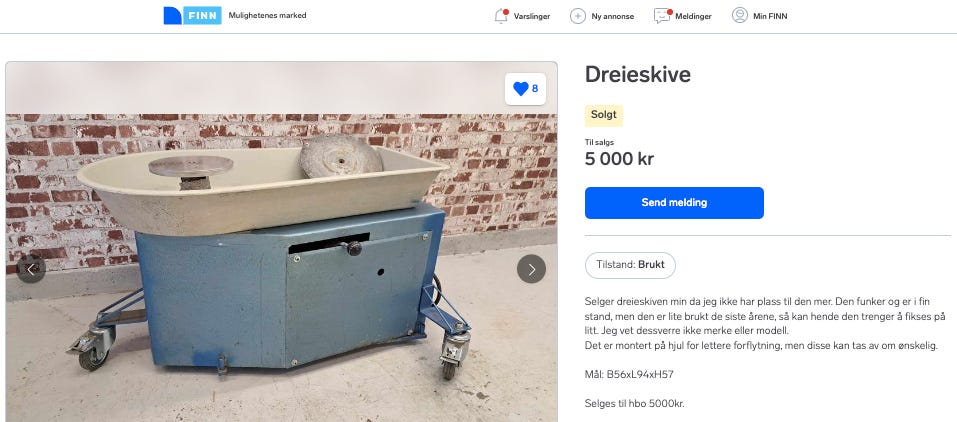
Profesjonell Keramikk Dreieskive for Pottemaker. Solid & Kraftig
Til salgs
5 500 kr
Be om at selgeren sender med Fiks ferdig! Det er trygt, raskt, og du får varen levert til adressen din. Les mer
Beskrivelse av varen
Tilstand: Pent brukt - I god stand
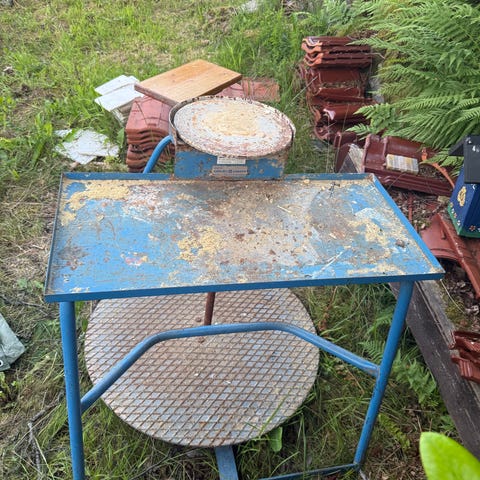
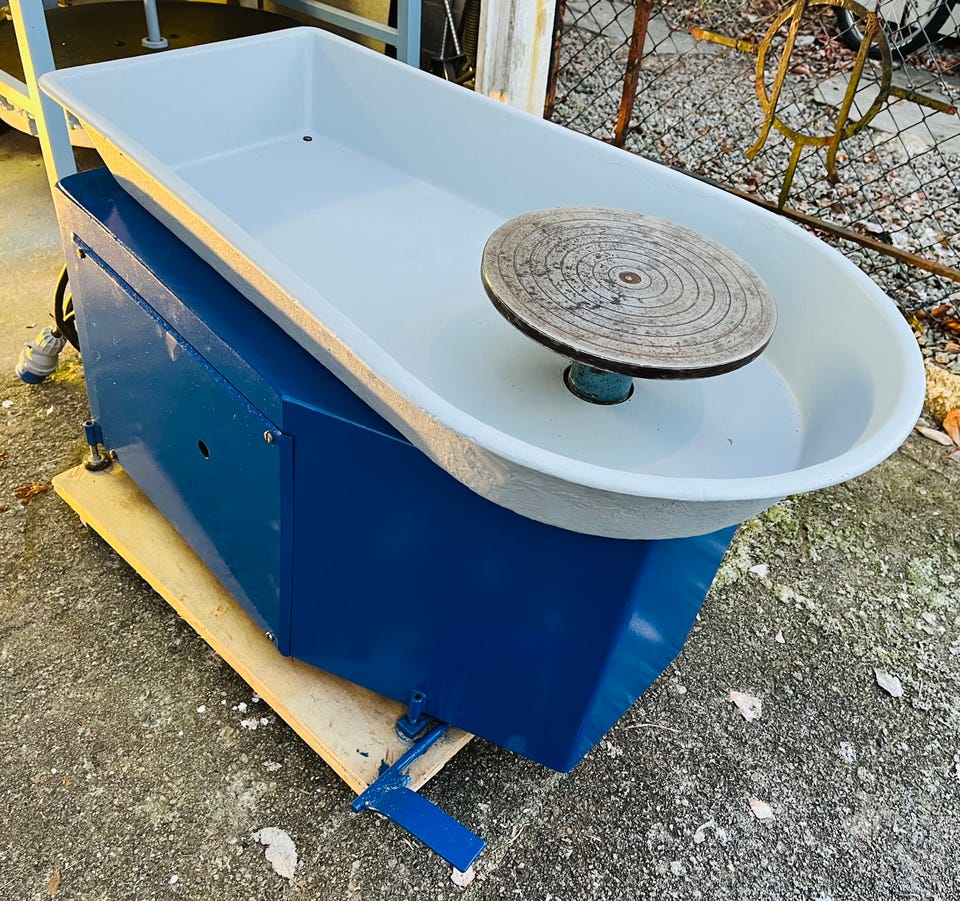
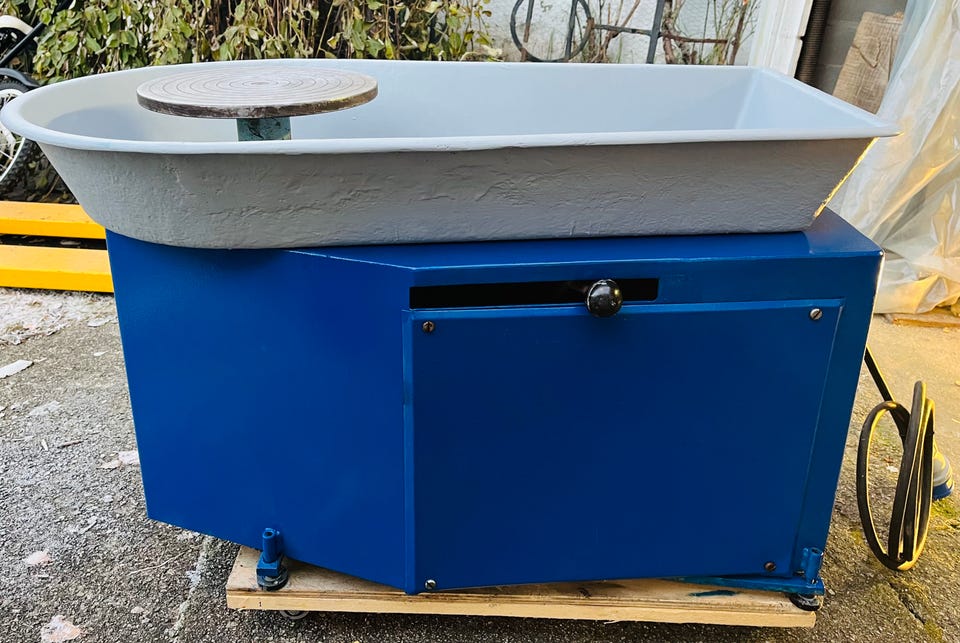
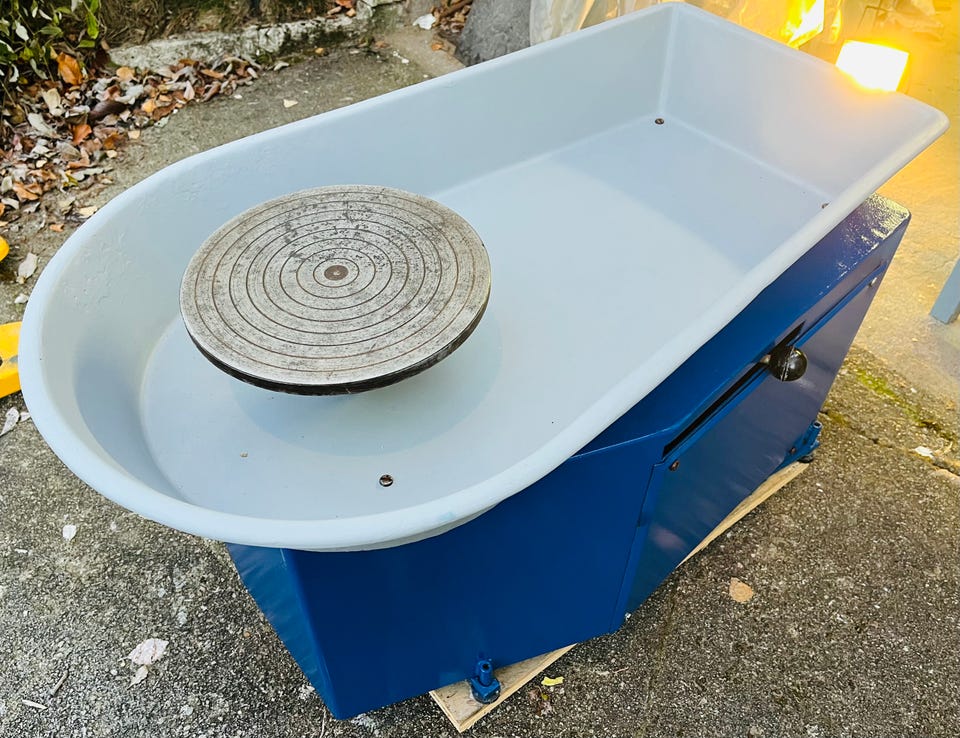
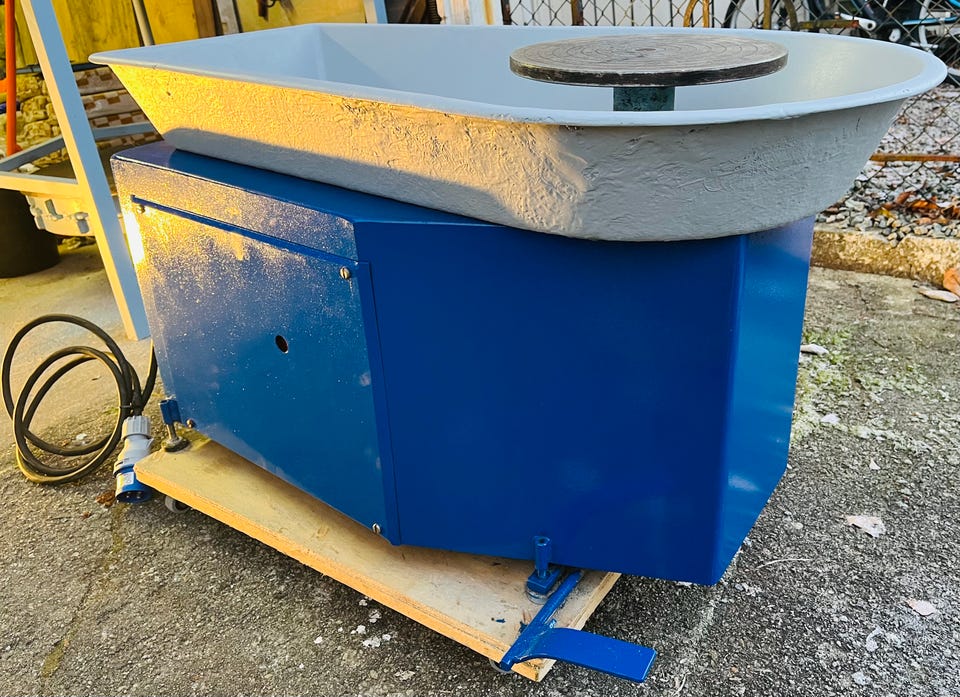
Sold og Kraftig Keramikk Dreieskive
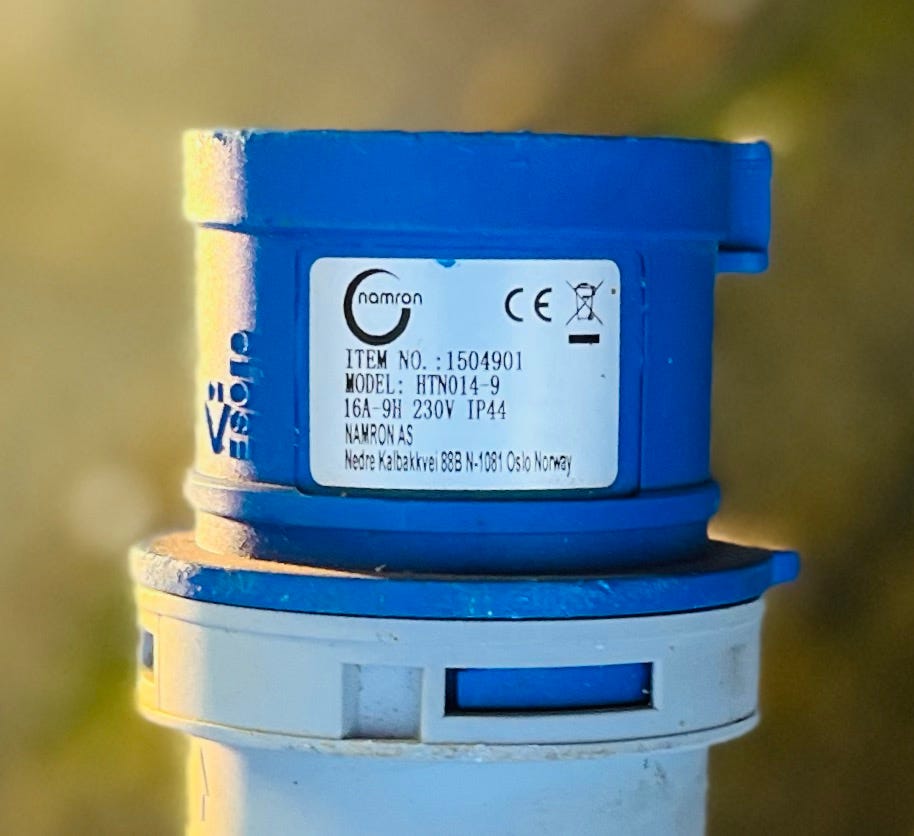
Elektrisk 3-fase / 220 V strømforsyning (blå 4-pinners støpsel). Kraftig 0,5 hk motor med belt drift.
Mye kraft, solid og svært godt kvalitet. Kan dreie over 10 kg leire. Ideell for pottemaker / keramikker som ønsker en solid dreieskive.
Stor kvalitets dreieskive. Eldre proff modell. Hastigheten reguleres mekanisk med fotpedal. Konstruert for å tåle mye bruk og store mengder leire. En dreieskive man kan ha livet ut.
Kjøpte på Finn noen år siden og transportert fra Kristiansand til Stavanger. Restaurert og i fungerende stand. - Testet OK når jeg kjøpe den - men ikke brukt (pga. endring av keramikk studio planer).
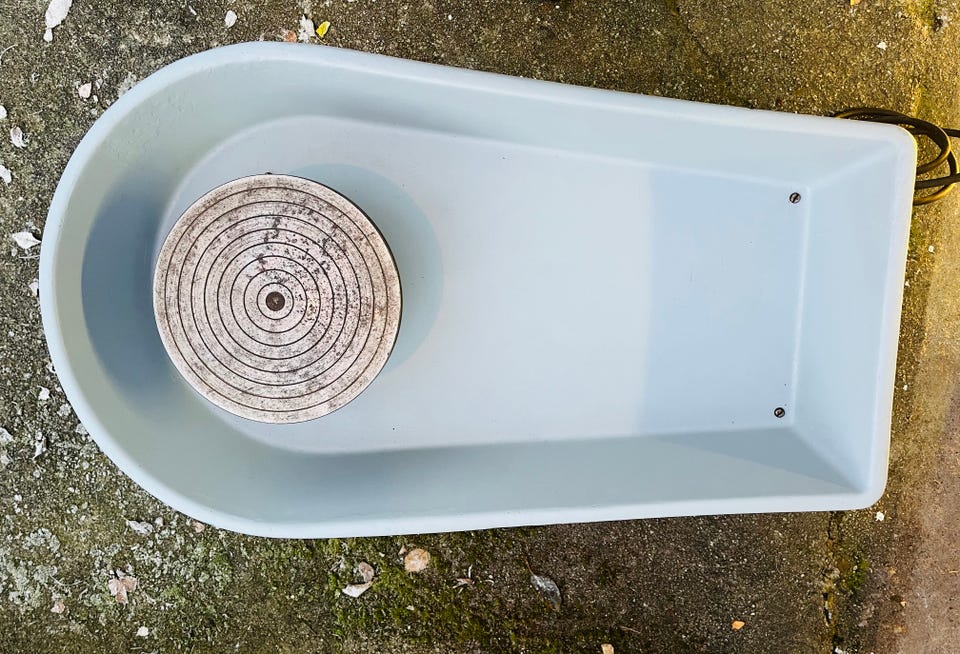
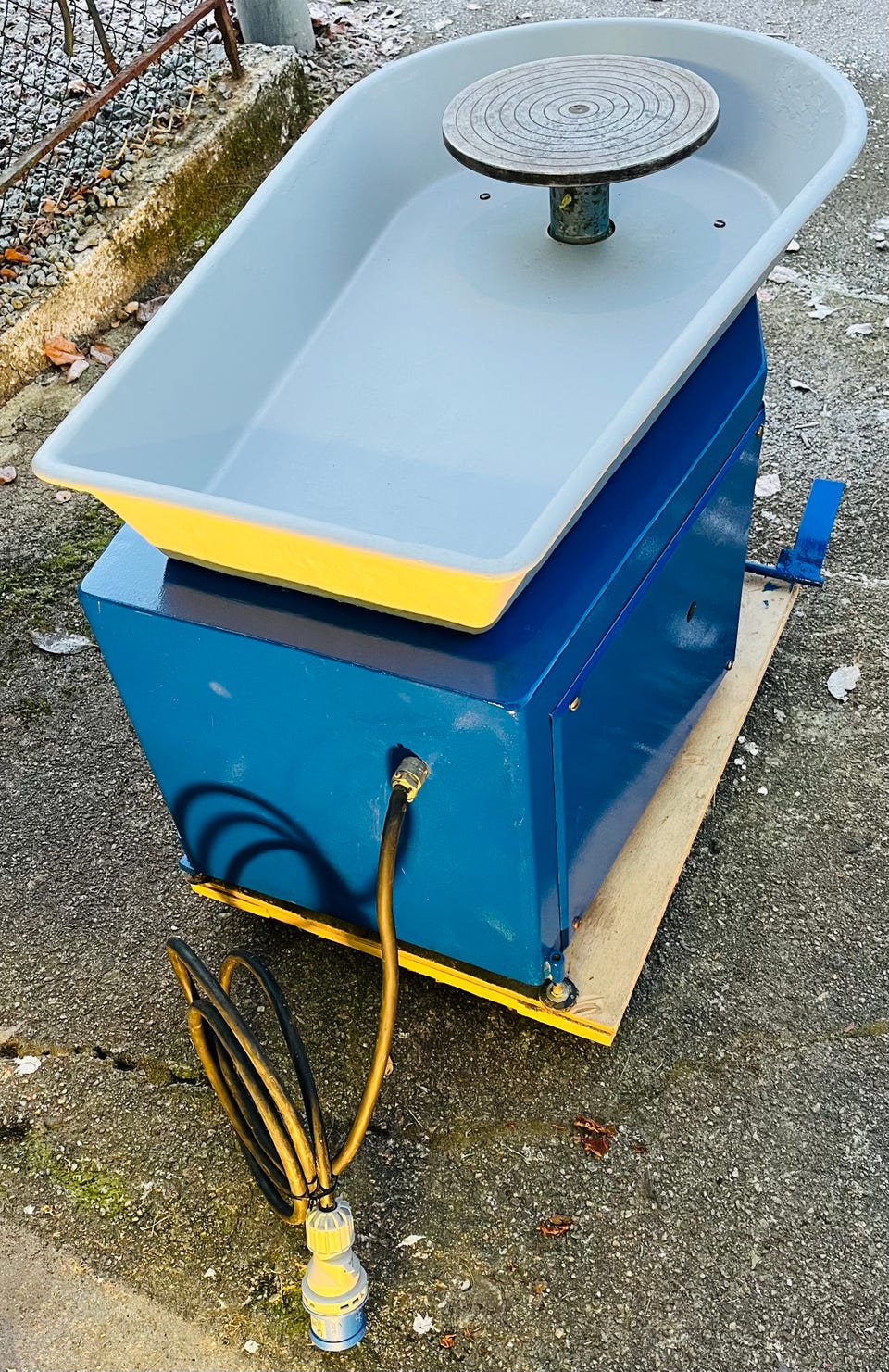
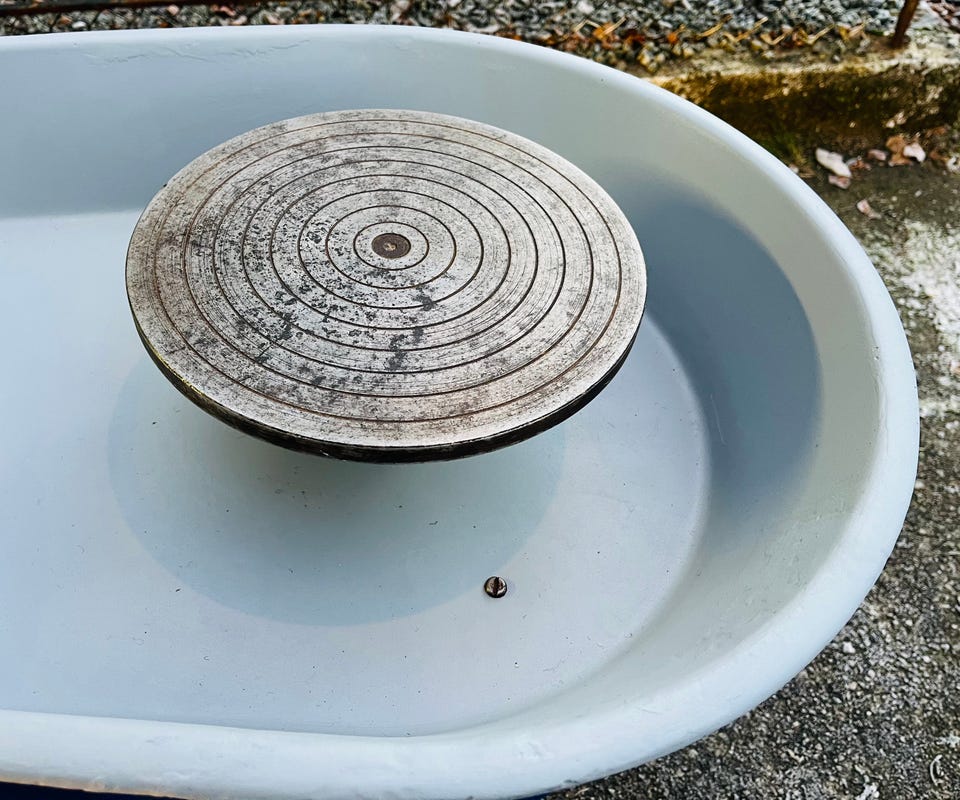
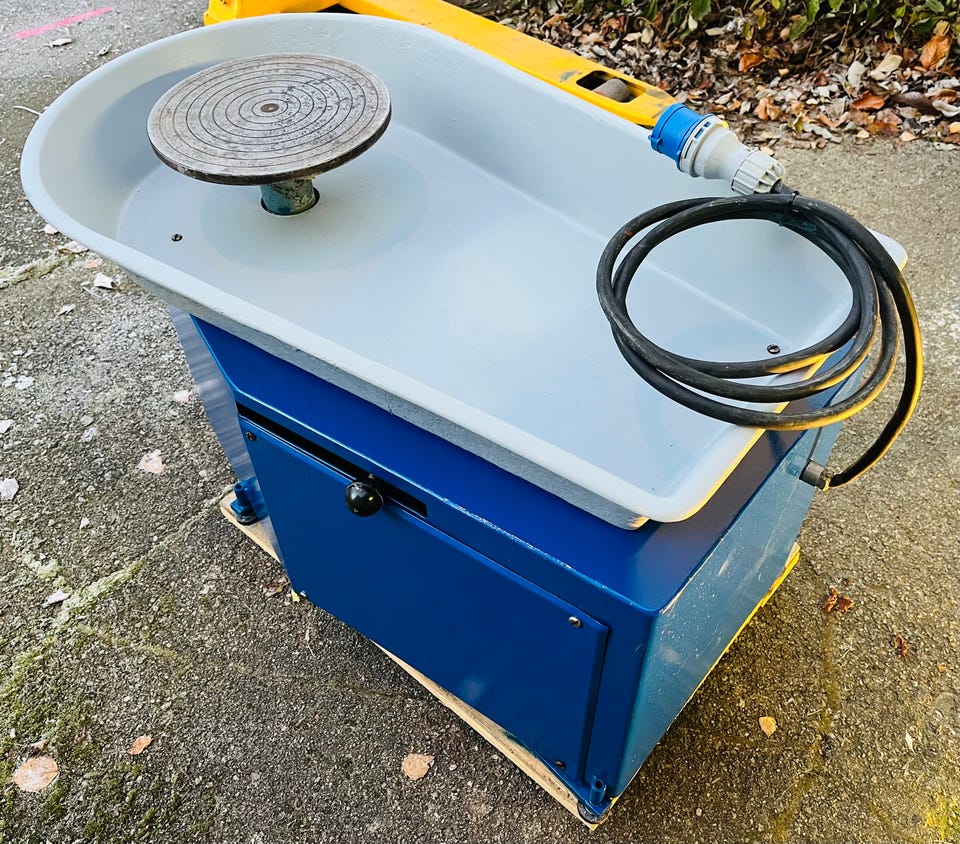
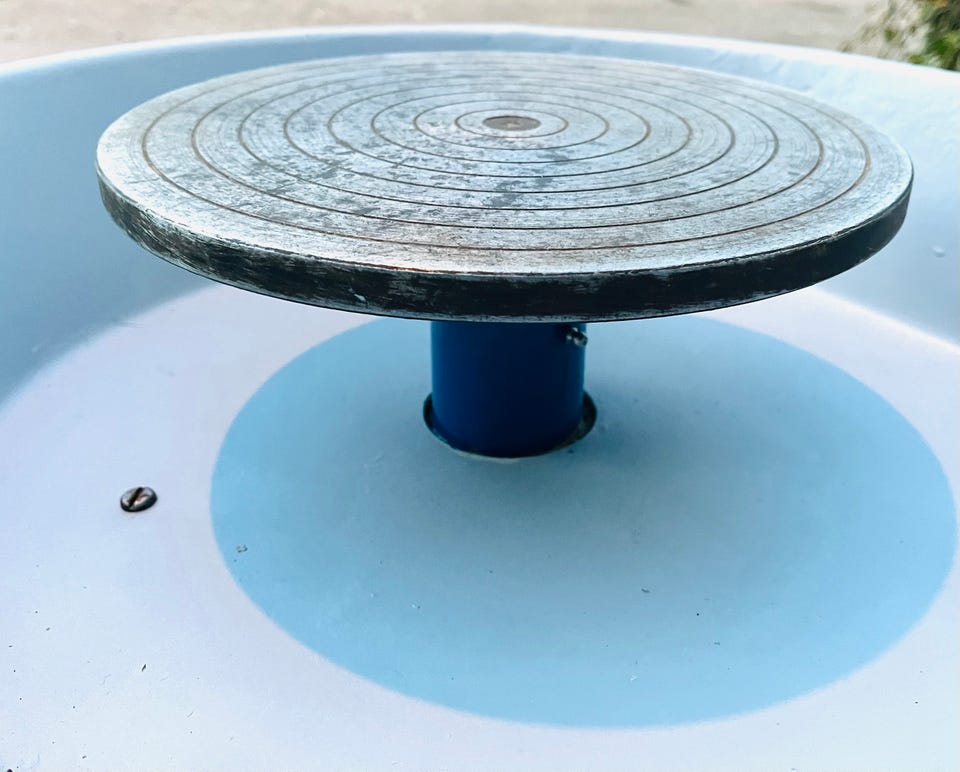
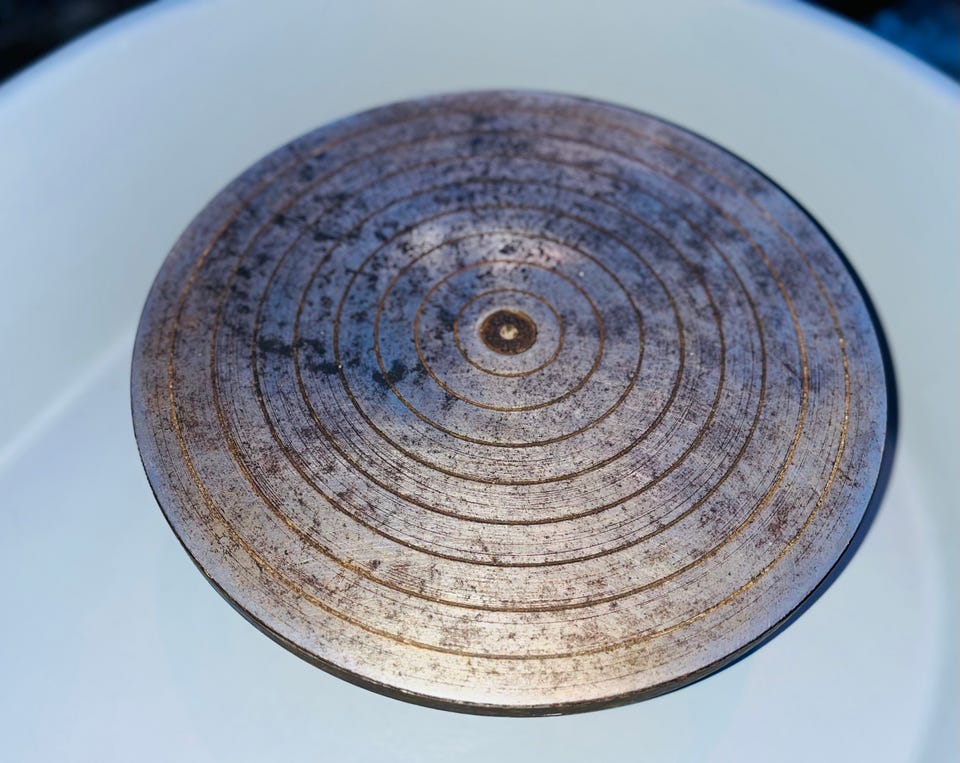
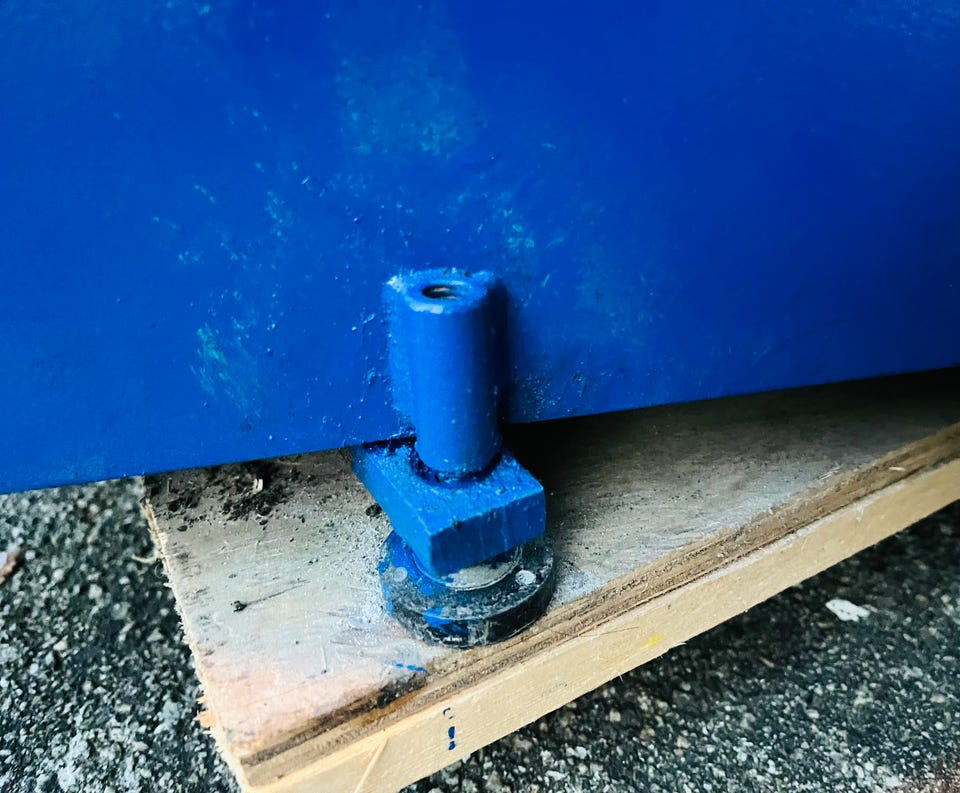
Stålramme og paneler. Skive-hode i stål. Plaske-brett i glassfiber resin
Dreieskive Størrelse: Cirka. 94 cm lang / 56 cm brei / 55 cm høy / Dreieskive: 28cm Ø
Vekt: Cirka. 50 kg.
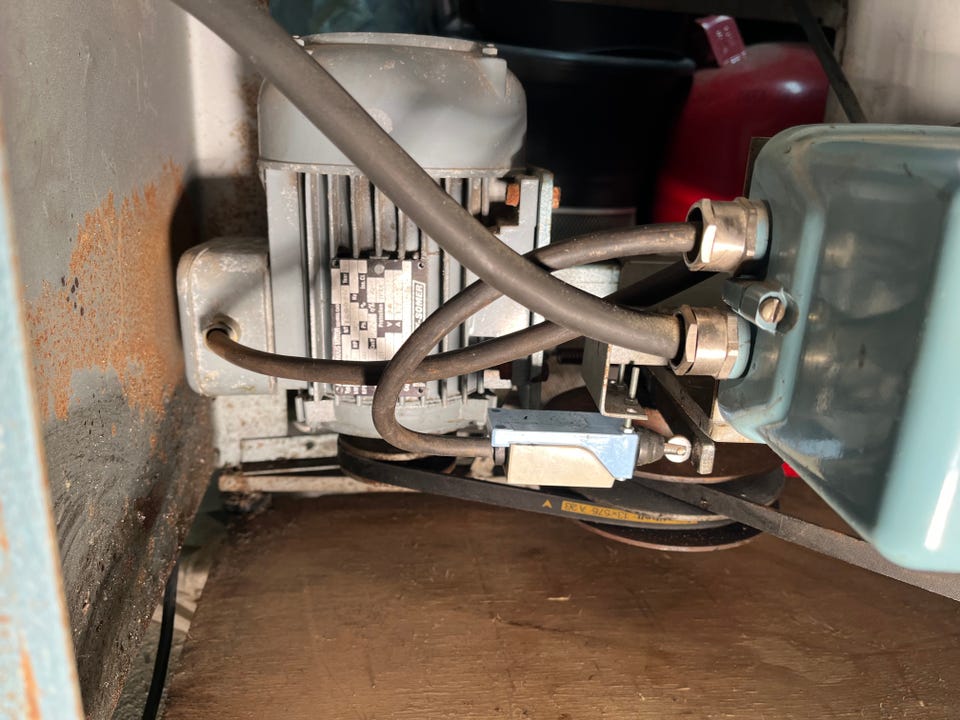
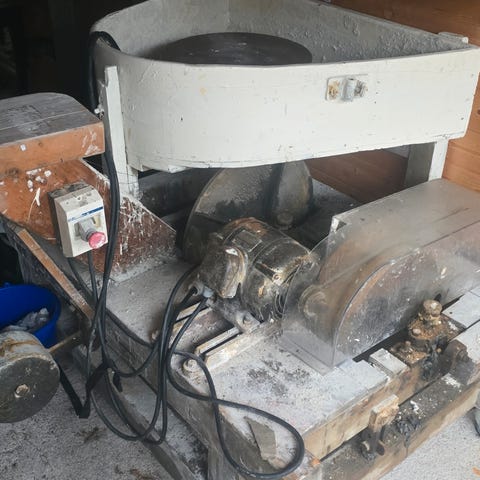
Detaljer om motor til dreieskive (Se bilder):
Leroy Somer: Asynchronous Motor Squirrel Cage:
Fransk Produsert. Leroy Somer er en del av Nidec / Shimpo
Motor Nr: 749026
Motor Type: HR5 71
Motor År: 1974
Hestekrefter: 0.5
RPM: 1500
Fase: 3
Volt: 220
Amp: 1.9
Kilowatt: 0.37
Transport tralle er med hvis ønskelig.
Har varebil, så kan tilbyr levering i Stavanger -Sandnes regionen / Rogaland.
----------
Dette er en interessant dreieskive, ettersom den faktisk ikke har noe produsentnavn på seg, men KI har hentet ut følgende informasjon (for tekniske nerder!) basert på bildene:
” This is a mid-1970s European commercial pottery wheel—most likely a vintage French or German studio model (such as a BAU Vallauris or Rohde / Nabertherm mechanical variable-speed wheel)—built around a 1974 Leroy-Somer 3-phase motor.
Because many European pottery equipment makers in the 1970s used unbranded sheet-metal housings and molded fiberglass/ABS splash trays without external badges, identifying the exact manufacturer requires checking the internal drive mechanism.
1974 Industrial Three-Phase Motor. The nameplate confirms the motor is a Leroy-Somer HR5 71 built in 1974, rated at 0.37 kW (0.5 HP), 1500 RPM (4-pole), 3-phase (220V / 380V), with IP44 splash protection.
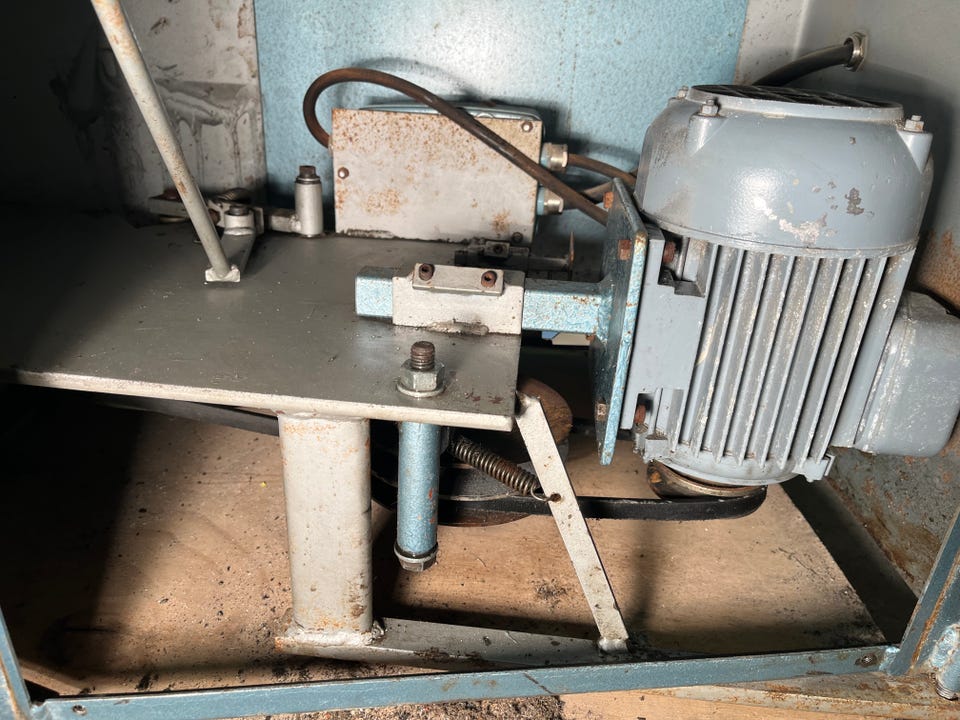
Mechanical Speed Control. Because 1970s three-phase motors ran at a fixed 1500 RPM (electronic VFDs were not yet used on pottery wheels) and the wheel has a side-mounted foot pedal arm, it uses a mechanical variable-speed drive—typically a friction cone drive or variable-pitch belt pulley (variator) inside the blue steel cabinet.
European Studio Build. The long, rectangular molded splash basin with an offset wheelhead, heavy blue-painted steel cabinet, and blue CEE 3-phase plug are hallmarks of 1970s–1980s French, German, or Swiss institutional/school wheels (such as BAU, Céradel, or early Shimpo/Continental OEM imports).
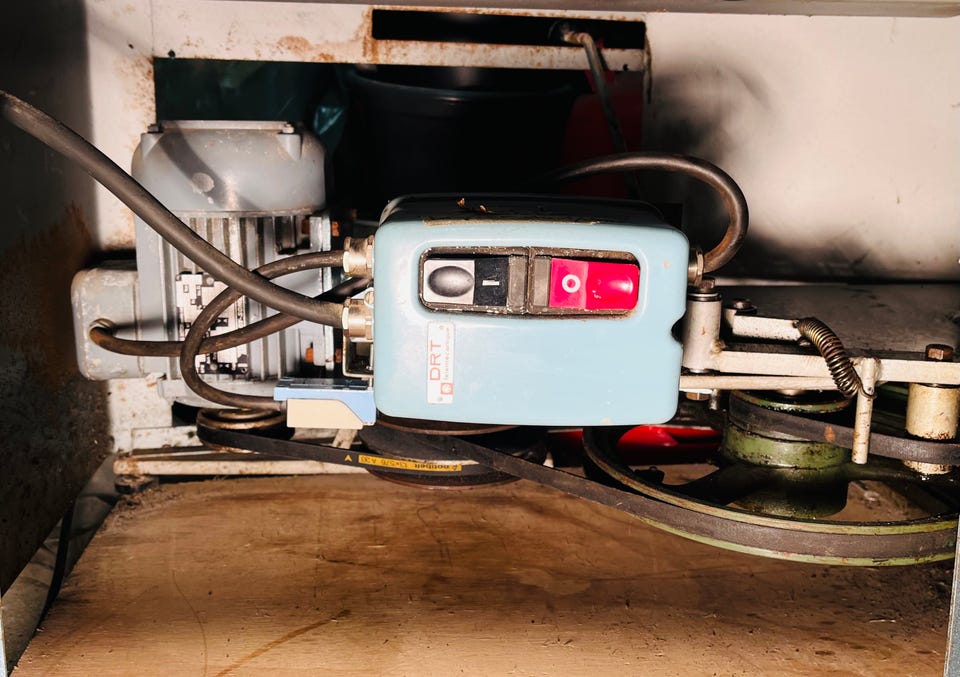
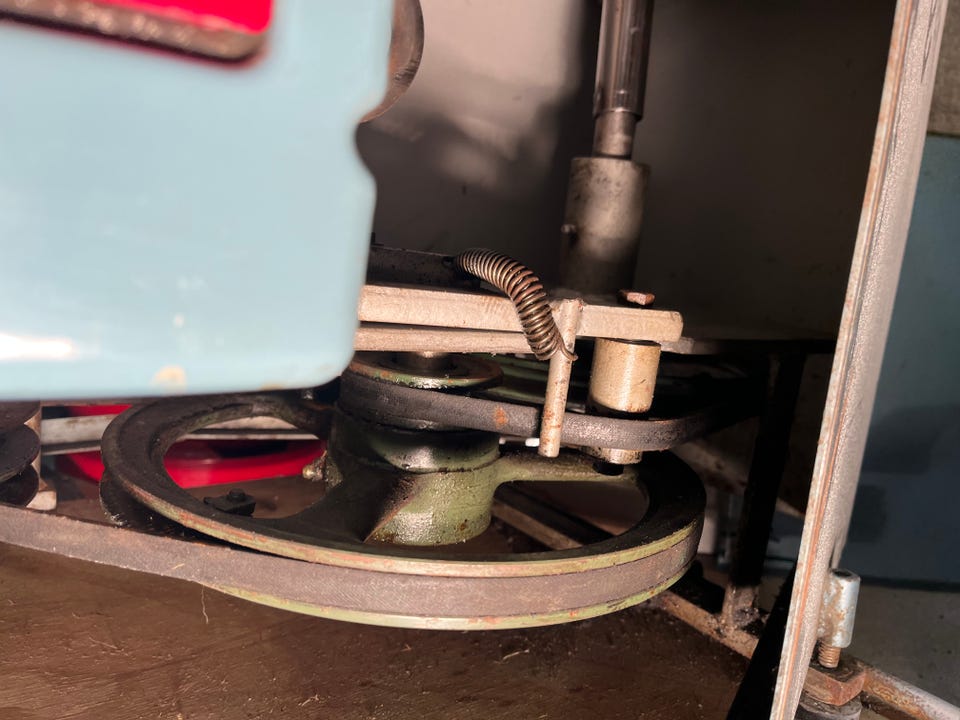
The pottery wheel uses a classic French/European mechanical variable-pitch belt variator (double-belt expanding pulley system) paired with a Telemecanique DRT motor starter, which is characteristic of 1970s French institutional/school wheels (such as early Céradel, Solargil, or BAU workshop builds).
Because the entire speed-control mechanism is 100% mechanical and uses standard off-the-shelf industrial components, it is straightforward to maintain and service without needing brand-specific OEM parts.
How the drive & electrical system works
Two-Stage Variable-Pitch Belt Drive.
Stage 1 (Motor to Variator): The Leroy-Somer motor drives an expanding/contracting split pulley (the dual-sheave variator visible using an Optibelt 13x575 (A23) V-belt.
Stage 2 (Variator to Wheelhead): Pushing the foot pedal pivots the linkage arms and spring tensioner, forcing the middle floating plate of the split pulley up or down. That changes the effective diameter of both belt grooves simultaneously, smoothly stepping the speed up or down to the large green flywheel pulley under the wheelhead.
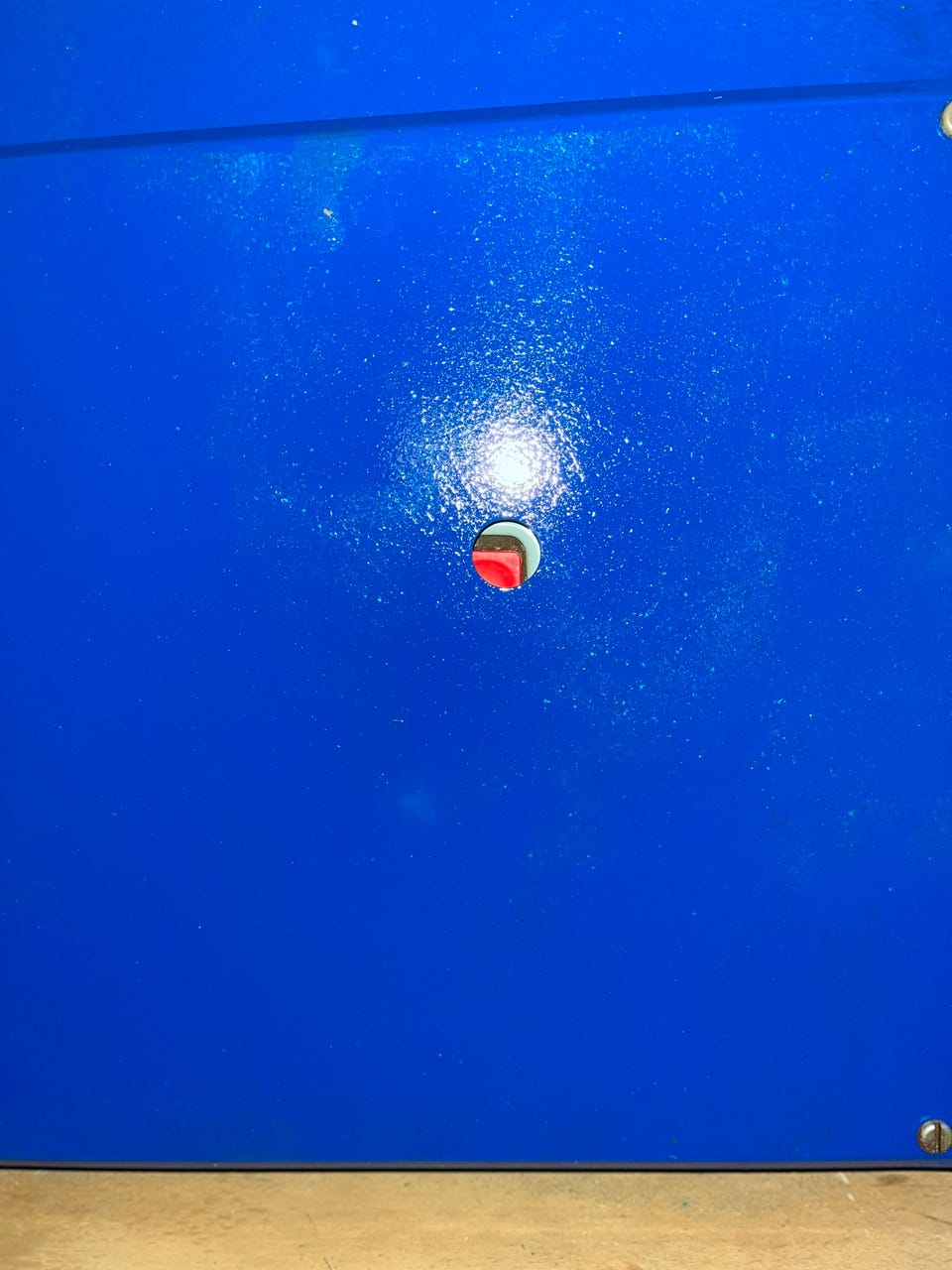
Telemecanique DRT DOL Starter. The blue box in the first interior photo is a classic 1970s French Télémécanique DRT direct-on-line magnetic motor starter with mechanical start (I) and stop (O) pushbuttons and built-in thermal overload protection.
Power Supply (3-Phase 220V vs. 380V/400V). Note the blue CEE 3-phase plug (blue 3P+E industrial plugs are wired for 230V 3-phase, which is still common in older Norwegian IT-grid workshops, whereas red CEE plugs are 400V 3-phase). Your motor nameplate supports both 220V Delta (1.9 A) and 380V Star (1.1 A).
Maintenance & Upgrade Tips
Belt Replacement. The primary belt is clearly stamped Optibelt 13x575 (A23)—a standard 13 mm wide (A-section) V-belt available at any industrial bearing or automotive supplier. Check the second belt's stampings before ordering a spare set.
Variator Lubrication. Keep the central sliding hub of the split variator pulley lightly greased so the middle flange slides smoothly when you press the pedal without sticking or chattering.
Single-Phase Conversion (If Needed).
If you only have standard 230V single-phase outlets available, you can wire this exact 0.37 kW motor to a small 0.37 kW or 0.75 kW 1-phase-to-3-phase VFD (inverter) set to 220V Delta—giving you both single-phase compatibility and optional electronic speed trim alongside the foot pedal. ”
Brukerprofil

Du må være logget inn for å se brukerprofiler og sende meldinger.
Annonsens metadata
Sist endret: 24.11.2026 kl. 22:39 ・ FINN-kode: 481706263