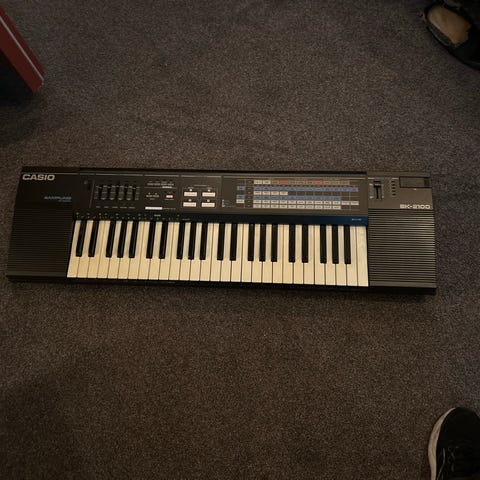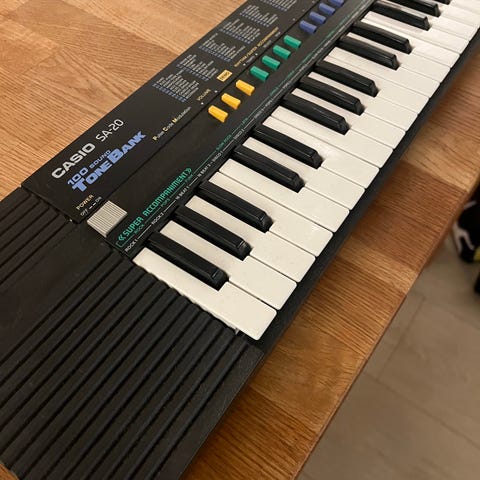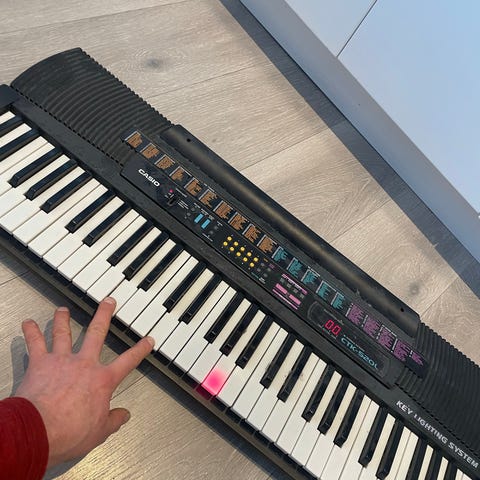

Bildegalleri
(1/4)
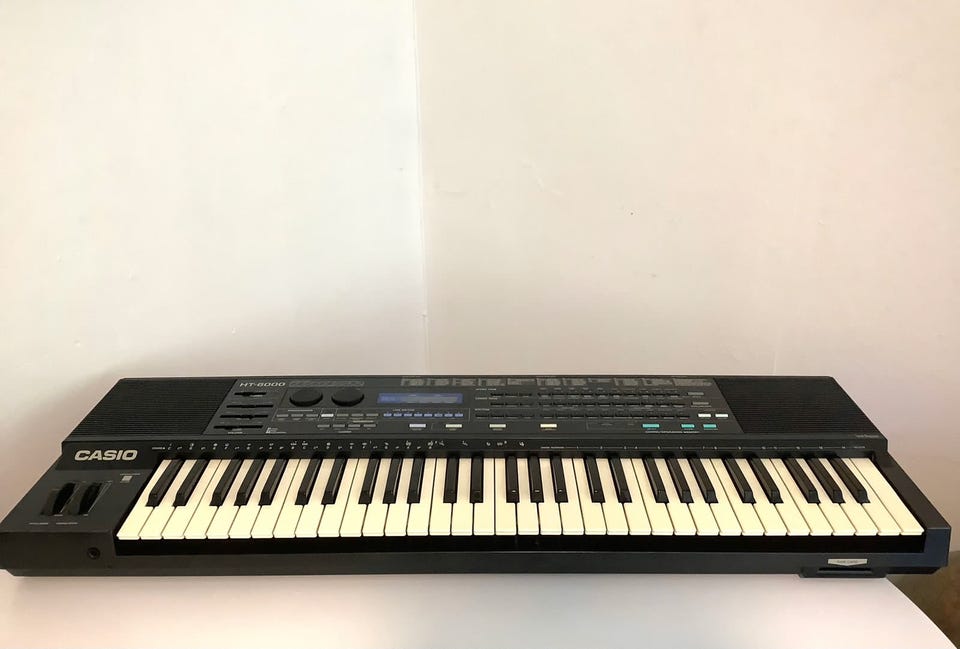
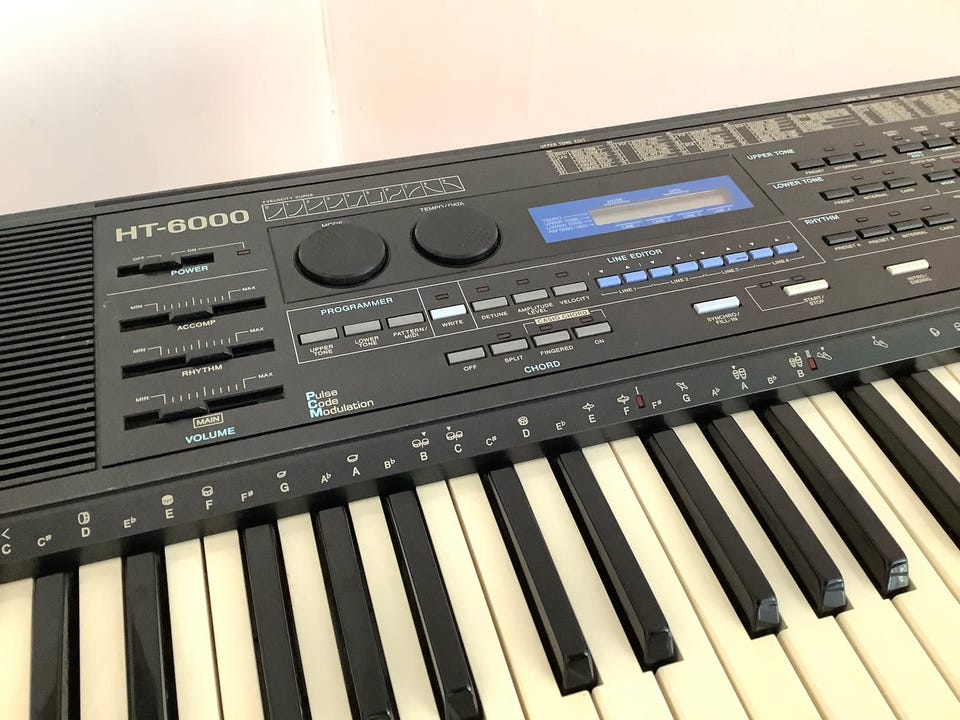
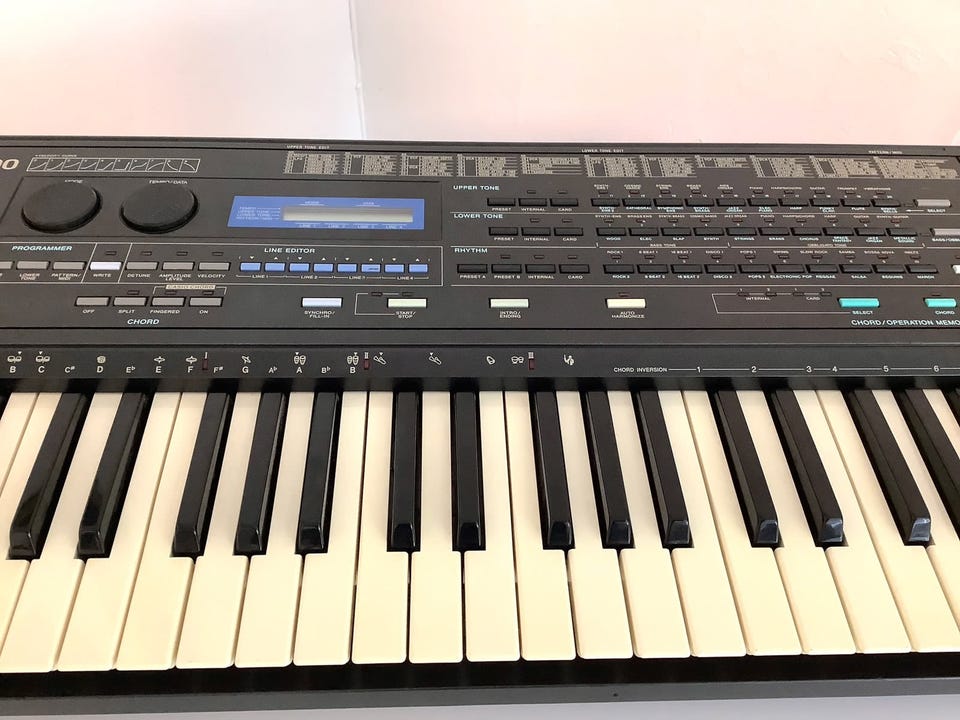
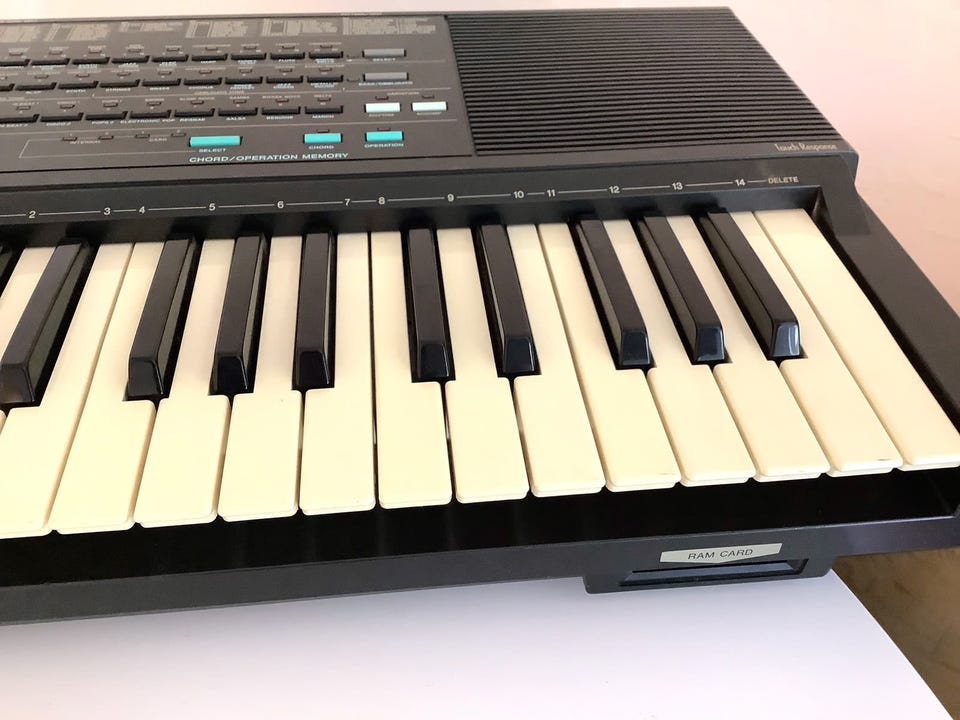
Casio HT 6000 vintage keyboard
Til salgs
1 495 kr
Be om at selgeren sender med Fiks ferdig! Det er trygt, raskt, og du får varen levert til adressen din. Les mer
Beskrivelse av varen
Tilstand: Pent brukt - I god stand
Casio HT 6000
Toppmodell analog digital hybrid synth fra 1987
🎵 Lyd demo:
https://www.youtube.com/watch?v=xteFj0Zkbsk&list=RDxteFj0Zkbsk&start_radio=1
Kosmetisk endel bruksmerker
Teknisk i god stand, har ikke funnet noen feil utenom at lyd ikke kommer fra de innebygde høyttalerne man må bruke phone eller audio ut.
Helst hentes da den veier like mye som en tanks
Fra wiki:
SD synthesis is used in seven Casio synthesizers and home keyboards released in 1987 and produced until 1991, when Casio exited the synthesizer market completely and focused solely on pure consumer keyboards. Due to some programming limitations plus Casio's poor marketing, the SD synths never gained wide popularity and are now fairly rare in the second-hand marketplace (which adds to their charm, according to some).
There still exists a small but devoted fanbase who insist that SD synthesis, particularly as expanded in the high-end model HT-6000, was overlooked and highly underrated and today rare.
The HT-6000 introduced for the HT line some of the more high-end features previously only included by Casio in the CZ line, such as ring-modulation, detuning, key-follow, and initial-touch (which, among the CZ's, was only found on most advanced model, the CZ-1). The HT-6000 used an impressive 4 DCOs per voice (vs. 1 on the other SD synths, and 2 on the CZ synths). It had 64 DCO waveforms to choose from (32 basic, 16 with noise [white or metallic], and 16 with ring modulation). It had 8 independent VCF filters (1 per voice, vs. 1 per channel), and added key-follow parameters for both the DCA and VCF. The DCA also added attack and decay curves (acute and obtuse). It also added an independent ADSR envelope for noise.
The 4 DCOs each use the same waveform, VCF and DCA envelopes, but can have separate tunings, velocity response curves, and relative DCA envelope depths. Stacking the oscillators with detunes allowed the creation of flange and chorus effects, fat "super saws", and the creation of dual-note or even triad and 4-note leads. The filter cutoffs could be set to respond to velocity which added some expressiveness. Because each oscillator could have separate tuning and velocity responses, it was also possible to have the pitch change according to pressure, if one of two differently tuned oscillators had an inverse velocity curve. Ring modulation used oscillator 4 to modulate oscillator 3, and allowed the creation of metallic and pulse sounds, lower bass harmonics and even distortion.
Like the HZ-600 but unlike the others, the HT-6000 had a complete parameter list silkscreened on the outer panel, somewhat alleviating the need for a manual. In terms of "home keyboard" features the HT-6000 improved the auto-accompaniment versus the previous HT's by including some additional PCM drum sounds, an additional accompaniment part ("obbligato"), 4 bass patches (versus one), additional chord inversions (including more tonic, suspended and subdominant triads), and the addition of "Intro" and drum and chord "Variation" for auto-rhythms.
Analog synth
Retro synth
Analog synt
Retro synt
Synthesizer
Keyboard
Vintage keyboard
Retro keyboard
80 tallet
Analog lyd
Casio
Brukerprofil

Du må være logget inn for å se brukerprofiler og sende meldinger.
Annonsens metadata
Sist endret: 19.10.2026 kl. 10:24 ・ FINN-kode: 479075747