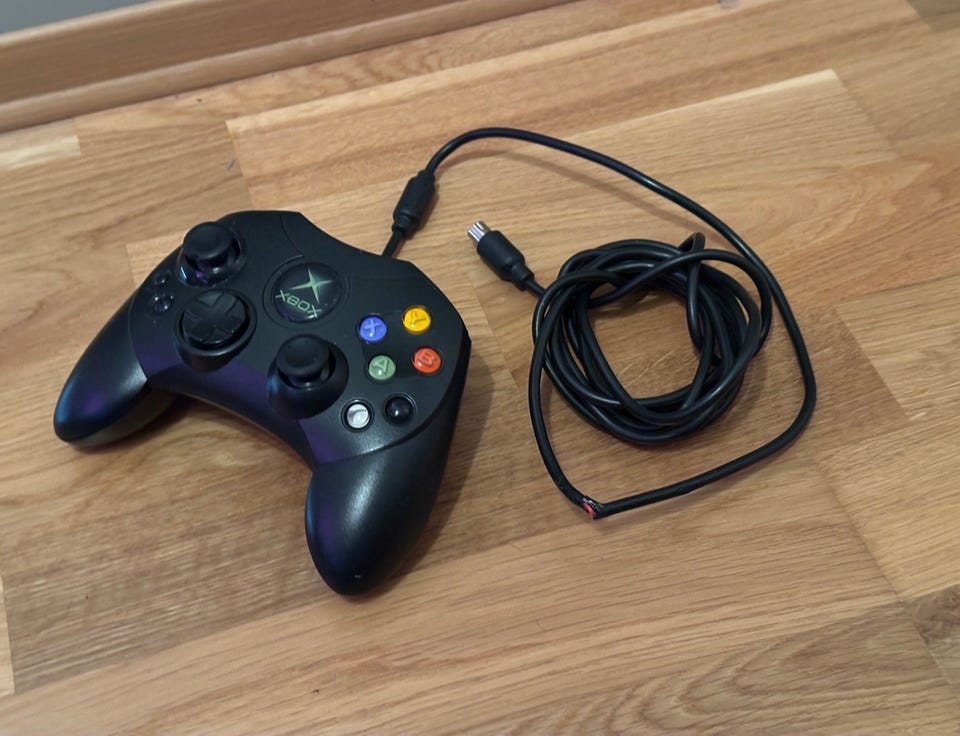
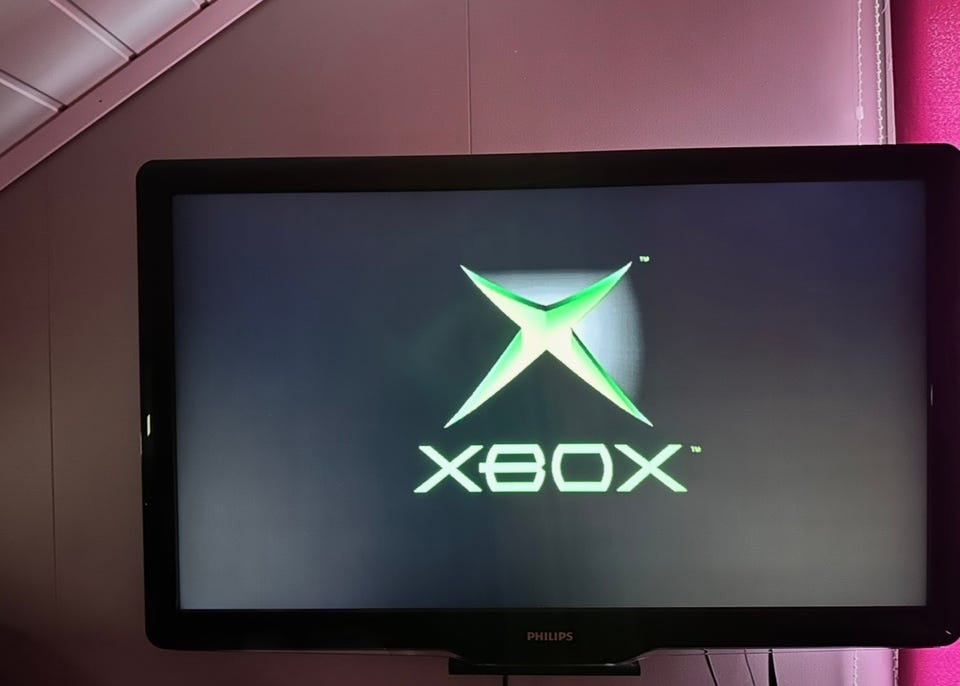
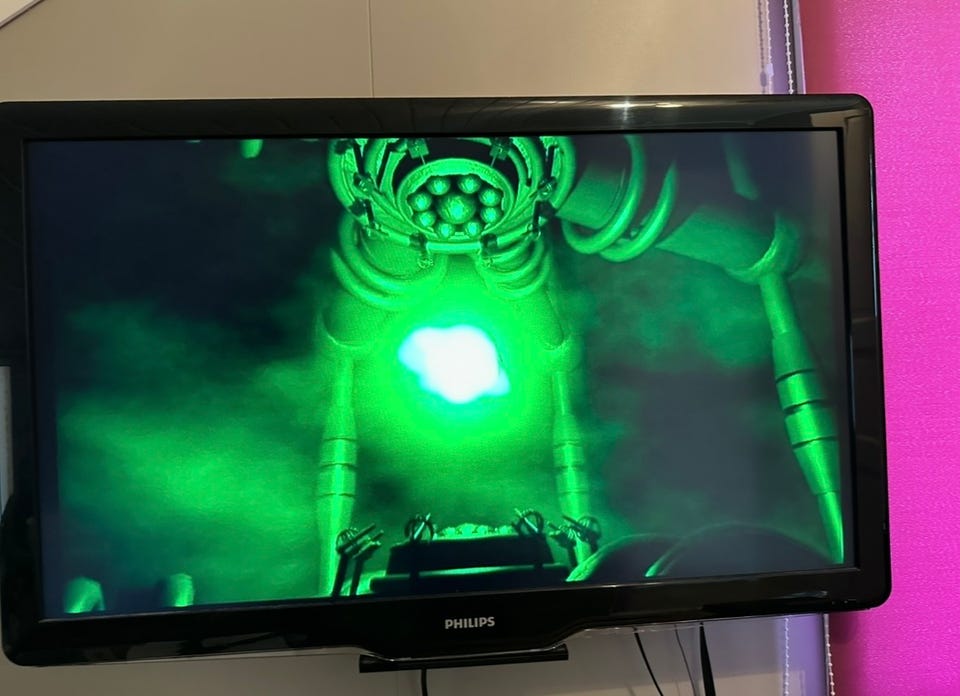

Bildegalleri
(1/9)
Xbox original
Til salgs
490 kr
Be om at selgeren sender med Fiks ferdig! Det er trygt, raskt, og du får varen levert til adressen din. Les mer
Beskrivelse av varen
Plattform: Xbox
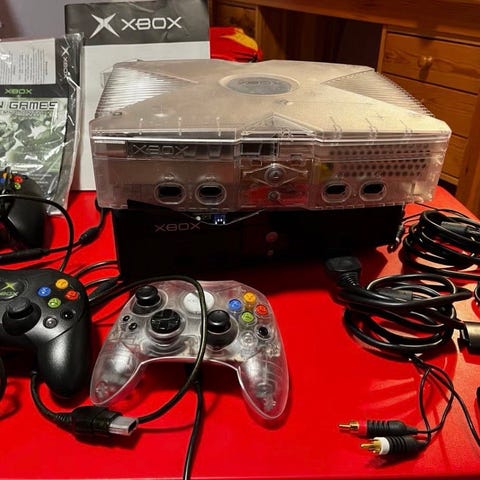
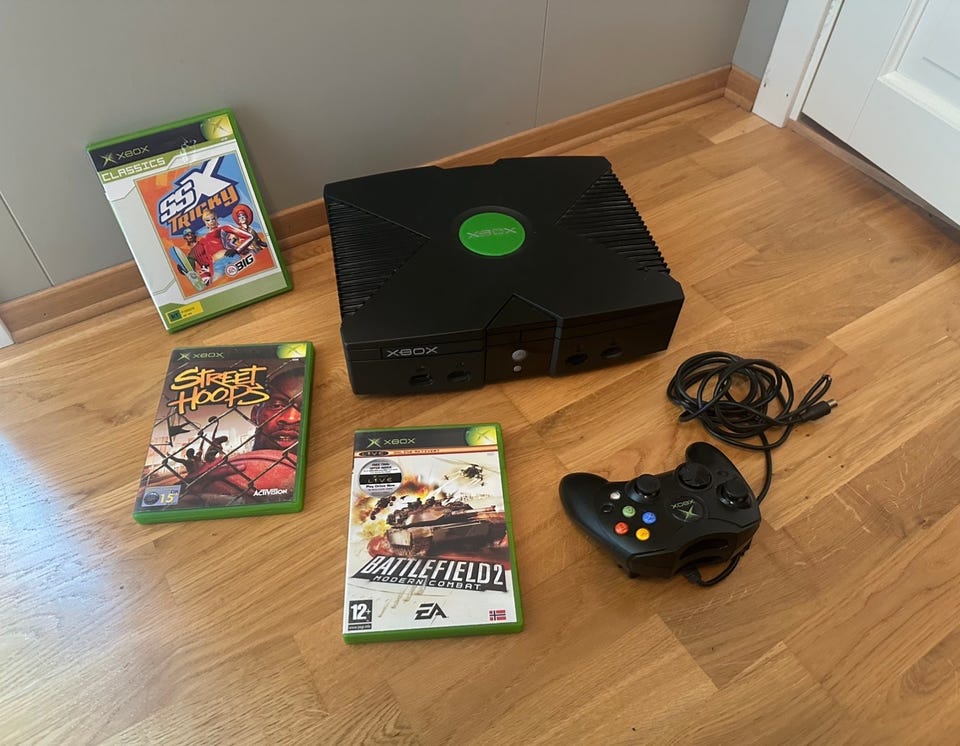
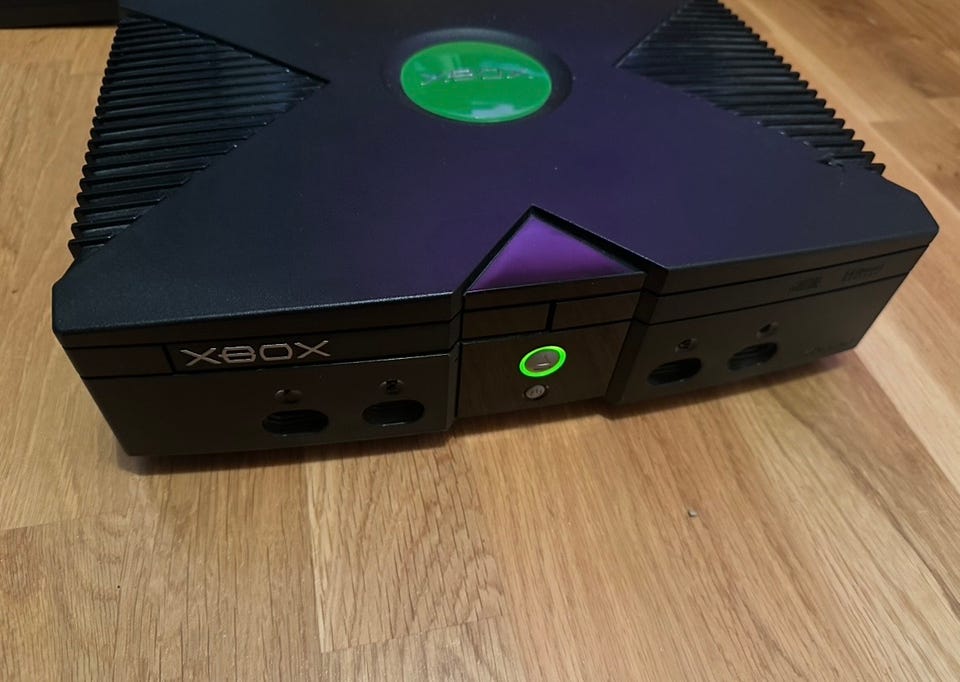
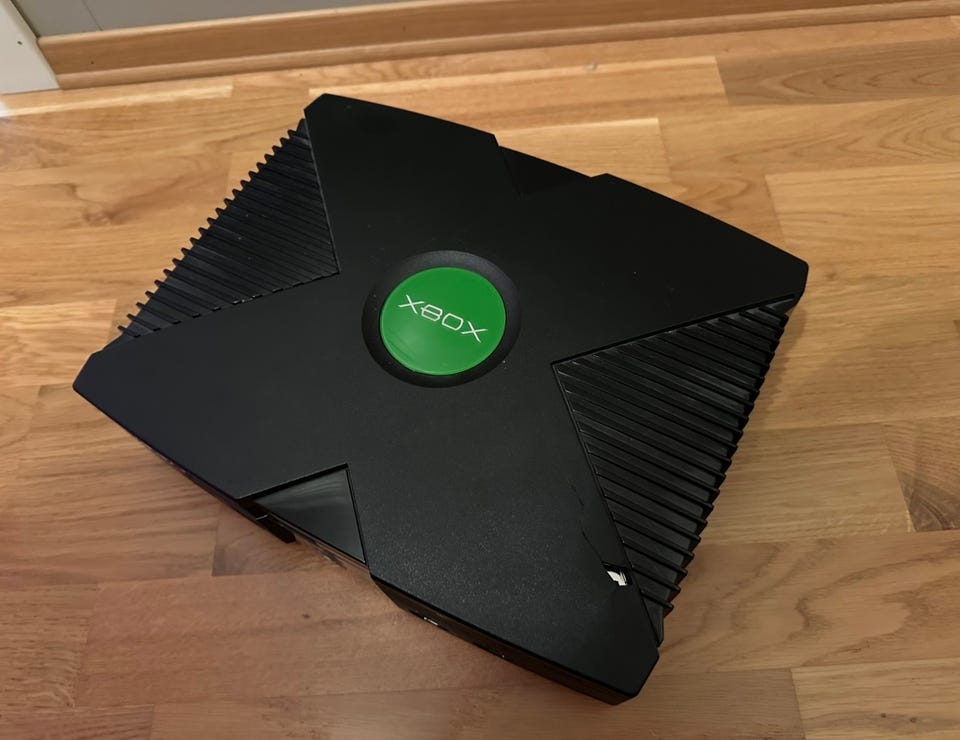
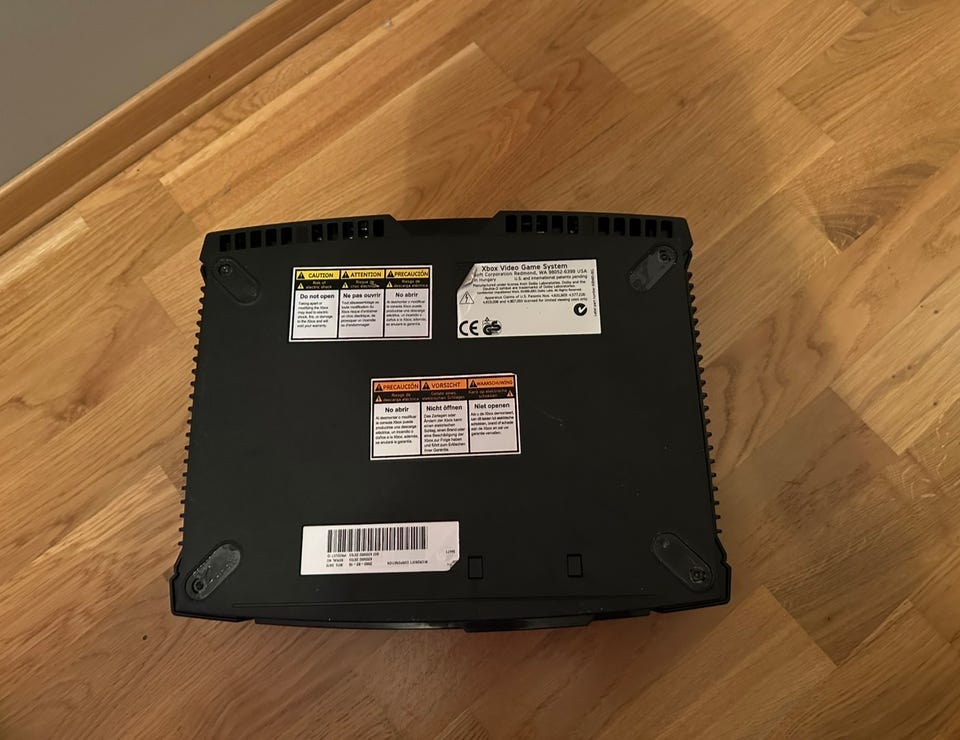
Selger en original Xbox, selges rimelig kr 490,-
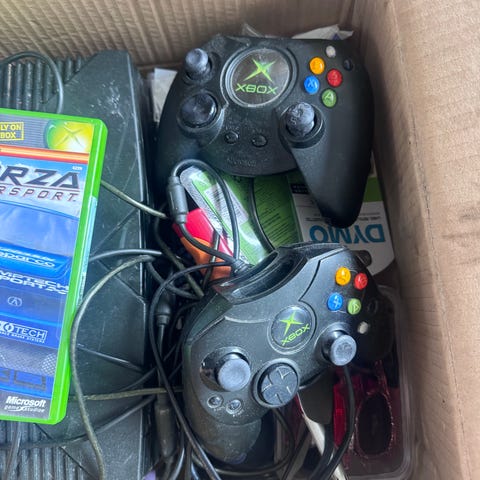
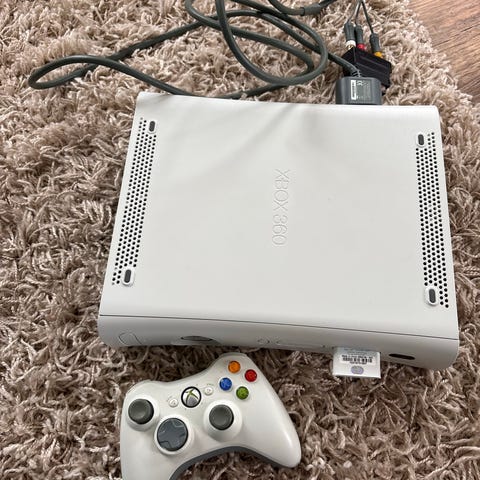
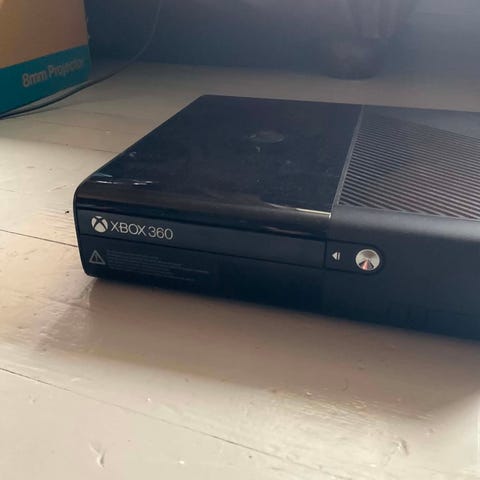
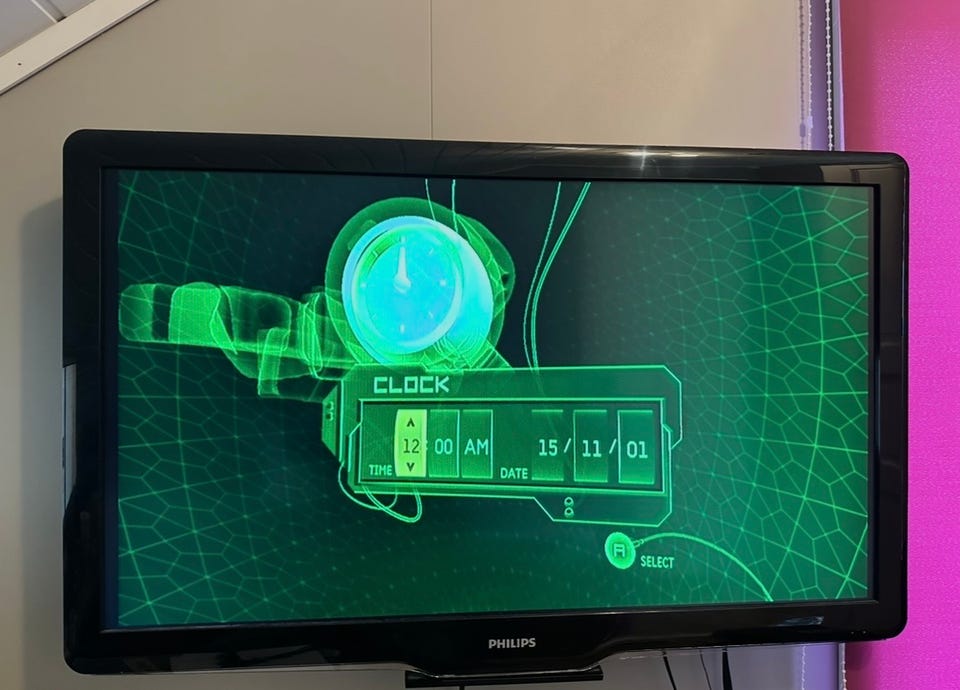
Det er det som er på bildene som medfølger, er ikke med noen ledninger. Har testet at den slår seg på, men ikke noe mer en det, ingen garantier. Ledninger brukt til testing medfølger ikke.
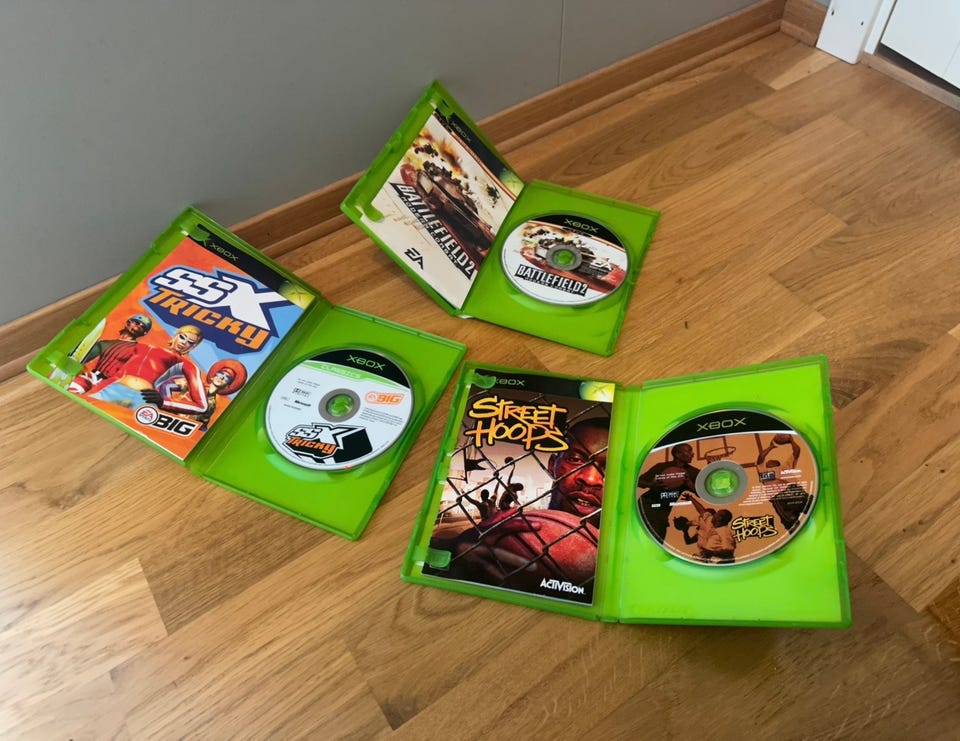
Det medfølger en håndkontroll, men den er mangelfull og har dårlig ledning. Er med 3 stykk spill, har riper så vet ikke om dem fungerer.
Kan hentes 7584 Selbustrand, eller sendes frakt med sporing kr 140,-
søkeord / wiki : xbox er Microsofts første spillkonsoll. Den ble lansert 15. november 2001 i USA. Neste generasjon av denne konsollen, Xbox 360, ble sluppet 22. november 2005. Nyeste generasjon av Xbox er Xbox One X. Maskinvare Microsoft bygde Xbox med standardkomponenter, slike som brukes i vanlige PC-er. De fleste andre spillkonsoller bruker spesiallagede komponenter. Ytelsen er bedre enn de to argeste konkurrentene, Sonys PlayStation 2 og Nintendos GameCube. Modifikasjon Som andre spillkonsoller inneholder Xbox en kopisperre som blant annet skal hindre at eieren bruker piratkopier av spill i maskinen. Dette er en nokså enkel sperre, som kun er software-basert. Man kan enkelt nok enten sette inn en ny BIOS eller omprogrammere den gamle for å fjerne disse sperrene. Utfordringen ligger i å modifisere firmwaren som ligger i den originale BIOS slik at maskinen vil godta kopierte spill, uten å miste alle funksjonene en umodifisert maskin har. Det er svært vanlig å installere Xbox Media Center på modifiserte konsoller. Det er også vanlig å skifte ut den originale harddisken med en større, da den kan skiftes ut med en hvilken som helst annen 3,5" IDE-harddisk. De første modchip-ene til Xbox kom i mai/juni 2002. TSOP Ved hjelp av å utnytte en feil man finner i noen kommersielle spill er det mulig å overskrive den originale BIOS med en hacket firmware. Denne metoden kalles populært TSOP flash. Ulempen med denne løsningen er at du ikke har muligheten til å starte opp maskinen med den originale firmwaren uten å overskrive BIOS igjen. Modchip På hovedkortet i en Xbox finner man en såkalt LPC-header. Her kan man enkelt lodde inn en såkalt modchip som inneholder en erstatnings-BIOS. Ofte følger det med et kit for å koble modchip-en til knappene på fremsiden av konsollen, slik at man ved å for eksempel holde på-knappen inne i tre sekunder ved oppstart starter opp den originale BIOS isteden. I de nyeste versjonene 1.6 og 1.6b er noen av banene som går til LPC-headeren brutt. Man må da gjøre en såkalt «LPC-rebuild» for å kunne installere en modchip. Dette vanskeliggjør installasjonen noe. Xbox Live Man kan ikke bruke Xbox Live, altså spille online, med en modifisert Xbox. Du kan imidlertid «slå av» de fleste modchips, men du er da nødt til å ha originalspillet. Problemet er forøvrig at dersom en bruker bare én gang glemmer å slå av modchip-en når hen skal spille Xbox Live, vil en sperre maskinen fra systemet for alltid. Dette er det heller ingen løsning på per i dag, bortsett fra at man kan omprogrammere maskinen til å gi en annen id-kode til Xbox Live. Denne koden må tas fra en annen maskin, og dette er derfor bare aktuelt om man kjenner en annen som har en Xbox hen ikke bruker på Xbox Live. Støtte for Xbox Live ble avviklet 15. april 2010. The Xbox is a home video game console developed and marketed by Microsoft. It was released on November 15, 2001, in North America, followed by Australia, Europe, and Japan in 2002.[3] It was the first major American-produced console since the Atari Jaguar in 1993, and as a sixth-generation console, competed with Sony's PlayStation 2 and Nintendo's GameCube. Microsoft began developing the Xbox in response to the impending launch of the PlayStation 2, which Microsoft CEO Bill Gates saw as threatening the Windows PC business due to its support for CD-ROM and DVD playback. Whereas most previous game consoles used specially designed hardware, the Xbox was built around standard PC components. Its hardware includes an Intel Pentium III CPU and an Nvidia GeForce 3-based GPU, while the software uses variations of Windows 2000 and DirectX.[9] The Xbox was the first console to feature a built-in hard disk.[12][13] The Xbox supports broadband connectivity to the internet via an integrated Ethernet port; Microsoft launched Xbox Live, a fee-based online gaming service, in 2002.[14] The Xbox had a record-breaking launch in North America; aided by the popularity of the launch game Halo: Combat Evolved, Microsoft sold 1.5 million Xboxes before the end of 2001. Cumulative sales reached 24 million, including 16 million in North America. However, Microsoft lost over $4 billion on the Xbox, unable to make a steady profit due to the manufacturing price being far more expensive than its retail price.[15][16][17][18][19] The Xbox outsold the GameCube and Sega's Dreamcast, but was vastly outsold by the PlayStation 2.[20] It underperformed outside of the Western market; particularly, it sold poorly in Japan due to its large size and an overabundance of games marketed towards American audiences.[21] Microsoft discontinued the Xbox in 2006,[6][7] and closed its online services in 2010. The Xbox was the first in the Xbox line of consoles, followed by the Xbox 360 in 2005, the Xbox One in 2013, and the Xbox Series X/S in 2020. All subsequent Xbox consoles are backward compatible with select original Xbox games. The popularity of the Xbox's blockbuster games such as Halo 2 (2004) contributed to the popularity of first-person shooters and online console gaming.[22] History Creation and development Before the Xbox, Microsoft had found success publishing video games for its Windows PCs, releasing popular titles such as Microsoft Flight Simulator and the massively successful Age of Empires after the creation of DirectX, the application programming interface (API) that allowed for direct access of the computer hardware and bypassing Windows.[23] However, the company had not entered the home console market of video games, which was dominated at the time by Sony's PlayStation. Sony was working on its next video game console, the PlayStation 2 (PS2), announced officially to the public on March 2, 1999, and intended for the system to act as a gateway for all types of home entertainment. Sony presented a vision where the console would ultimately replace the desktop computer in the home.[24] Microsoft CEO Bill Gates saw the upcoming PS2 as a threat to Microsoft's line of Windows PCs, worrying that the all-encompassing system could eliminate consumer interests in PCs and drive them out of the market. With video games rapidly growing into a massive industry, Gates decided that Microsoft needed to venture into the console gaming market to compete with Sony. Previously, Sega had developed a version of Windows CE for its Dreamcast console to be used by game developers. Additionally, Gates had directly approached Sony CEO Nobuyuki Idei before the public announcement of the PS2 regarding letting Microsoft develop programming software for the console. However, the offer was declined by Idei in favor of having Sony create proprietary software.[25] Microsoft had also attempted to meet with Hiroshi Yamauchi and Genyo Takeda of Nintendo to potentially acquire the company, but Nintendo declined to go further.[24][26] In 1998, four engineers from Microsoft's DirectX team—Kevin Bachus, Seamus Blackley, Ted Hase and DirectX team leader Otto Berkes[27]—began discussing ideas for a new console which would run off Microsoft's DirectX technology.[28] Nat Brown, the Windows Software Architect at Microsoft, would also become a regular contributor to the project after meeting Hase in November 1998. The project was codenamed "Midway," in reference to the Battle of Midway during World War II in which Japan was decisively defeated by American forces, as a representation of Microsoft's desire to surpass Sony in the console market.[25] The DirectX team held their first development meeting on March 30, 1999, in which they discussed issues such as getting a PC to boot at a quicker pace than usual.[25] The console would run off Windows 2000 using DirectX 8.1, which would allow PC developers to easily transition into making games for the console while also granting it a larger processing power than that of most other home consoles.[29] According to Blackley, using PC technology as the foundation for a video game console would eliminate the technological barriers of most home consoles, allowing game creators to expand further on their own creativity without having to worry about hardware limitations.[25][29][30] The 4 DirectX team members encountered disagreements with the Silicon Valley engineering team behind WebTV, which joined Microsoft after they purchased the rights to the device. Microsoft executive Craig Mundie wanted the project to be led by the WebTV team, who believed the console should be built from the ground-up as an appliance running off Windows CE; however, the DirectX team were adamant about the idea of repurposing PC hardware components, such as a hard disk drive, arguing that they were cheaply manufactured and could easily be updated every year. The 4 developers gained the support of Ed Fries, the head of Microsoft's gaming division, who believed the use of a hard drive, in particular, would give the console a technical edge among competitors despite its high manufacturing cost. The two opposing teams pitched their arguments to Gates on May 5, 1999, at a meeting attended by over twenty different people. WebTV's team, among whom were Nick Baker, Dave Riola, Steve Perlman, and Tim Bucher, and their sponsor, Craig Mundie, made the case that creating an appliance would be far cheaper, highlighting that most consoles were generally sold at around $300. They also wanted to use a custom-made graphics chip, which could be shared across several different home devices. Conversely, Fries, vouching for the DirectX team, argued that using a PC hard drive would set Microsoft's console apart from competitors by allowing for the direct implementation of online access, an argument which Gates sided with. When Gates questioned if PC games could be effectively ported to the new console, Blackley explained that the machine would utilize DirectX hardware, meaning that they could be converted easily. Gates heavily favored this proposition over WebTV's, whose concept relied on Windows CE, a heavily stripped-down Windows variant that was not compatible with DirectX. As such, Gates sided with the DirectX concept and gave Berkes' team permission to create a new video game console. Despite this, WebTV would still play a part in the Xbox's initial launch.[25][24] Rick Thompson and Robert J. Bach were responsible for overseeing the Xbox's design. The DirectX team began constructing prototype consoles, purchasing several Dell computers and using their internal parts.[31] Initially, it envisioned that after designing the console, Microsoft would have worked with a third-party computer manufacturer to mass-produce the units. However, the early work showed that this would need to be something that Microsoft would have to produce themselves, making the prospect a far more costly operation; the name "Coffin Box" became associated with the project as there were fears the project would end careers at Microsoft.[24] Further, as a gaming console, they could not provide the direct Windows interface to users. While Thompson and Bach had warned Gates and Steve Ballmer about these large-scale changes from the initial proposal in late 1999, the matter came to a head at a February 14, 2000, meeting, informally referred to as the Valentine's Day Massacre, in which Gates furiously vented about the new cost proposal and massive changes in this console from what had been previously presented, since the Xbox appeared to marginalize Windows.[24] However, after being reminded that this was a product to compete against Sony, Gates and Ballmer gave the project the go-ahead along with the necessary marketing budget.[24] Another contentious point of design was the addition of Ethernet connectivity rather than simple support for dial-up networking. At this point, most consumer homes had access to Internet connectivity, but social networks had yet to be established which would later demonstrate the viability of this decision. The Xbox leads argued that with the planned Xbox Live functionality, the Ethernet port would help friends be able to play after they have graduated from schools and colleges and moved across the country.[24] Throughout the console's prototyping, Microsoft was working with AMD for the CPU on the system. According to Blackley, just prior to the system's reveal in January 2001, the Microsoft engineers opted to switch to an Intel CPU, a fact that had not yet been communicated to AMD prior to the reveal.[32] Among the names considered for the new console were a number of acronyms, including "Windows Entertainment Project" (WEP), "Microsoft Total Gaming" (MTG), "Microsoft Interactive Network Device" (MIND), and "Microsoft Interactive Center" (MIC).[33][34] Also among the names considered was "DirectX Box", referring to the system's reliance on Direct X. At one point, Hase jokingly came up with the names "XXX-Box" and "DirectXXX-Box" as a nod to the system's higher volume of adult content compared to Sony or Nintendo's consoles.[35] "DirectX Box" was quickly shortened to "Xbox" through an e-mail conversation, and was ultimately favored by the development team, though a number of spelling variants were tossed around, such as xBox, XboX, and X-box.[33][35] Microsoft's marketing department did not like this name, suggesting "11-X" or "Eleven-X" as alternatives.[33] During focus testing, the company put the name "Xbox" on the list of possible names simply to prove how unpopular the Xbox name would be with consumers. However, "Xbox" proved to be the more popular name on the list and was thus selected as the official name of the product.[36] When the physical design of the controller began, circuit boards for the controller had already been manufactured. Microsoft had asked Sony's supplier, Mitsumi Electric, for a similar folded and stacked circuit board design used in Sony's DualShock 2 controller, but the company refused to manufacture such a design for Microsoft. This led to the controller being bulky and nearly three times the size of Sony's controller. This initial controller design was never launched in Japan. The console instead launched with a smaller, redesigned version named "Controller S" that did use the more compact circuit board design.[37][38] As the development team began to tighten down the design of the Xbox, they got help from Flextronics not only in revising the design but in mass production, creating a factory in Guadalajara, Mexico, for this purpose. Early production units had a high failure rate of around 25%, which Flextronics repaired. Later iterations of the hardware design worked to eliminate these failures.[24] Initial announcement and content acquisitions Gates first publicly mentioned the Xbox in an interview in late 1999, stating that he wanted the system "to be the platform of choice for the best and most creative game developers in the world".[39] It was later announced officially by Gates in a keynote presentation at the Game Developers Conference in San Jose on March 10, 2000, showing off an early prototype build of the system and a series of demos showcasing its hardware.[25][40] The presentation and the new system were well-received, impressing developers with both the hard drive and the Ethernet port and appealing to them with the notion of easy-to-use development tools.[25] Microsoft began looking at a series of acquisitions and partnerships to secure content for the console at this time.[24] In early 2000, Sega's Dreamcast sales were diminishing, in part due to Electronic Arts' decision to bypass the console, and Sony's PlayStation 2 was just going on sale in Japan.[41][24] Gates was in talks with Sega's late chairman Isao Okawa about the possibility of Xbox compatibility with Dreamcast games, but negotiations fell apart over whether the Dreamcast's SegaNet online service should be implemented.[42] Microsoft also looked to acquire Electronic Arts, Nintendo, Square Enix, and Midway without success.[24] The company did achieve success in convincing developers at Bethesda Game Studios and Tecmo about the power of the Xbox over the PS2, lining up The Elder Scrolls III: Morrowind and Dead or Alive 3 as Xbox console-exclusives.[24] Around this same time, Microsoft announced it was rebranding its Games Group, which had been focused on developing games for Windows, to the Microsoft Games division to make titles for both Windows and the Xbox.[43] Microsoft began acquiring a number of studios to add to the division, notably Bungie in June 2000, shortly after their announcement of Halo: Combat Evolved. With Microsoft's acquisition, Halo switched from being a release for personal computers to being an Xbox exclusive release and as a launch time to help drive sales of the console.
Brukerprofil

Du må være logget inn for å se brukerprofiler og sende meldinger.
Annonsens metadata
Sist endret: 3.9.2026 kl. 12:24 ・ FINN-kode: 473864557