Bildegalleri
(1/11)
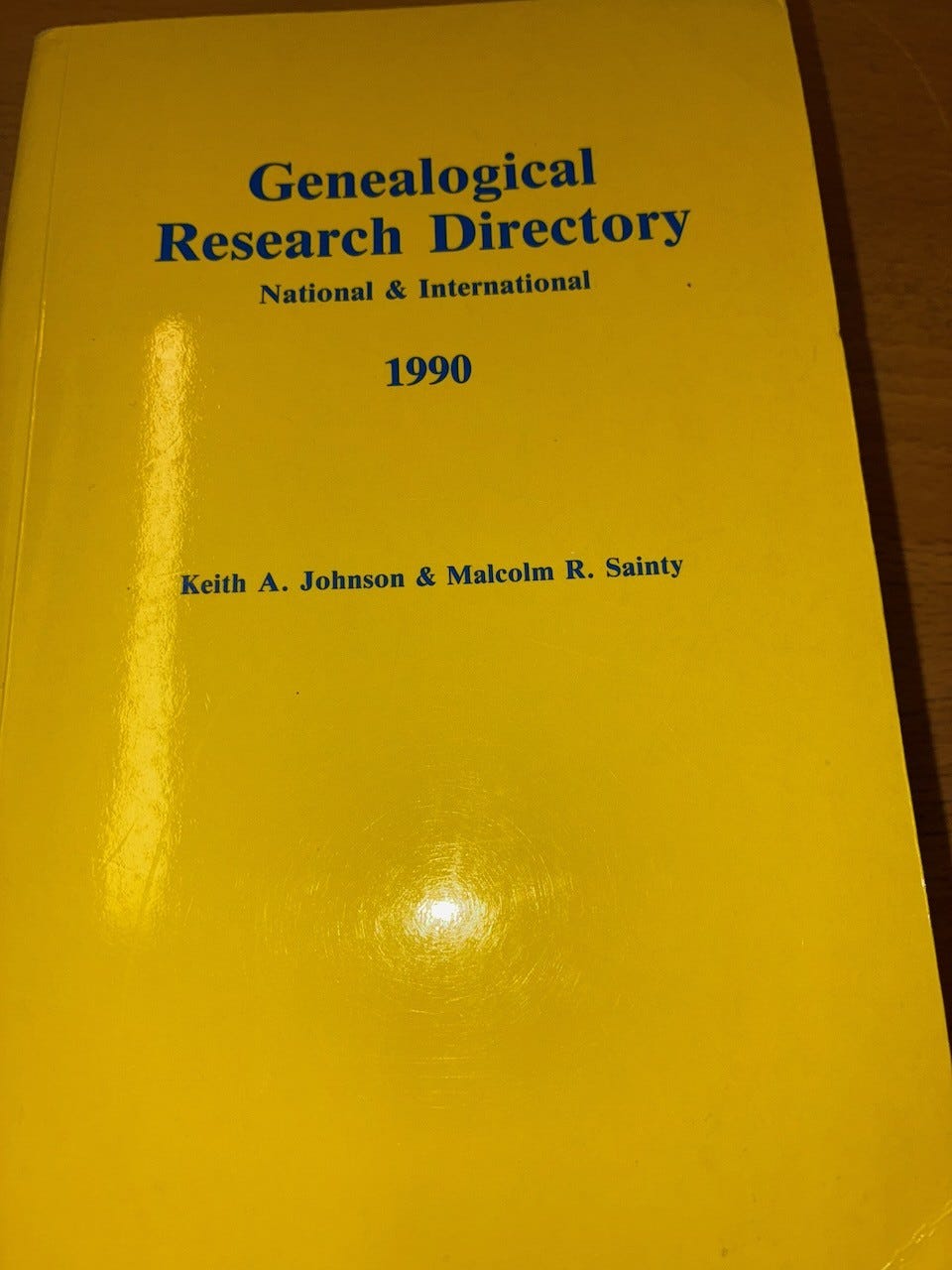
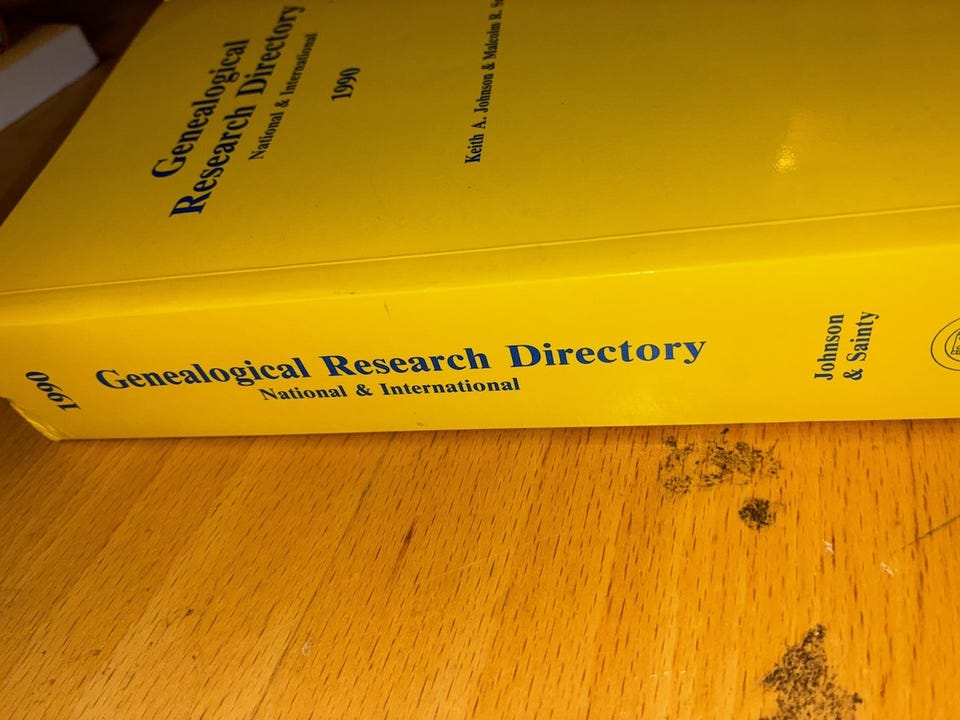
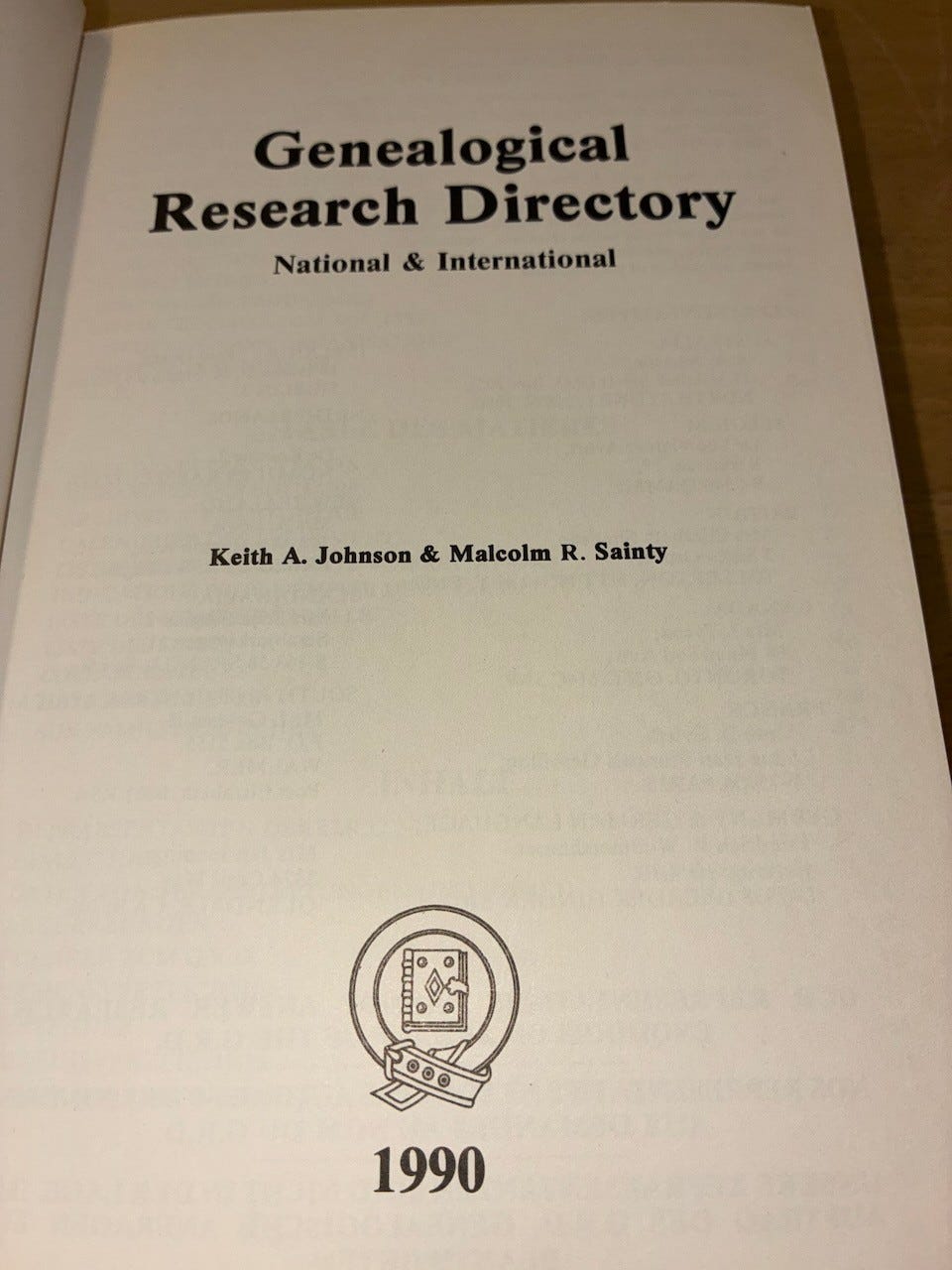
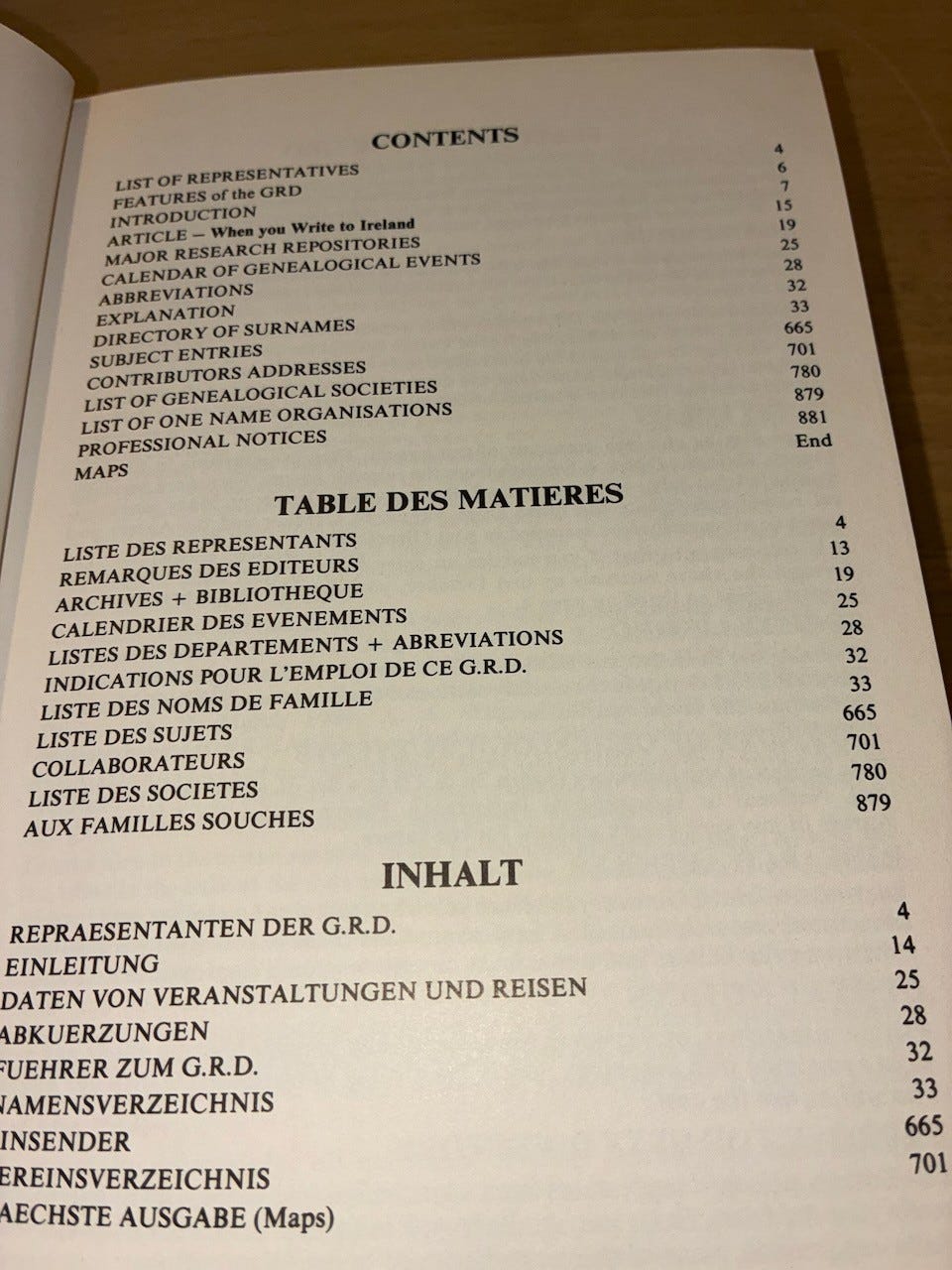
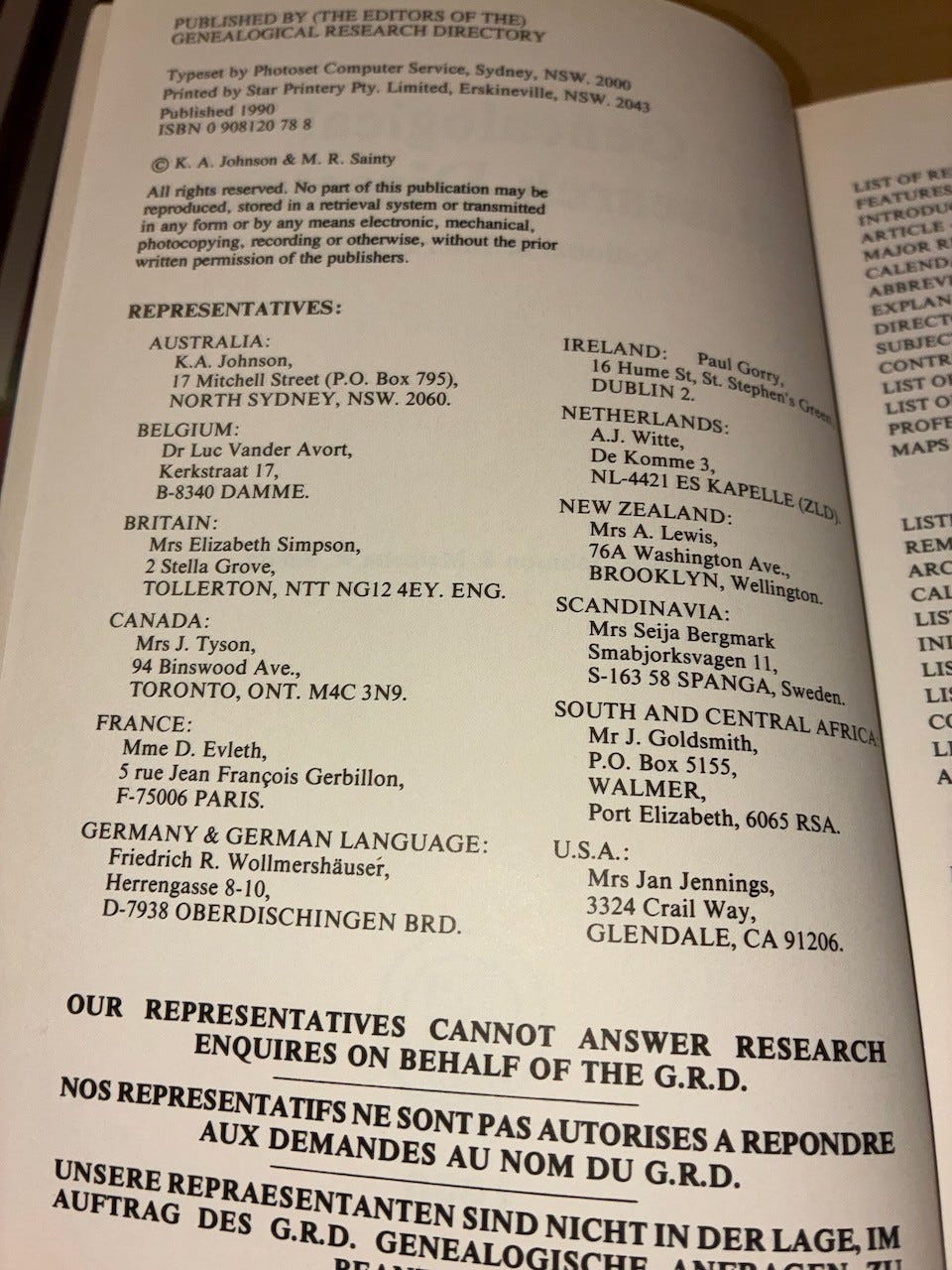
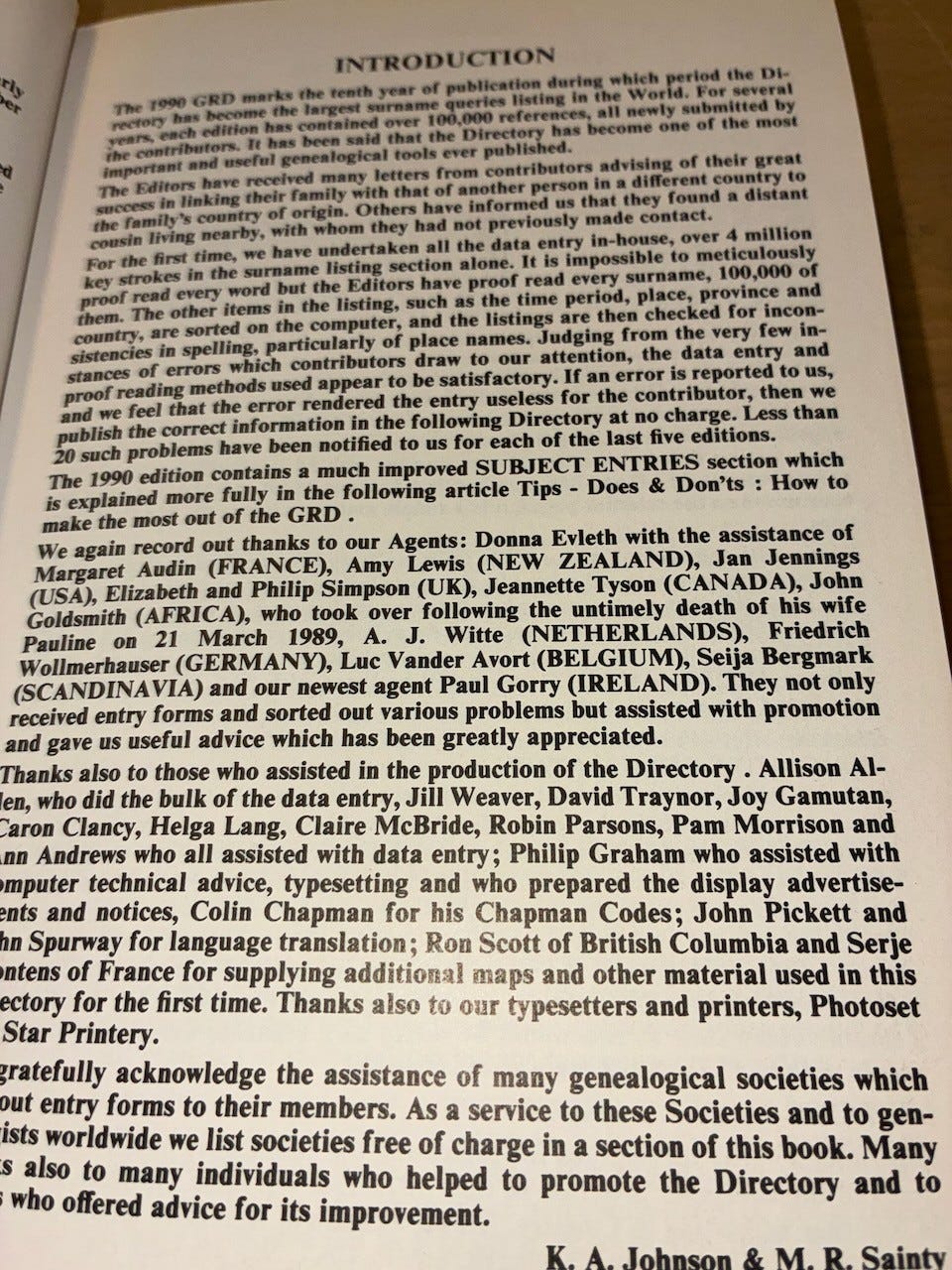

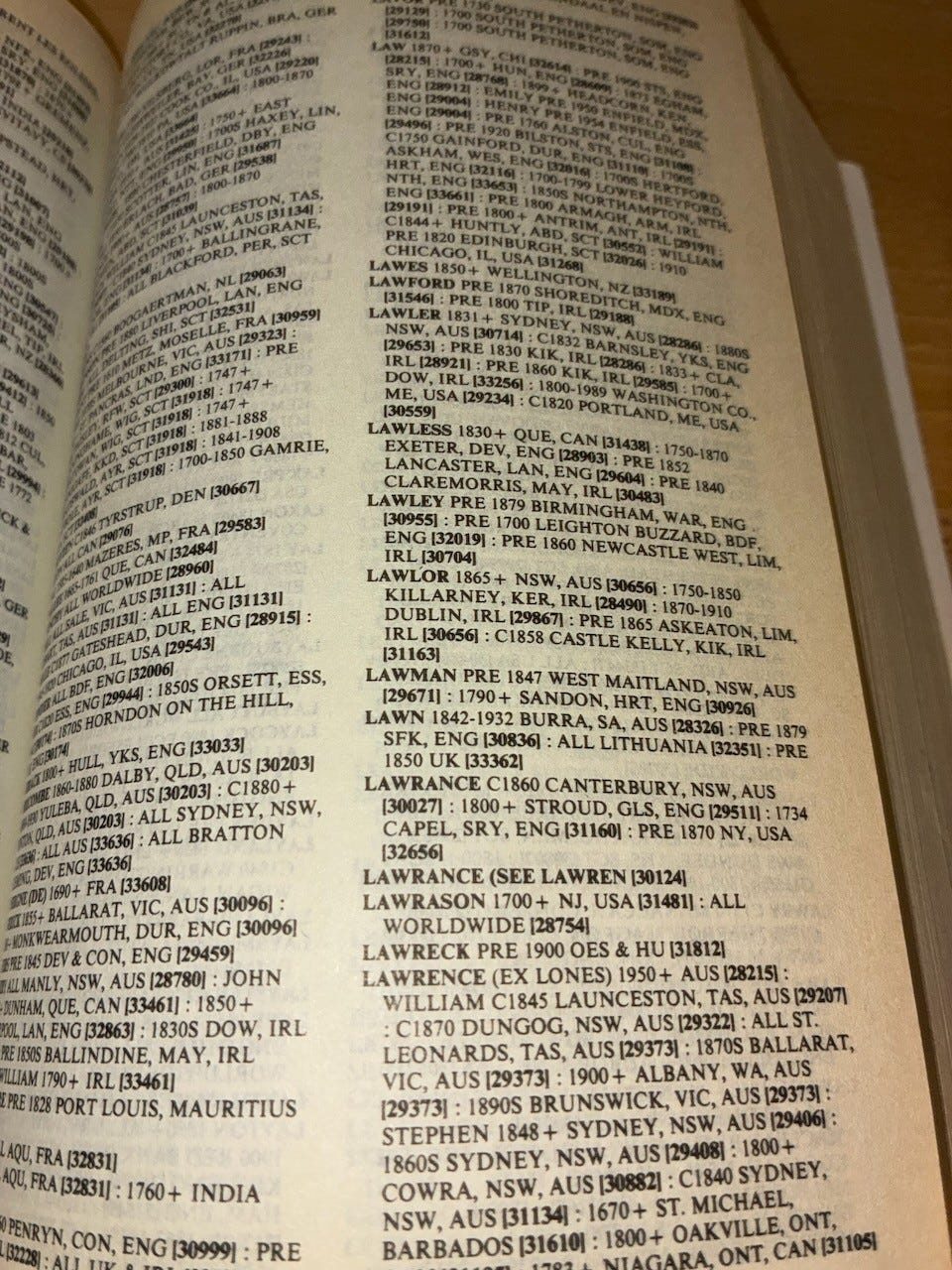

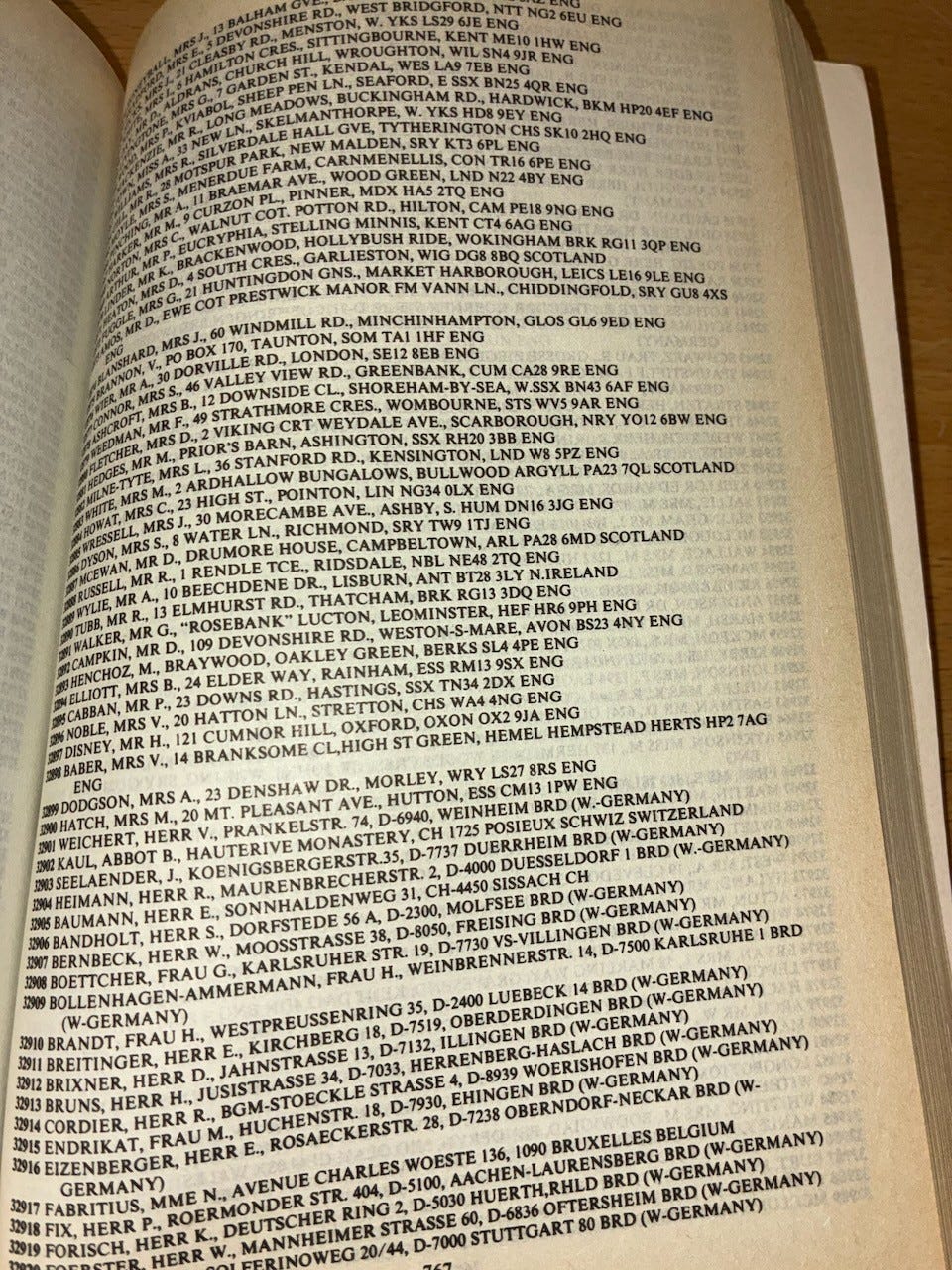

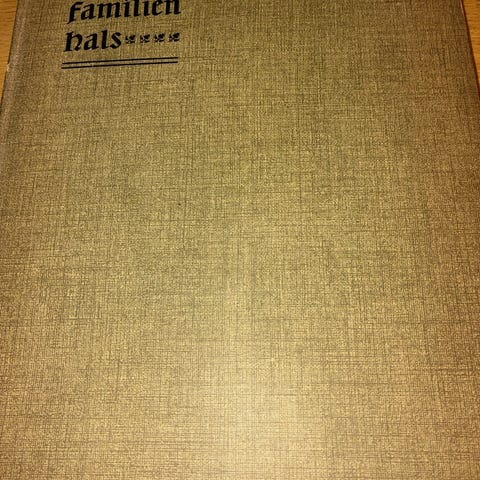
Genealogic Research Directory National & International 1990 Johnson & Sainty
Til salgs450 kr
Beskrivelse
Genealogic Research Directory. National & International. 1990. Keith A Johnson & Malcolm R: Sainty.
Genealogy is the study of families, family history, and the tracing of their lineages. Genealogists use oral interviews, historical records, genetic analysis, and other records to obtain information about a family and to demonstrate kinship and pedigrees of its members. The results are often displayed in charts or written as narratives. The field of family history is broader than genealogy, and covers not just lineage but also family and community history and biography.[3]
The record of genealogical work may be presented as a "genealogy", a "family history", or a "family tree". In the narrow sense, a "genealogy" or a "family tree" traces the descendants of one person, whereas a "family history" traces the ancestors of one person,[4][5][6] but the terms are often used interchangeably.[7] A family history may include additional biographical information, family traditions, and the like.[3]
The pursuit of family history and origins tends to be shaped by several motives, including the desire to carve out a place for one's family in the larger historical picture, a sense of responsibility to preserve the past for future generations, and self-satisfaction in accurate storytelling.[8] Genealogy research is also performed for scholarly or forensic purposes, or to trace legal next of kin to inherit under intestacy laws.
Overview
Twelve generations patrilineage of a Hindu Lingayat male from central Karnataka spanning over 275 years, depicted in descending order
Amateur genealogists typically pursue their own ancestry and that of their spouses. Professional genealogists may also conduct research for others, publish books on genealogical methods, teach, or produce their own databases. They may work for companies that provide software or produce materials of use to other professionals and to amateurs. Both try to understand not just where and when people lived but also their lifestyles, biographies, and motivations. This often requires—or leads to—knowledge of antiquated laws, old political boundaries, migration trends, and historical socioeconomic or religious conditions.
Genealogists sometimes specialize in a particular group, e.g., a Scottish clan; a particular surname, such as in a one-name study; a small community, e.g., a single village or parish, such as in a one-place study; or a particular, often famous, person. Bloodlines of Salem is an example of a specialized family-history group. It welcomes members who can prove descent from a participant of the Salem Witch Trials or who simply choose to support the group.
Genealogists and family historians often join family history societies, where novices can learn from more experienced researchers. Such societies generally serve a specific geographical area. Their members may also index records to make them more accessible or engage in advocacy and other efforts to preserve public records and cemeteries. Some schools engage students in such projects as a means to reinforce lessons regarding immigration and history.[9] Other benefits include family medical histories for families with serious medical conditions that are hereditary.
The terms "genealogy" and "family history" are often used synonymously, but some entities offer a slight difference in definition. The Society of Genealogists, while also using the terms interchangeably, describes genealogy as the "establishment of a pedigree by extracting evidence, from valid sources, of how one generation is connected to the next" and family history as "a biographical study of a genealogically proven family and of the community and country in which they lived".[3]
Motivation
Individuals conduct genealogical research for a number of reasons.
Personal or medical interest
Private individuals research genealogy out of curiosity about their heritage. This curiosity can be particularly strong among those whose family histories were lost or unknown due to, for example, adoption or separation from family through divorce, death, or other situations.[10] In addition to simply wanting to know more about who they are and where they came from, individuals may research their genealogy to learn about any hereditary diseases in their family history.[11]
There is a growing interest in family history in the media as a result of advertising and television shows sponsored by large genealogy companies, such as Ancestry.com. This, coupled with easier access to online records and the affordability of DNA tests, has both inspired curiosity and allowed those who are curious to easily start investigating their ancestry.[12][13]
Community or religious obligation
In communitarian societies, one's identity is defined as much by one's kin network as by individual achievement, and the question "Who are you?" would be answered by a description of father, mother, and tribe. New Zealand M?ori, for example, learn whakapapa (genealogies) to discover who they are.[14][15][16][17]
Family history plays a part in the practice of some religious belief systems. For example, The Church of Jesus Christ of Latter-day Saints (LDS Church) has a doctrine of baptism for the dead, which necessitates that members of that faith engage in family history research.[18][19][20]
In East Asian countries that were historically shaped by Confucianism, many people follow a practice of ancestor worship as well as genealogical record-keeping. Ancestors' names are inscribed on tablets and placed in shrines, where rituals are performed. Genealogies are also recorded in genealogy books. This practice is rooted in the belief that respect for one's family is a foundation for a healthy society.[21]
Establishing identity
Royal families, both historically and in modern times, keep records of their genealogies in order to establish their right to rule and determine who will be the next sovereign. For centuries in various cultures, one's genealogy has been a source of political and social status.[22][23]
Some countries and indigenous tribes allow individuals to obtain citizenship based on their genealogy. In Ireland and in Greece, for example, an individual can become a citizen if one of their grandparents was born in that country, regardless of their own or their parents' birthplace. In societies such as Australia or the United States, by the 20th century, there was growing pride in the pioneers and nation-builders. Establishing descent from these was, and is, important to lineage societies, such as the Daughters of the American Revolution and The General Society of Mayflower Descendants.[24] Modern family history explores new sources of status, such as celebrating the resilience of families that survived generations of poverty or slavery, or the success of families in integrating across racial or national boundaries. Some family histories even emphasize links to celebrity criminals, such as the bushranger Ned Kelly in Australia.[25]
Legal and forensic research
Main article: Investigative genetic genealogy
Lawyers involved in probate cases do genealogy to locate heirs of property.[26][27]
Detectives may perform genealogical research using DNA evidence to identify victims of homicides or perpetrators of crimes.[28][29][30][31][32]
Scholarly research
Historians and geneticists may carry out genealogical research to gain a greater understanding of specific topics in their respective fields, and some may employ professional genealogists in connection with specific aspects of their research. They also publish their research in peer-reviewed journals.[33]
The introduction of postgraduate courses in genealogy in recent years has given genealogy more of an academic focus, with the emergence of peer-reviewed journals in this area. Scholarly genealogy is beginning to emerge as a discipline in its own right, with an increasing number of individuals who have obtained genealogical qualifications carrying out research on a diverse range of topics related to genealogy, both within academic institutions and independently.[34]
Discrimination and persecution
In the US, the "one-drop rule" asserted that any person with even one ancestor of black ancestry ("one drop" of "black blood") was considered black. It was codified into the law of some States (e.g. the Racial Integrity Act of 1924) to reinforce racial segregation.
Genealogy was also used in Nazi Germany to determine whether a person was considered a "Jew" or a "Mischling" (Mischling Test), and whether a person was considered as "Aryan" (Ahnenpass).
History
Pre-modern genealogy
A Medieval genealogy traced from Adam and Eve
Hereditary emperors, kings and chiefs in several areas have long claimed descent from gods (thus establishing divine legitimacy). Court genealogists have preserved or invented appropriate genealogical pretensions - for example in Japan,[35] Polynesia,[36] and the Indo-European world from Scandinavia through ancient Greece to India.[37]
Historically, in Western societies, genealogy focused on the kinship and descent of rulers and nobles, often arguing or demonstrating the legitimacy of claims to wealth and power. Genealogy often overlapped with heraldry, which reflected the ancestry of noble houses in their coats of arms. Modern scholars regard many claimed noble ancestries as fabrications, such as the Anglo-Saxon Chronicle's tracing of the ancestry of several English kings to the god Woden.[38] With the coming of Christianity to northern Europe, Anglo-Saxon royal genealogies extended the kings' lines of ancestry from Woden back to reach the line of Biblical patriarchs: Noah[39] and Adam. (This extension offered the side-benefit of connecting pretentious rulers with the prestigious genealogy of Jesus.)[40]
Modern historians and genealogists may regard manufactured pseudo-genealogies with a degree of scepticism. However, the desire to find ancestral links with prominent figures from a legendary or distant past has persisted. In the United States, for example, it does no harm to establish one's links to ancestors who boarded the Mayflower. And the popularity of the genealogical hypothesis of The Holy Blood and the Holy Grail (1982) demonstrates popular interest in ancient bloodlines, however dubious.
Some family trees have been maintained for considerable periods. The family tree of Confucius has been maintained for over 2,500 years and is listed in the Guinness Book of World Records as the largest extant family tree. The fifth edition of the Confucius Genealogy was printed in 2009 by the Confucius Genealogy Compilation Committee (CGCC).[41][42]
Modern times
In modern times, genealogy has become more widespread, with commoners as well as nobility researching and maintaining their family trees.[43] Genealogy received a boost in the late 1970s with the television broadcast of Roots: The Saga of an American Family by Alex Haley. His account of his family's descent from the African tribesman Kunta Kinte inspired many others to study their own lines.[44]
With the advent of the Internet, the number of resources readily accessible to genealogists has vastly increased, fostering an explosion of interest in the topic.[45] Genealogy on the internet became increasingly popular starting in the early 2000s.[46] The Internet has become a major source not only of data for genealogists but also of education and communication.
By country
India
In India, there are two broad types of traditional genealogists: those who work in places where the Ganges river flows and those who work in other locations.[47] Each caste grouping in the Indian subcontinent has different kinds of genealogists, who have a set of inter-generational patrons, called jajmans.[47] Usually, a traditional genealogist would visit their jajman’s house and record information in the presence of the patron family and other witnesses in their pothis (record-books), passed on from one to another. All the vital details about a particular family are recorded in the pothi, such as births, deaths, marriages, divisions in the family, and donations made for religious purposes.[47] Two major genealogical traditions in the Indian subcontinent are Panda Bahi, produced by Tirth Purohits/Pandas at places of pilgrimage, and Bhatt Bahi, produced by wandering Bhats serving local clientele.[48]
Traditional genealogists played a role in the 1857 rebellion, as they spread word door-to-door.[47] Due to this, many genealogists were killed by the British and other migrated to different parts of India away from their hometown.[47] However, traditional genealogy in India is a dying practice due to urbanization, migration abroad, the impact of the Internet, modern technology, and monetary and economic concerns.[47]
There are more than twenty-five places of pilgrimage across India where genealogical records on the families of visiting pilgrims are kept by pandas (Hindu priests).[49][50] Some notable places where traditional genealogy records are kept include Hindu genealogy registers at Haridwar (Uttarakhand), Varanasi and Allahabad (Uttar Pradesh), Kurukshetra (Haryana), Trimbakeshwar (Maharashtra), and Chintpurni (Himachal Pradesh).[51][49][50] In February 2025, the National Archives of India announced it was planning on creating a publicly-accessible database of genealogical records sourced from pothis kept in the collection of pandas (priests) from Gaya, Kashi, Prayagraj, Kedarnath, Ujjain, Badrinath, and other places of pilgrimage where familial genealogical records are kept and maintained.[49][50]
United States
Genealogical research in the United States was first systematized in the early 19th century, especially by John Farmer (1789–1838).[52] Before Farmer's efforts, tracing one's genealogy was seen as an attempt by the American colonists to secure a measure of social standing, an aim that was counter to the new republic's egalitarian, future-oriented ideals (as outlined in the Constitution).[52] As Fourth of July celebrations commemorating the Founding Fathers and the heroes of the Revolutionary War became increasingly popular, however, the pursuit of "antiquarianism", which focused on local history, became acceptable as a way to honor the achievements of early Americans.[53] Farmer capitalized on the acceptability of antiquarianism to frame genealogy within the early republic's ideological framework of pride in one's American ancestors. He corresponded with other antiquarians in New England, where antiquarianism and genealogy were well established, and became a coordinator, booster, and contributor to the growing movement. In the 1820s, he and fellow antiquarians began to produce genealogical and antiquarian tracts in earnest, slowly gaining a devoted audience among the American people. Though Farmer died in 1838, his efforts led to the founding in 1845 of the New England Historic Genealogical Society (NEHGS), one of New England's oldest and most prominent organizations dedicated to the preservation of public records.[54] NEHGS publishes the New England Historical and Genealogical Register.
The Genealogical Society of Utah, founded in 1894, later became the Family History Department of the Church of Jesus Christ of Latter-day Saints. The department's research facility, the Family History Library, which Utah.com claims as "the largest genealogical library in the world",[55] was established to assist in tracing family lineages for special religious ceremonies which Latter-day Saints believe will seal family units together for eternity. Latter-day Saints believe that this fulfilled a biblical prophecy stating that the prophet Elijah would return to "turn the heart of the fathers to the children, and the heart of the children to their fathers."[56] There is a network of church-operated Family History Centers all over the United States and around the world, where volunteers assist the public with tracing their ancestors.[57] Brigham Young University offers bachelor's degree, minor, and concentration programs in Family History and is the only school in North America to offer this.[58]
The American Society of Genealogists is the scholarly honorary society of the U.S. genealogical field. Founded by John Insley Coddington, Arthur Adams, and Meredith B. Colket Jr., in December 1940, its membership is limited to 50 living fellows. ASG has semi-annually published The Genealogist, a scholarly journal of genealogical research, since 1980. Fellows of the American Society of Genealogists, who bear the post-nominal acronym "FASG", have written some of the most notable genealogical materials of the last half-century.[59]
Some of the most notable scholarly American genealogical journals include The American Genealogist, National Genealogical Society Quarterly, The New England Historical and Genealogical Register, The New York Genealogical and Biographical Record, and The Genealogist.[60][61]
Research process
30 years of image research[62] arranged genealogically on a kitchen wall in Sweden 2019
Genealogical research is a complex process that uses historical records and sometimes genetic analysis to demonstrate kinship. Reliable conclusions are based on the quality of sources (ideally, original records), the information within those sources, (ideally, primary or firsthand information), and the evidence that can be drawn (directly or indirectly), from that information. In many instances, genealogists must skillfully assemble indirect or circumstantial evidence to build a case for identity and kinship. All evidence and conclusions, together with the documentation that supports them, is then assembled to create a cohesive genealogy or family history.[63]
Genealogists begin their research by collecting family documents and stories. This creates a foundation for documentary research, which involves examining and evaluating historical records for evidence about ancestors and other relatives, their kinship ties, and the events that occurred in their lives. As a rule, genealogists begin with the present and work backwards in time. Historical, social, and family context is essential to achieving correct identification of individuals and relationships. Source citation is also important when conducting genealogical research.[64][65] To keep track of collected material, family group sheets and pedigree charts are used. Formerly handwritten, these can now be generated by genealogical software.[66]
Because a person's DNA contains information that has been passed down relatively unchanged from early ancestors, analysis of DNA is sometimes used for genealogical research. Three DNA types are of particular interest. Mitochondrial DNA (mtDNA) is contained in the mitochondria of the egg cell and is passed down from a mother to all of her children, both male and female; however, only females pass it on to their children. Y-DNA is present only in males and is passed down from a father to his sons (direct male line) with only minor mutations occurring over time. Autosomal DNA (atDNA), is found in the 22 non-sex chromosomes (autosomes) and is inherited from both parents; thus, it can uncover relatives from any branch of the family. A genealogical DNA test allows two individuals to find the probability that they are, or are not, related within an estimated number of generations. Individual genetic test results are collected in databases to match people descended from a relatively recent common ancestor. See, for example, the Molecular Genealogy Research Project. Some tests are limited to either the patrilineal or the matrilineal line.[67]
Collaboration
Most genealogy software programs can export information about persons and their relationships in a standardized format called a GEDCOM. In that format, it can be shared with other genealogists, added to databases, or converted into family web sites. Social networking service (SNS) websites allow genealogists to share data and build their family trees online. Members can upload their family trees and contact other family historians to fill in gaps in their research. In addition to the (SNS) websites, there are other resources that encourage genealogists to connect and share information, such as rootsweb.ancestry.com[68] and rsl.rootsweb.ancestry.com.[69]
Volunteerism
Volunteer efforts figure prominently in genealogy.[70] These range from the extremely informal to the highly organized.
On the informal side are the many popular and useful message boards such as Rootschat and mailing lists on particular surnames, regions, and other topics. These forums can be used to try to find relatives, request record lookups, obtain research advice, and much more. Many genealogists participate in loosely organized projects, both online and off. These collaborations take numerous forms. Some projects prepare name indexes for records, such as probate cases, and publish the indexes, either online or off. These indexes can be used as finding aids to locate original records. Other projects transcribe or abstract records. Offering record lookups for particular geographic areas is another common service. Volunteers do record lookups or take photos in their home areas for researchers who are unable to travel.[71]
Those looking for a structured volunteer environment can join one of thousands of genealogical societies worldwide. Most societies have a unique area of focus, such as a particular surname, ethnicity, geographic area, or descendancy from participants in a given historical event. Genealogical societies are almost exclusively staffed by volunteers and may offer a broad range of services, including maintaining libraries for members' use, publishing newsletters, providing research assistance to the public, offering classes or seminars, and organizing record preservation or transcription projects.[72]
Software
Gramps is an example of genealogy software.
Main article: Genealogy software
Genealogy software is used to collect, store, sort, and display genealogical data. At a minimum, genealogy software accommodates basic information about individuals, including births, marriages, and deaths. Many programs allow for additional biographical information, including occupation, residence, and notes, and most also offer a method for keeping track of the sources for each piece of evidence.[73] Most programs can generate basic kinship charts and reports, allow for the import of digital photographs and the export of data in the GEDCOM format (short for GEnealogical Data COMmunication) so that data can be shared with those using other genealogy software. More advanced features include the ability to restrict the information that is shared, usually by removing information about living people out of privacy concerns; the import of sound files; the generation of family history books, web pages and other publications; the ability to handle same-sex marriages and children born out of wedlock; searching the Internet for data; and the provision of research guidance. Programs may be geared toward a specific religion, with fields relevant to that religion, or to specific nationalities or ethnic groups, with source types relevant for those groups. Online resources involve complex programming and large data bases, such as censuses.[74]
Records and documentation
A family history page from an antebellum era[broken anchor] family Bible
Genealogists use a wide variety of records in their research. To effectively conduct genealogical research, it is important to understand how the records were created, what information is included in them, and how and where to access them.[75][76]
Ring eller send sms til 924 35 058 for å kjøpe og for å diskutere henting og sending.
NB: Knappen for å vise hele beskrivelsen har kun en visuell effekt.
Beliggenhet
| FINN-kode | 458801643 |
|---|---|
| Sist endret | 6.4.2026 kl. 15:37 |