Bildegalleri
(1/25)
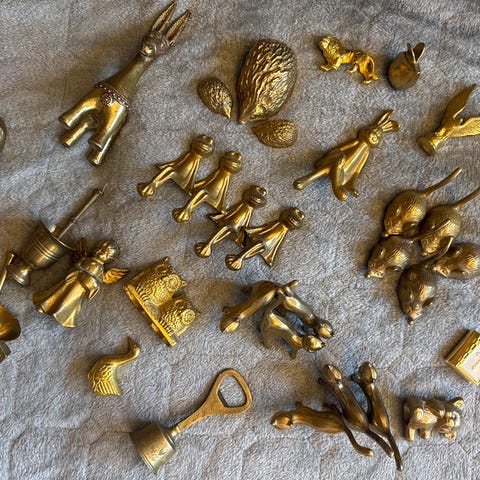
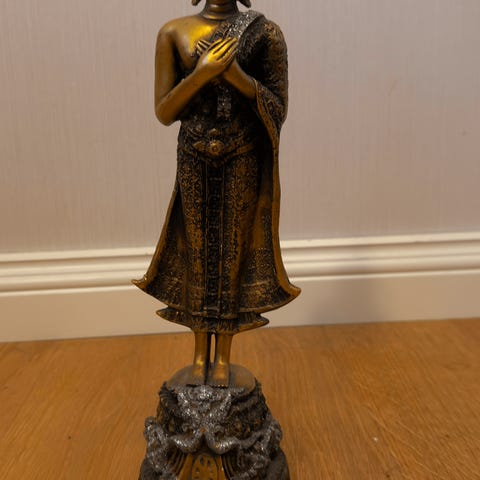
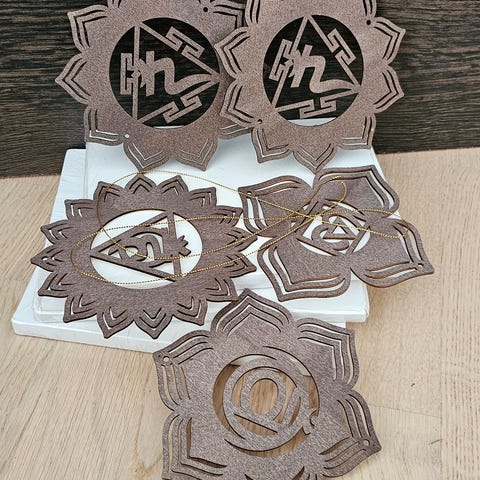
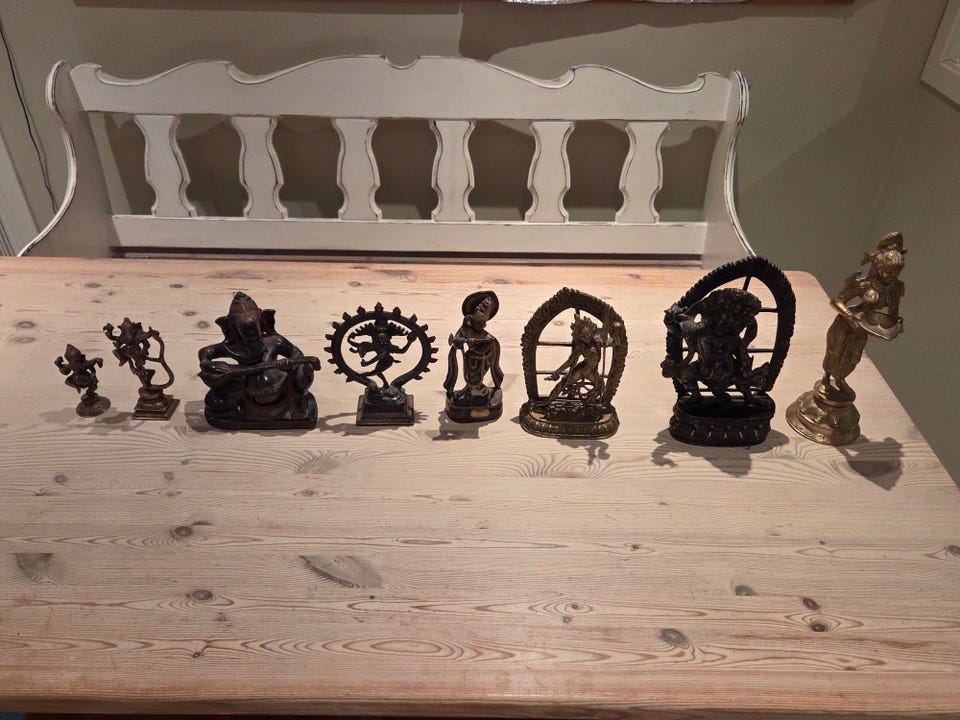
Diverse hinduistiske og budistiske guder
Til salgs
Fiks ferdig
300 kr
Frakt fra 69 kr + Trygg betaling 40 kr
Trygg handel med Fiks ferdig
Etter levering har du 24 timer til å se over varen. Hvis det er noe galt med varen, får du pengene dine tilbake.
Beskrivelse av varen
Tilstand: Som ny - Ikke synlig brukt
TEKST ER TATT FRA AI
Gi bud.
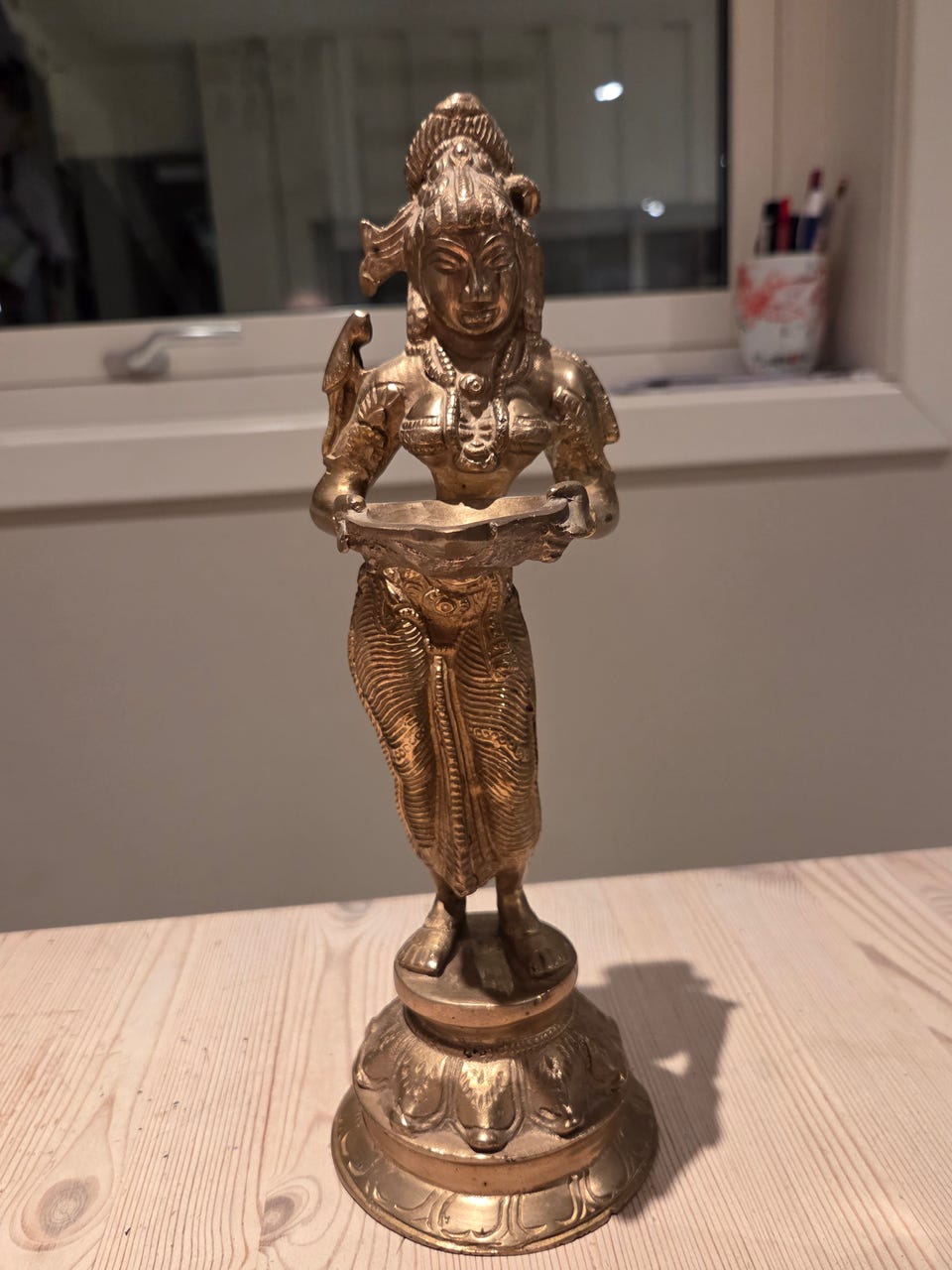
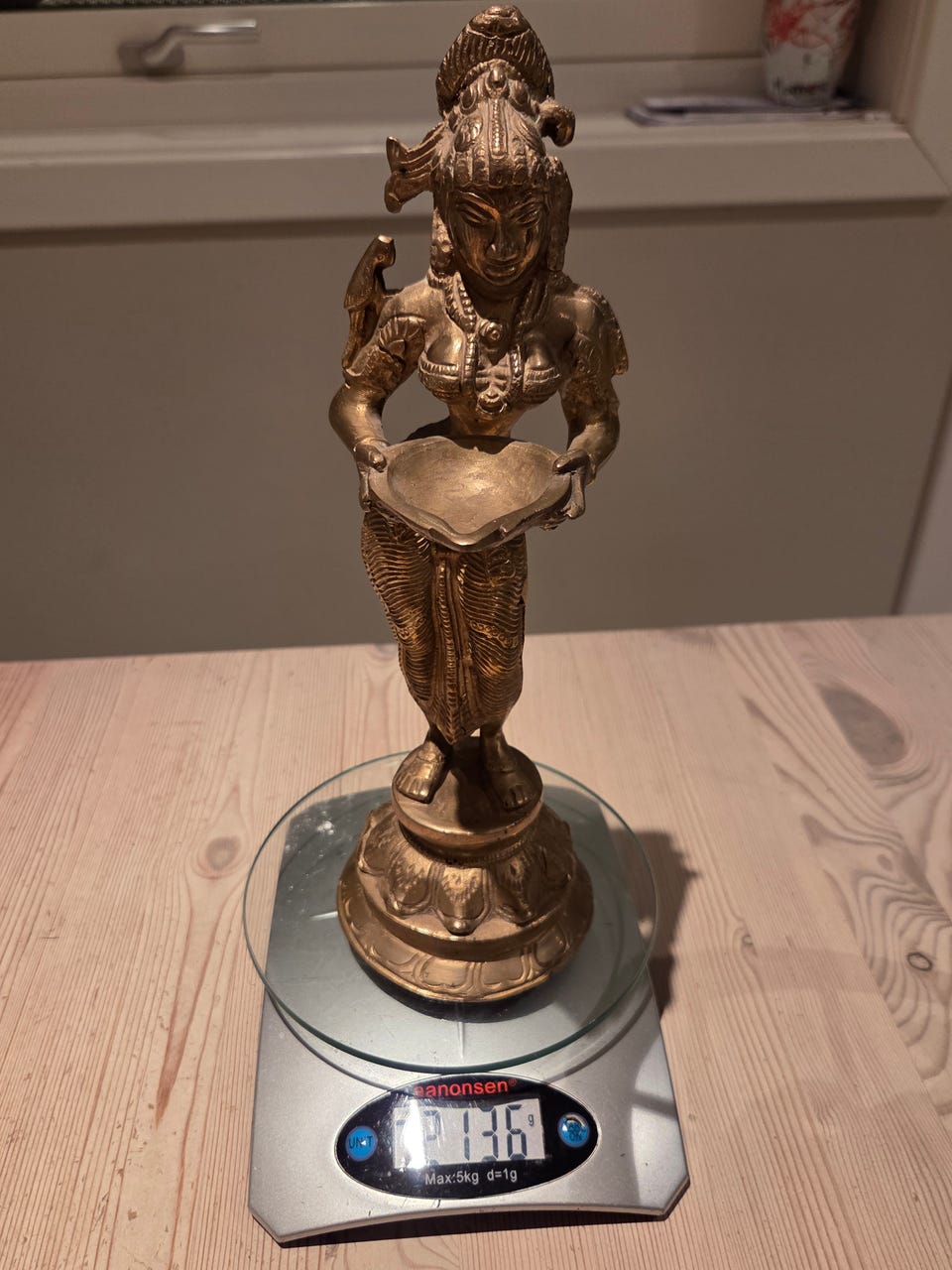
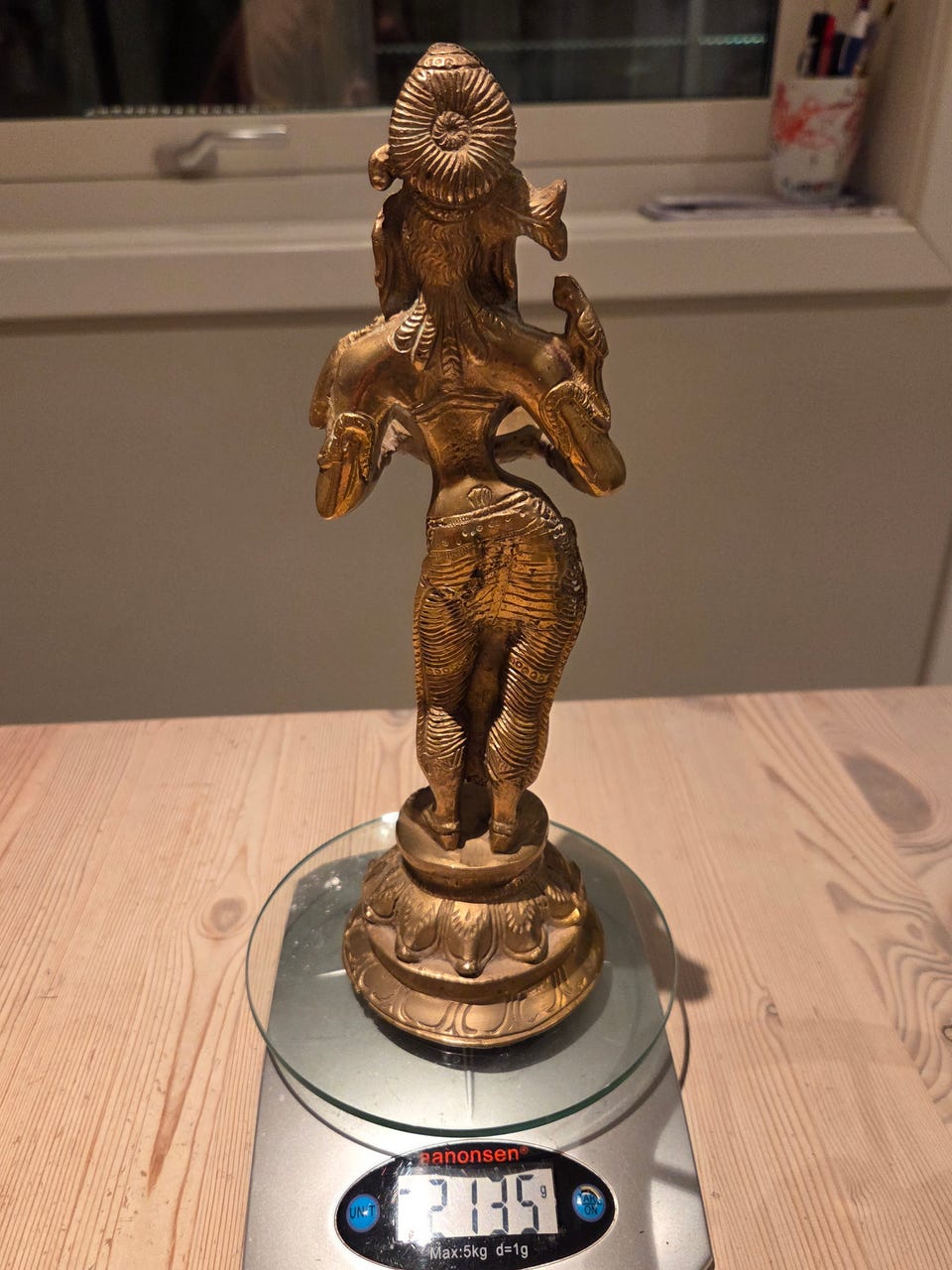
Bilde 2. Deepa Lakshmi (also spelled Dipa Lakshmi). She is a significant figure in Hindu art and household worship.
Key Characteristics
The Subject: Deepa Lakshmi represents the Goddess of Wealth and Prosperity in the form of a lamp bearer.
The Lamp: She is holding a shallow bowl called a diyā or deep. In traditional practice, this would be filled with oil or ghee and a cotton wick to be lit during prayers or as a welcoming gesture at the entrance of a home.
Symbolism: Lighting the lamp held by Lakshmi symbolizes the removal of darkness (ignorance) and the welcoming of light, knowledge, and auspiciousness into the home.
The Bird: If you look closely at her right shoulder, there is a small bird—likely a parrot. In South Indian iconography, the parrot is often associated with goddesses like Meenakshi or Kamakshi, symbolizing love, fertility, and the messenger of the divine.
Cultural Significance
These statues are commonly used in Deepavali (Diwali) celebrations or placed in the Puja (prayer) room. Because she is a "Goddess of the Lamp," she is considered a bridge between the physical world and the spiritual light.
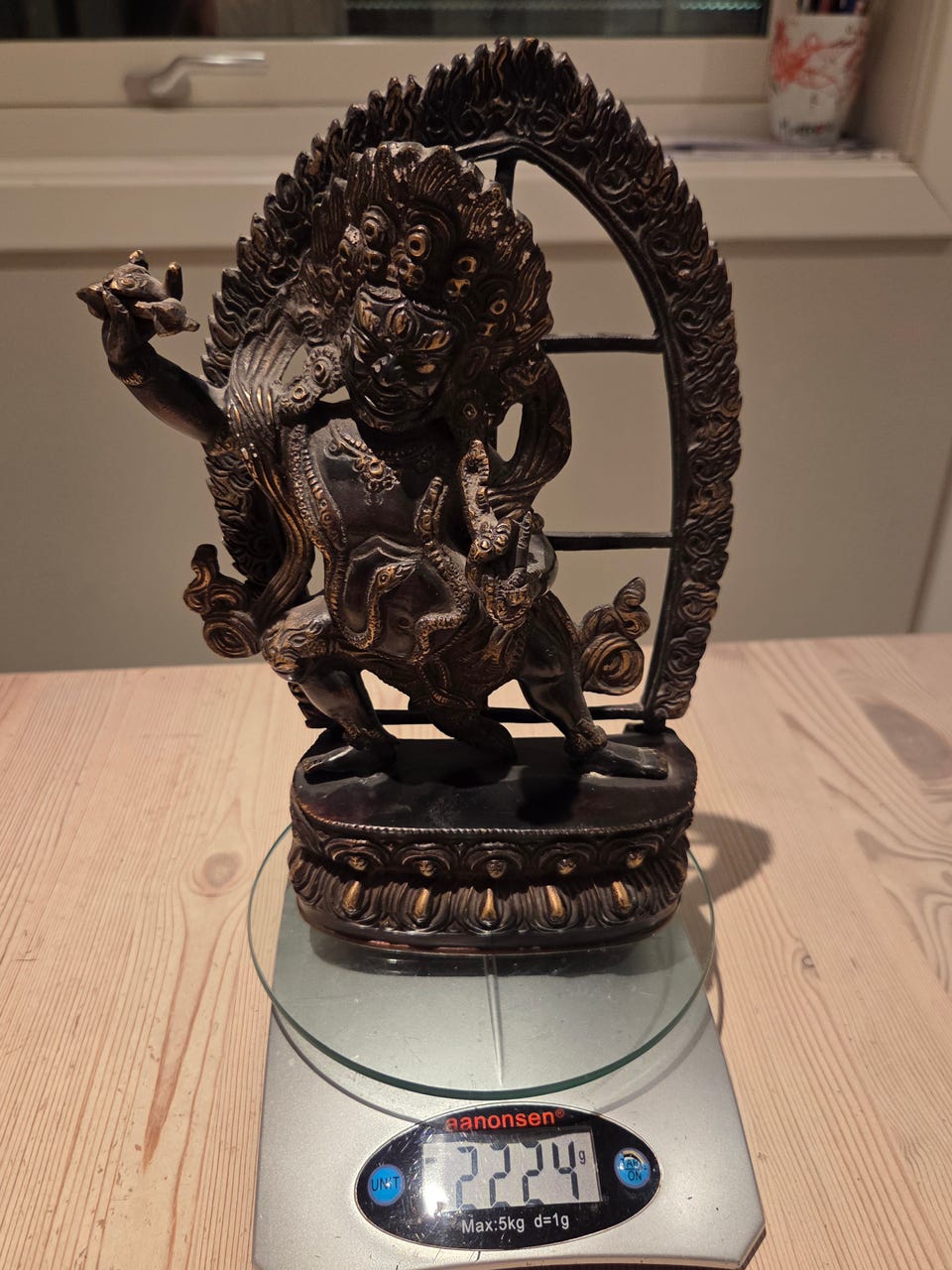
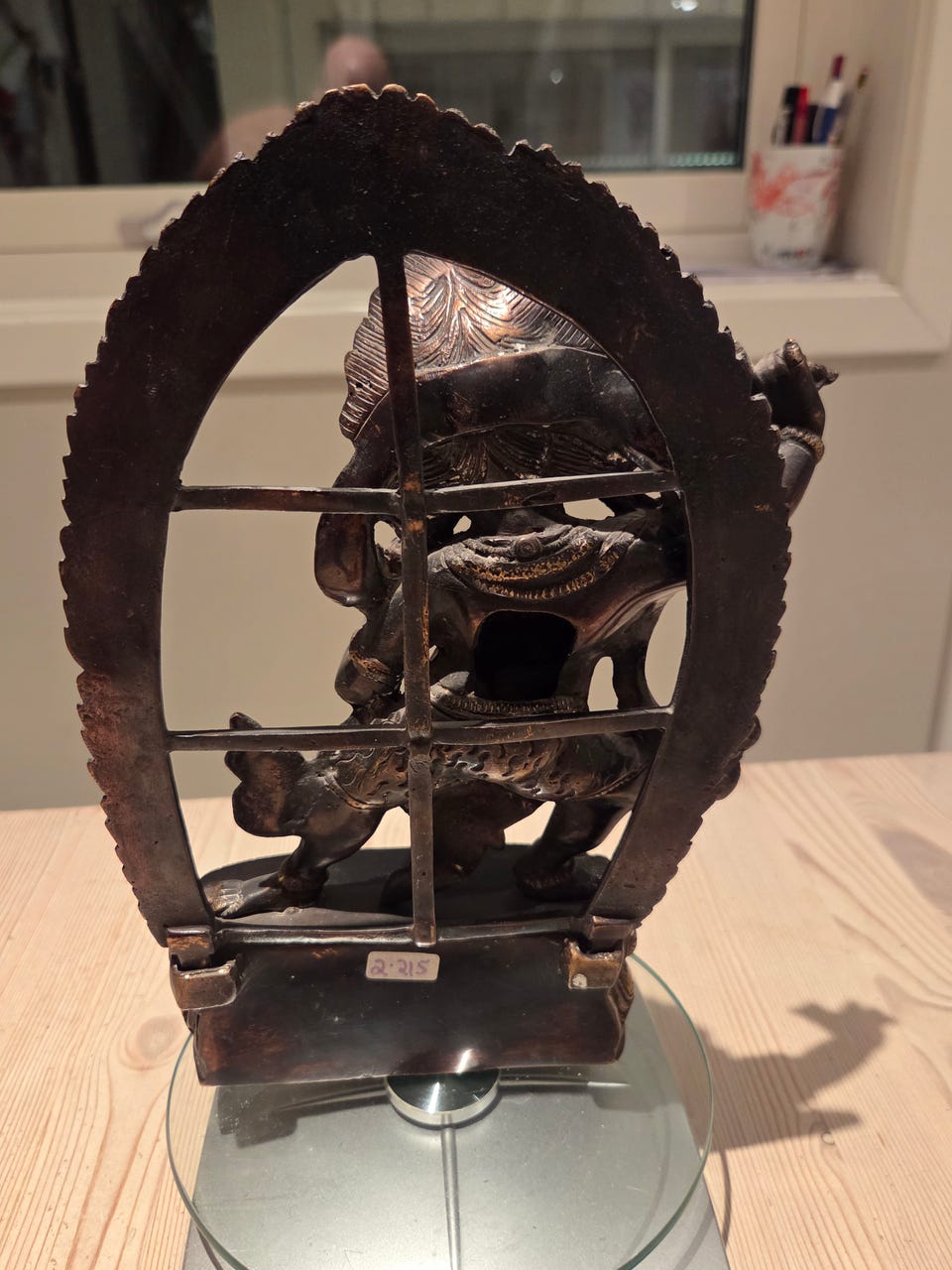
Bilde 5. Vajrapani, a prominent protective deity (Bodhisattva) in Tibetan Buddhism.
Here is a breakdown of what makes this piece significant:
1. Iconography and Symbolism
Vajrapani is often portrayed in this "wrathful" form to represent the energy of the enlightened mind and the power to overcome obstacles and delusions.
The Vajra (Thunderbolt): In his raised right hand, he holds a vajra, which symbolizes both the irresistible force of a diamond and the unstoppable power of a thunderbolt.
The Flaming Aureole: The large, flame-like arch (the prabhamandala) behind him represents the intense heat of transformative wisdom that "burns away" ignorance.
The Pose: He is standing in the pratyalidha asana (warrior pose), stepping to the right, which signifies his active, protective nature.
Serpent Ornaments: He is often shown wearing snakes as jewelry (seen around his neck and torso), representing his power over the Nagas (serpent deities) and the transmutation of negative emotions like anger.
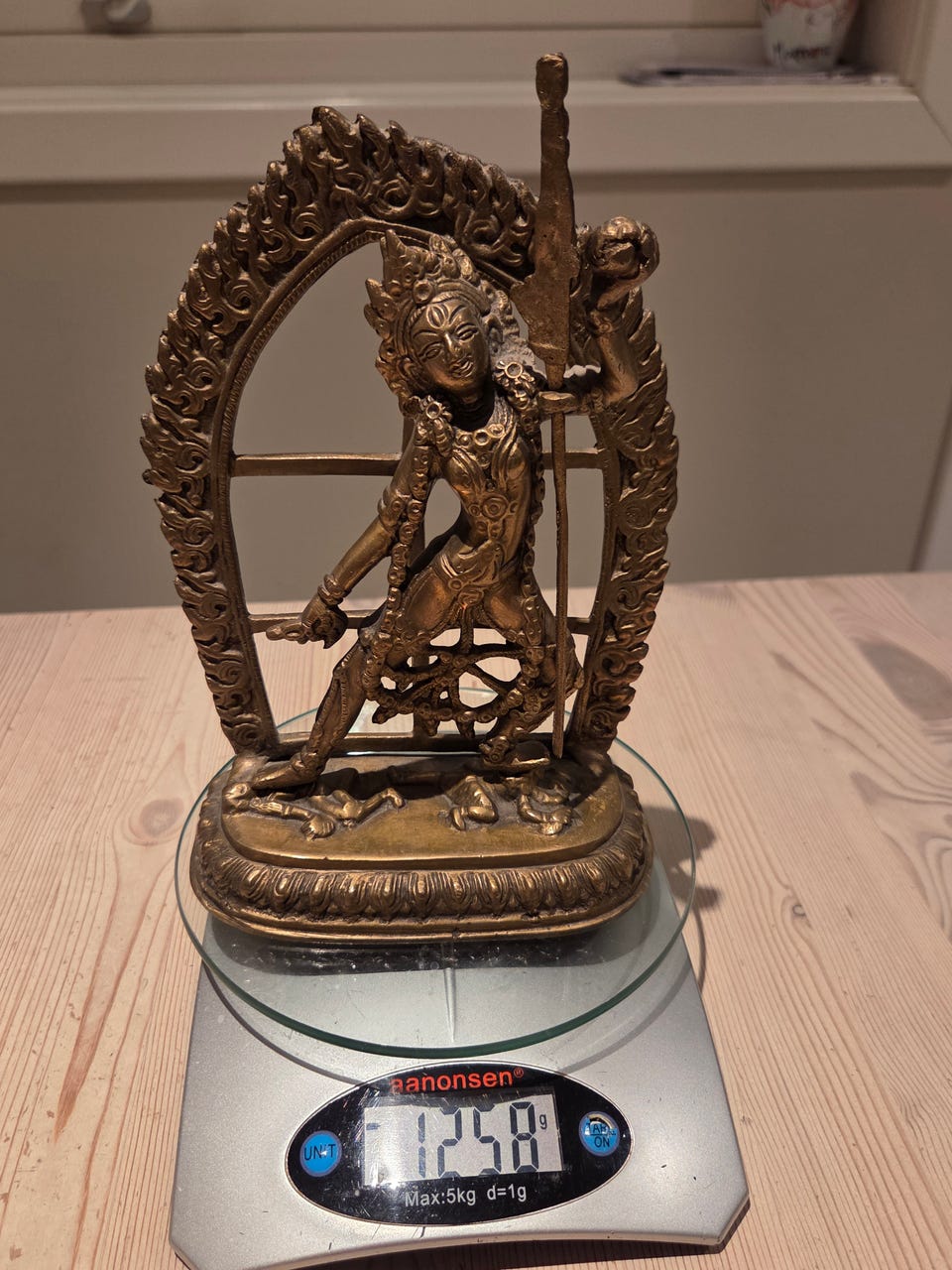
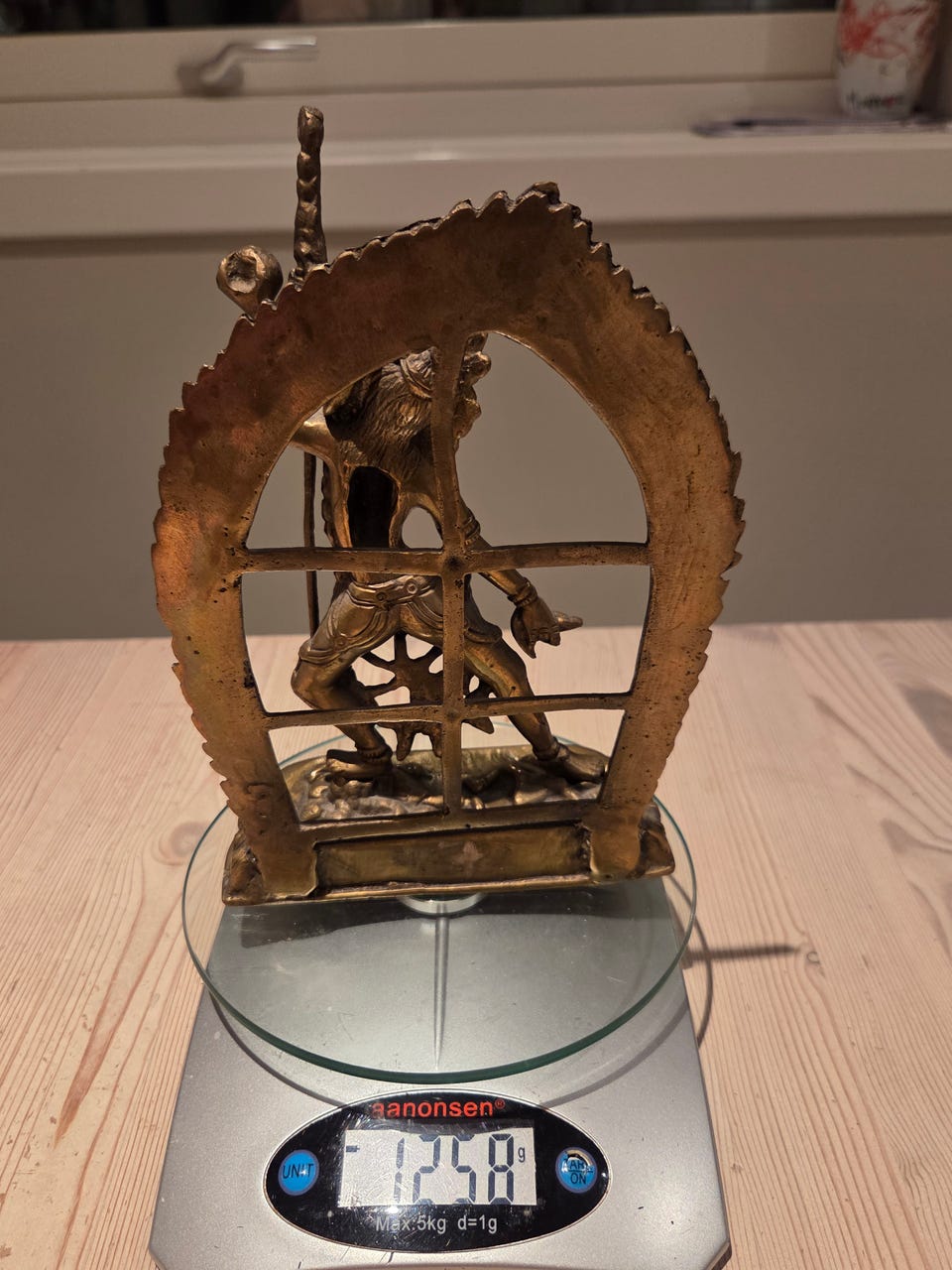
Bilde 7. Tibetan or Nepalese bronze representation of Vajrayogini, specifically in the form of Naro Dakini. She is a significant "meditational deity" (Yidam) in Vajrayana Buddhism, representing the female aspect of enlightenment and the transformation of ignorance into wisdom.
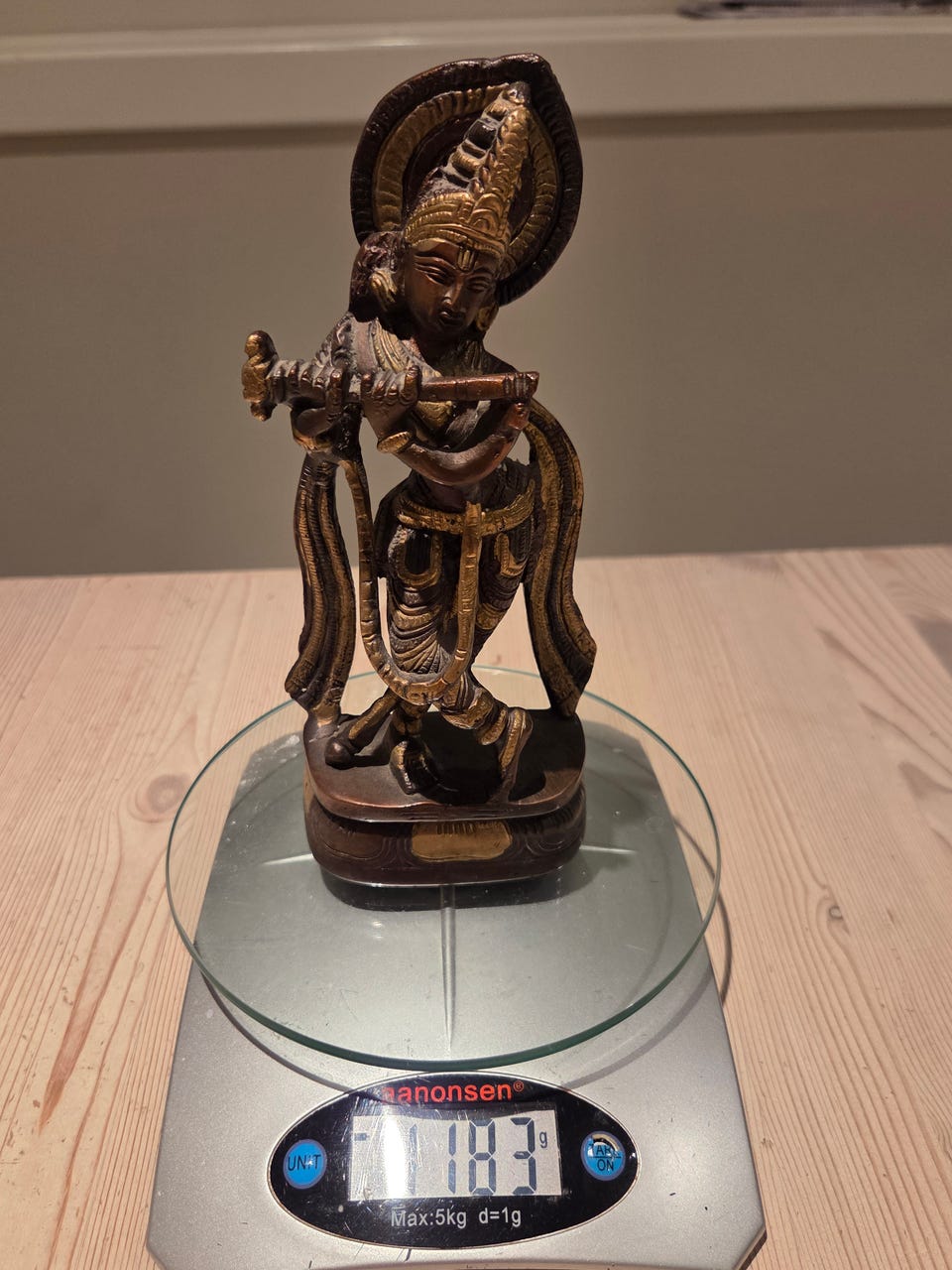
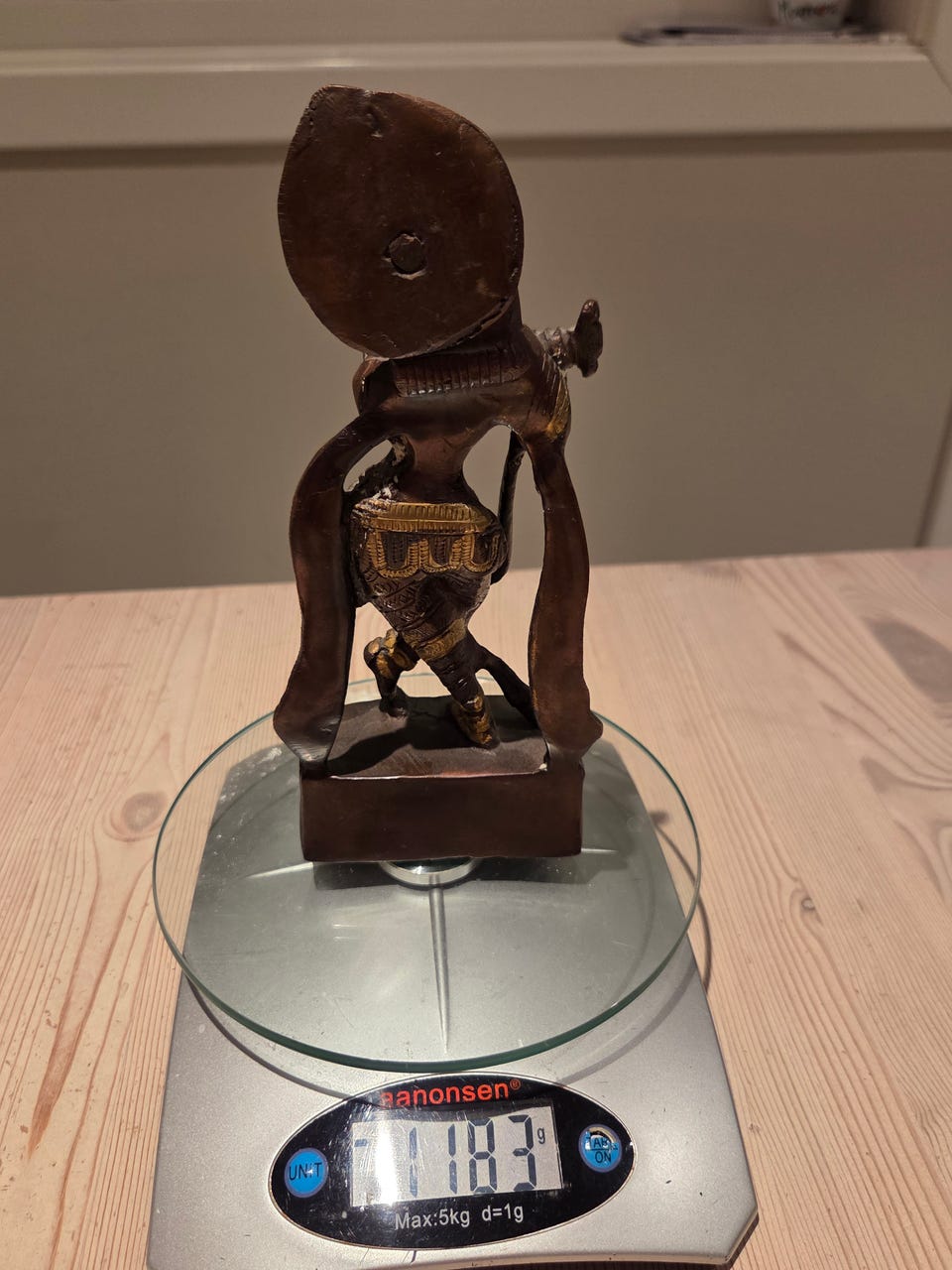
Bilde 9. This specific depiction is known as Venugopala, which shows Krishna playing his divine flute (bansuri). He is easily identifiable by his signature Tribhanga posture—the "three-bend" pose where the body curves at the neck, waist, and knee—and his crossed legs.
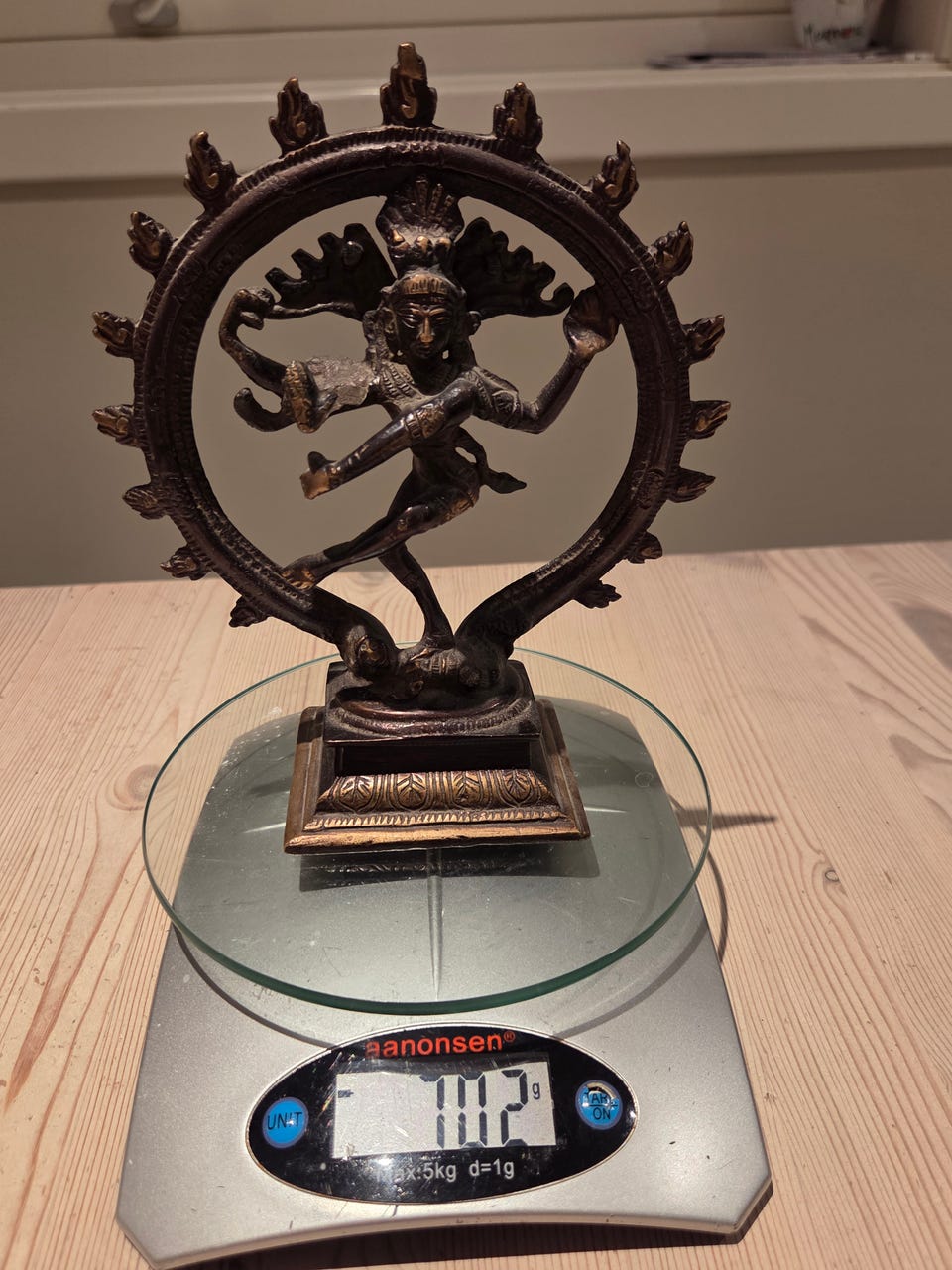
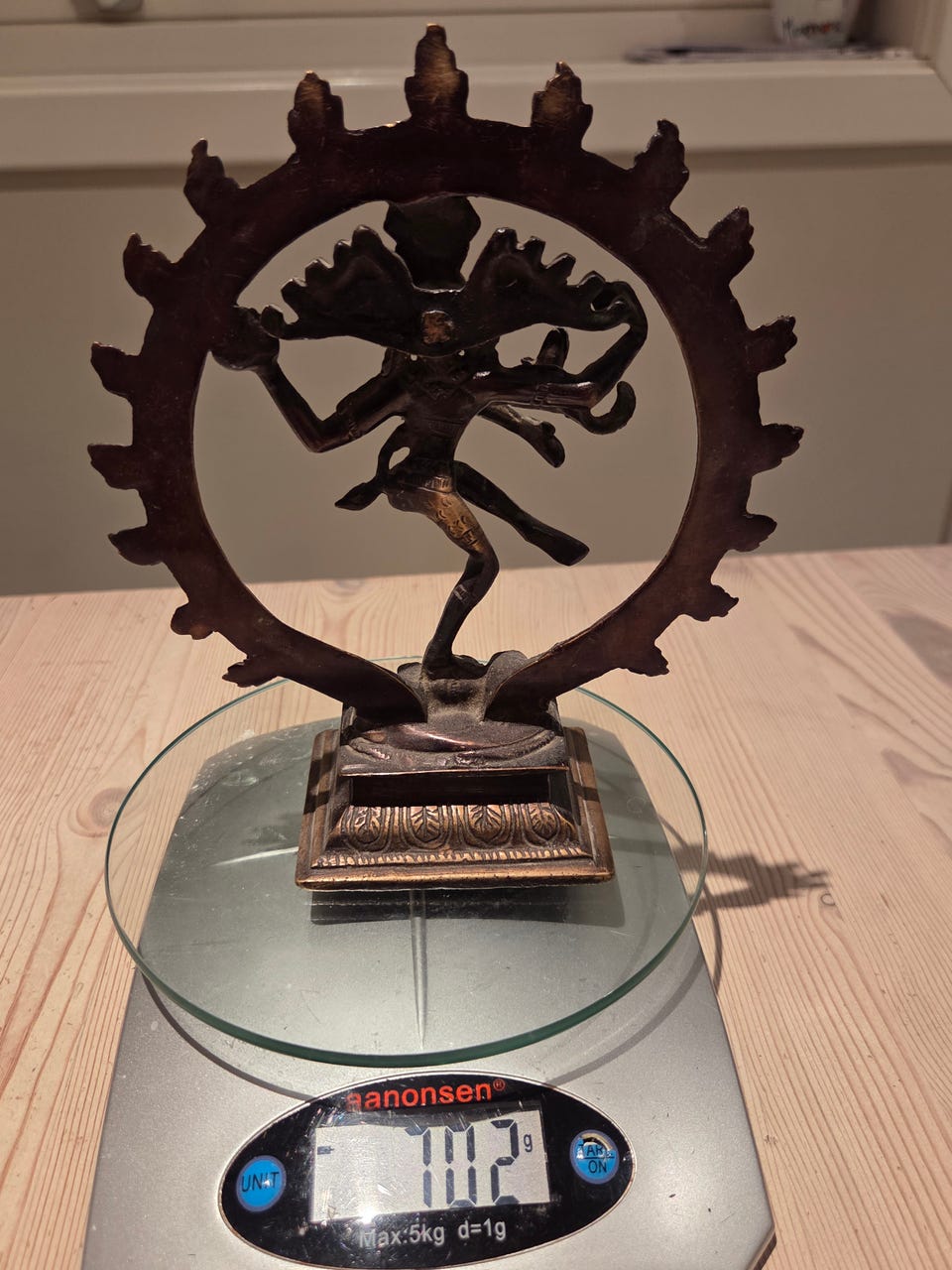
Bilde 11.Shiva Nataraja, the Lord of the Dance. This specific pose is one of the most iconic symbols of Hindu art and philosophy.
What the Statue Represents
Shiva is depicted performing the Ananda Tandava (Dance of Bliss). This dance is not just a performance; it represents the cosmic cycle of creation and destruction, as well as the daily rhythm of birth and death.
Here is a breakdown of the key elements you see in your statue:
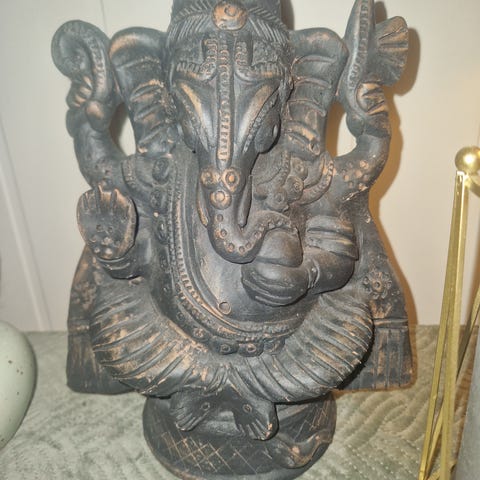
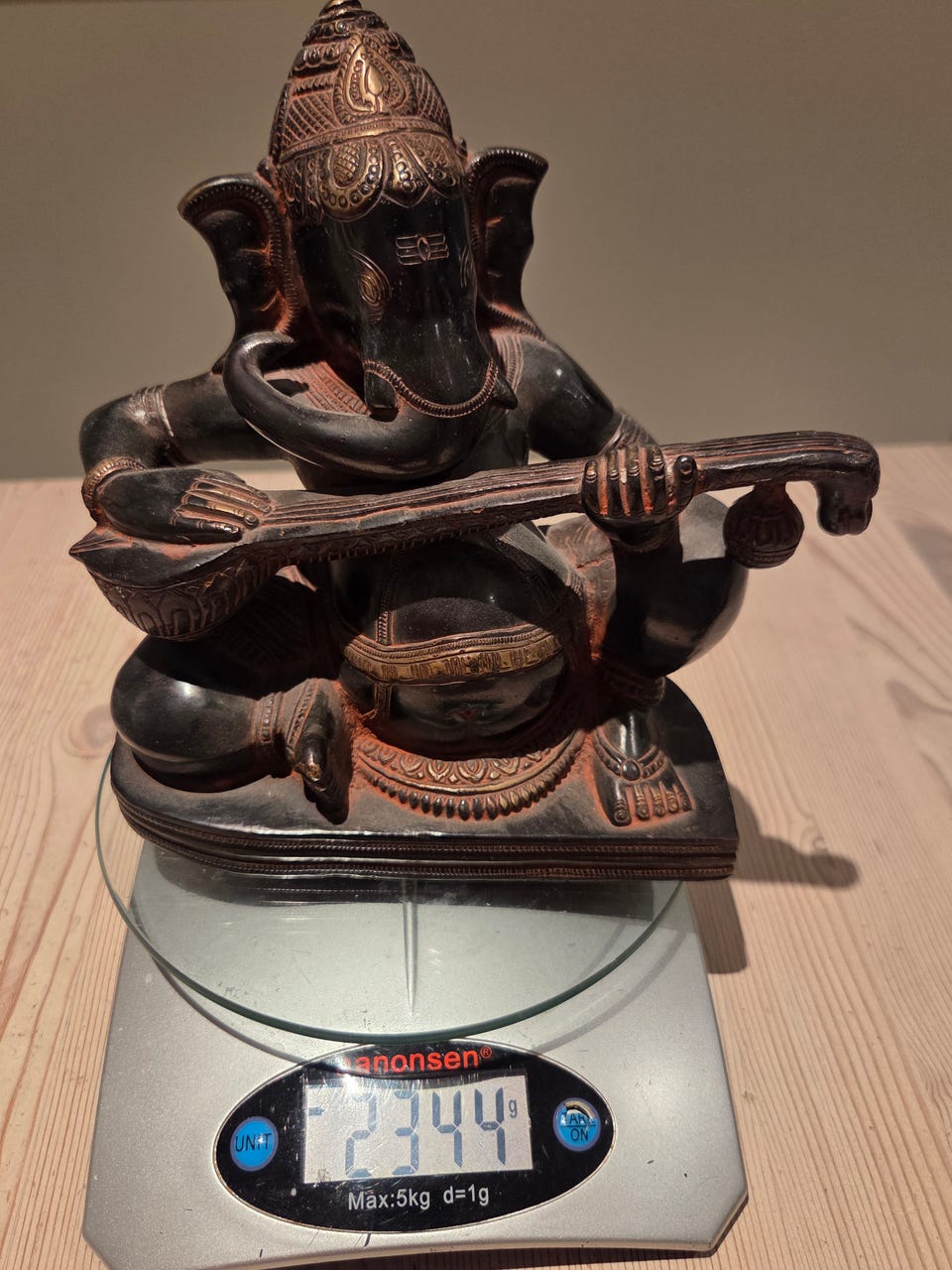
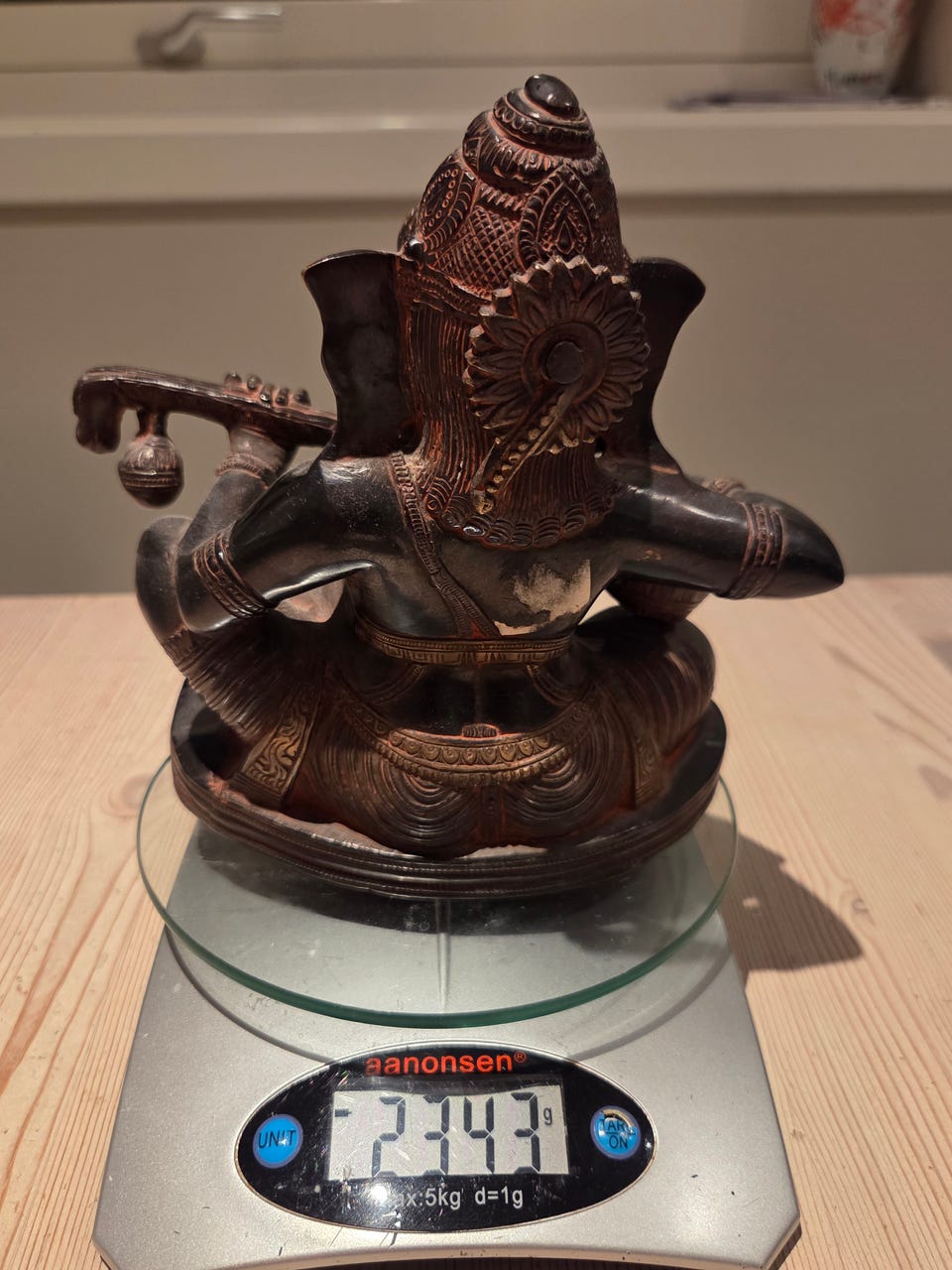
SOLGT. Bilde 13.Lord Ganesha, the Hindu deity known as the remover of obstacles and the patron of arts and sciences. This specific depiction is often referred to as Veena Ganesha, as he is shown playing the veena, a traditional Indian stringed instrument.
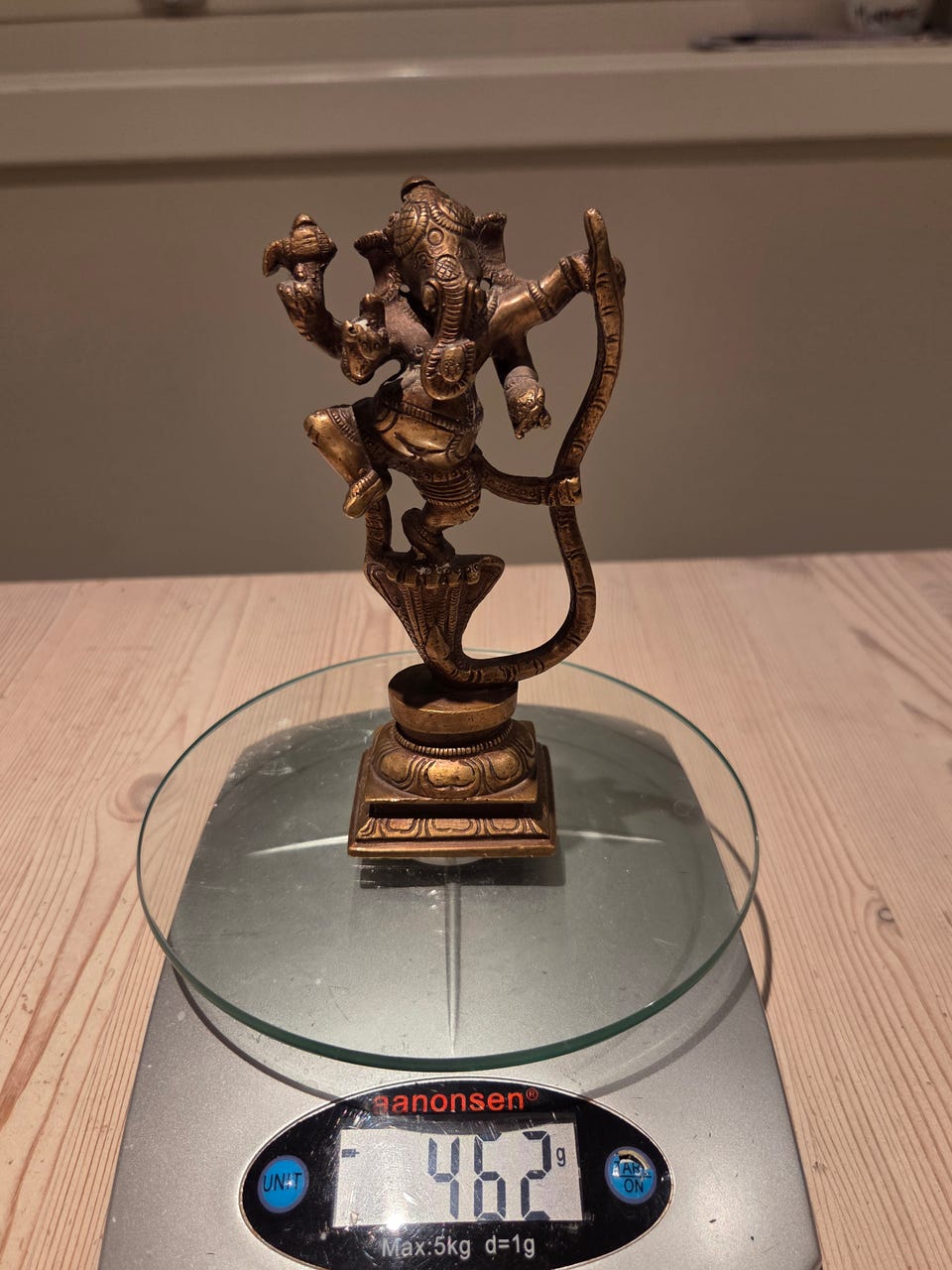
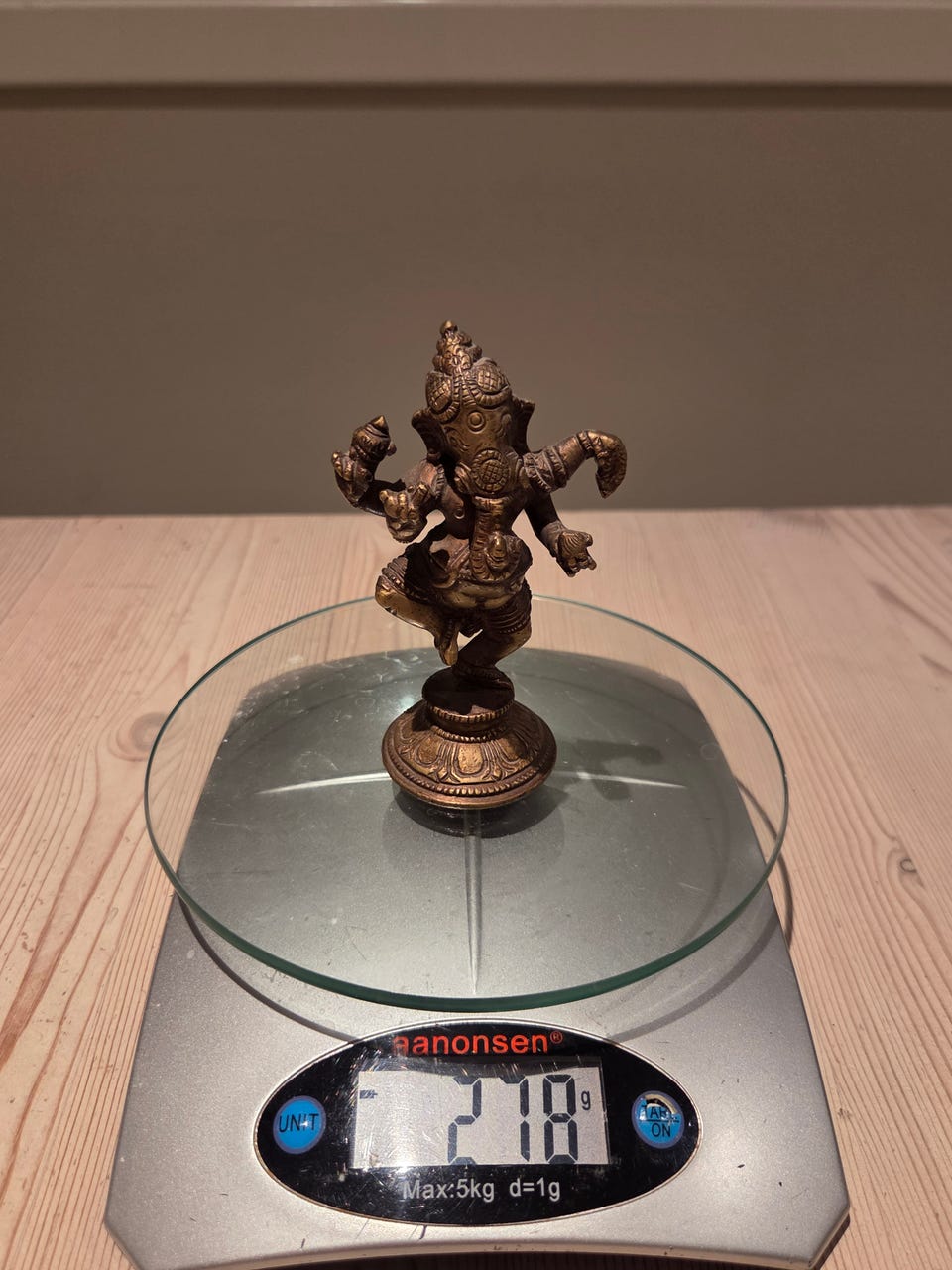
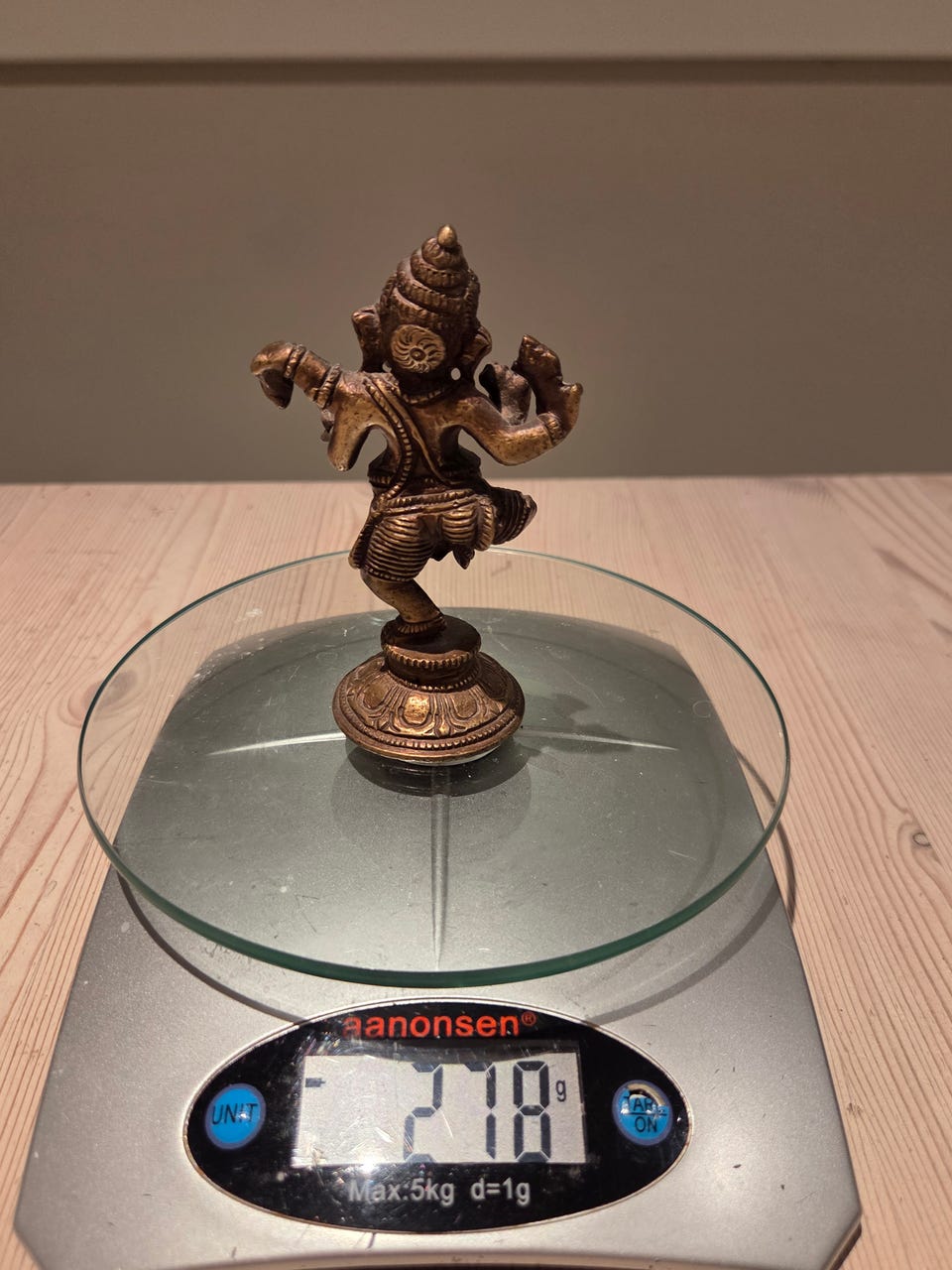
Bilde 15.Lord Ganesha, specifically in a dancing pose known as Nritya Ganapati.
In Hindu iconography, this form represents Ganesha in a joyous, celebratory state. He is often depicted dancing under the Kalpavriksha (wish-fulfilling tree), though here he is standing on a pedestal with one leg raised in a classic dance posture.
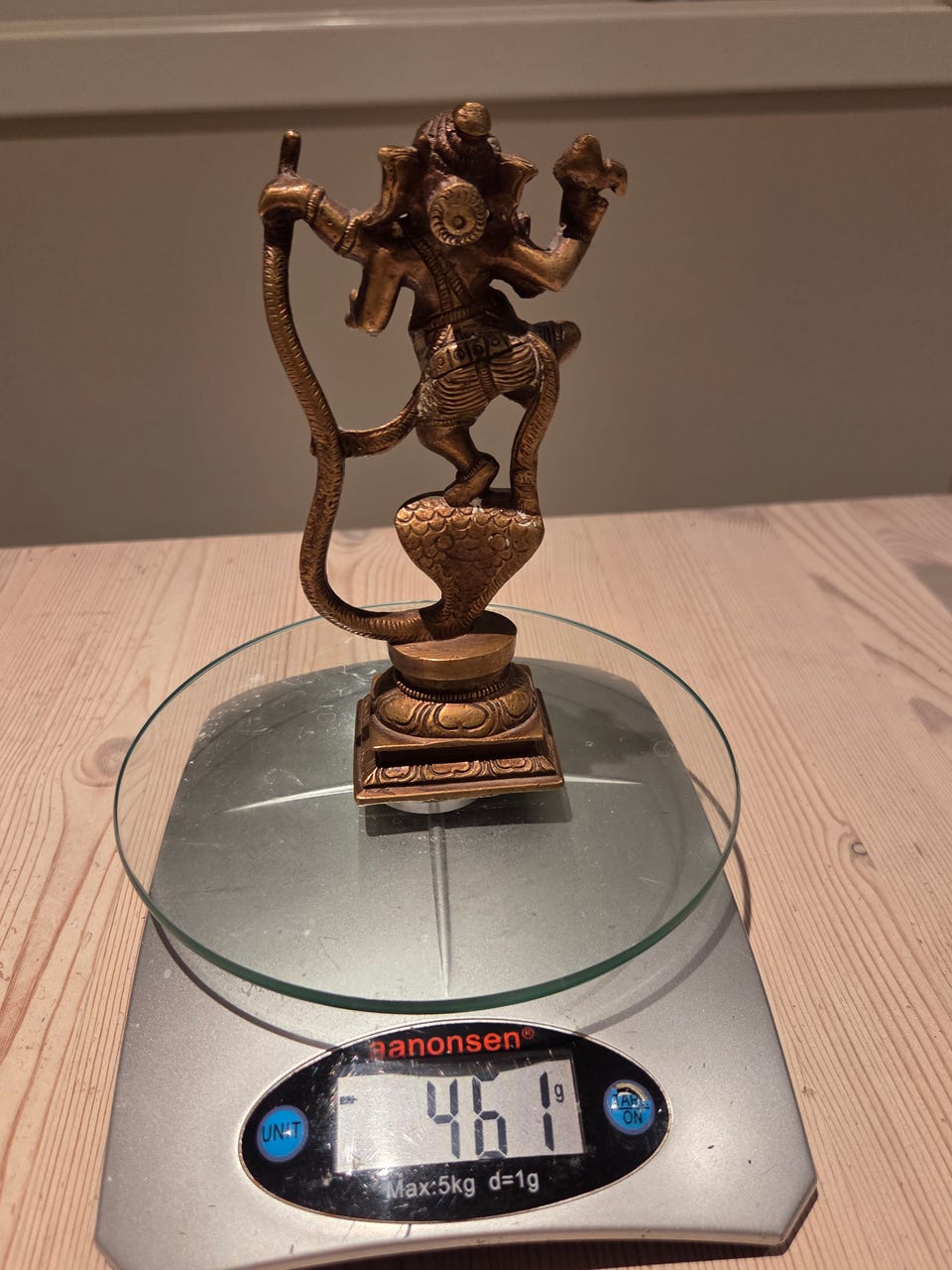
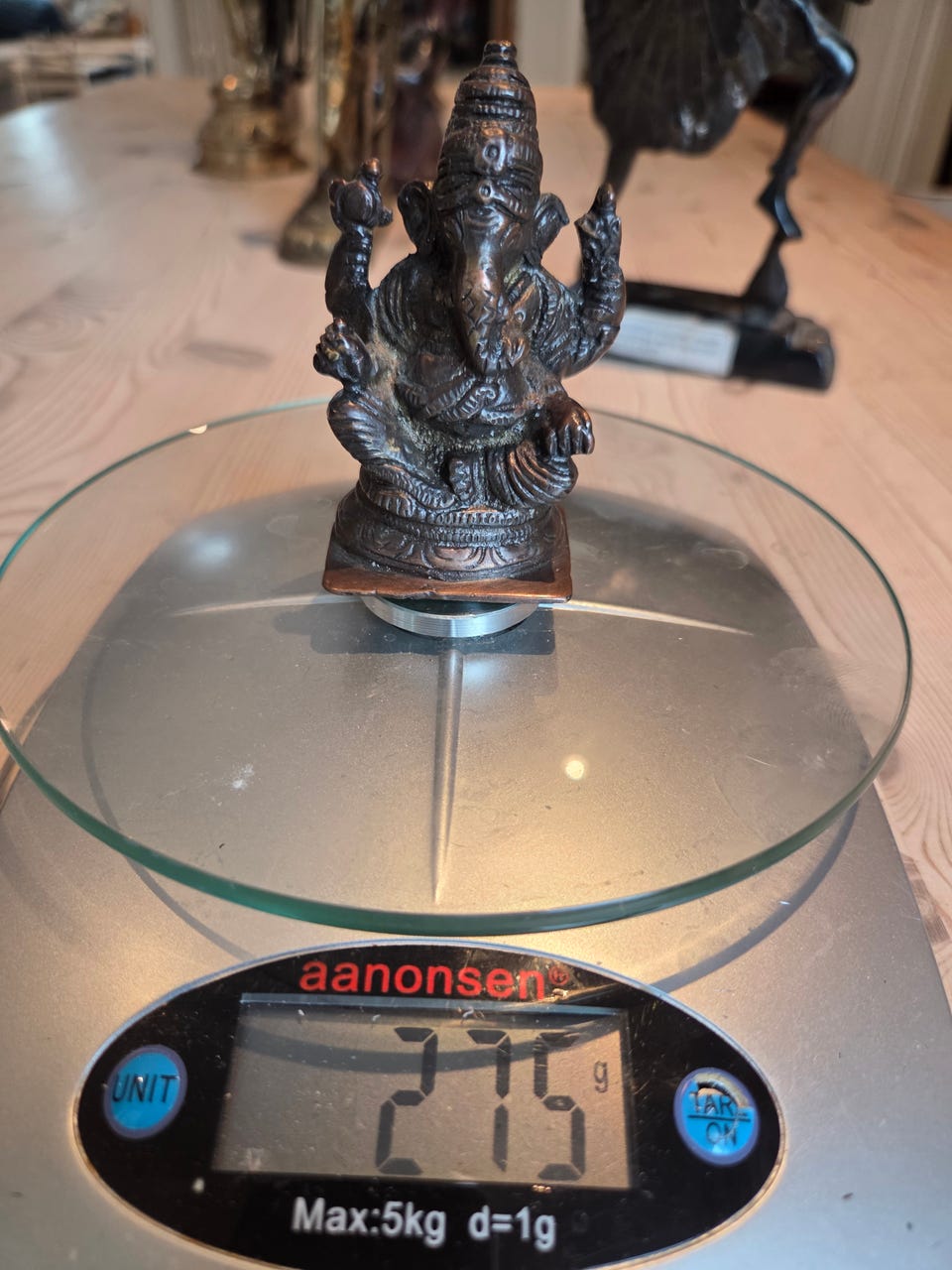
Bilde 17.Lord Ganesha placed on a digital kitchen scale.
Based on the visual evidence, here are some key details:
Physical Details
Deity: Lord Ganesha, recognizable by his elephant head. This specific pose is often referred to as Nritya Ganesha (Dancing Ganesha), as he is shown standing on one leg in a graceful dance posture. 300kr
NB: Knappen for å vise hele beskrivelsen har kun en visuell effekt.
Brukerprofil

Du må være logget inn for å se brukerprofiler og sende meldinger.
Logg innAnnonsens metadata
Sist endret: 1.3.2026 kl. 09:31 ・ FINN-kode: 445802168
Utforsk våre nye sider for klær og mote
Ta en titt