Bildegalleri
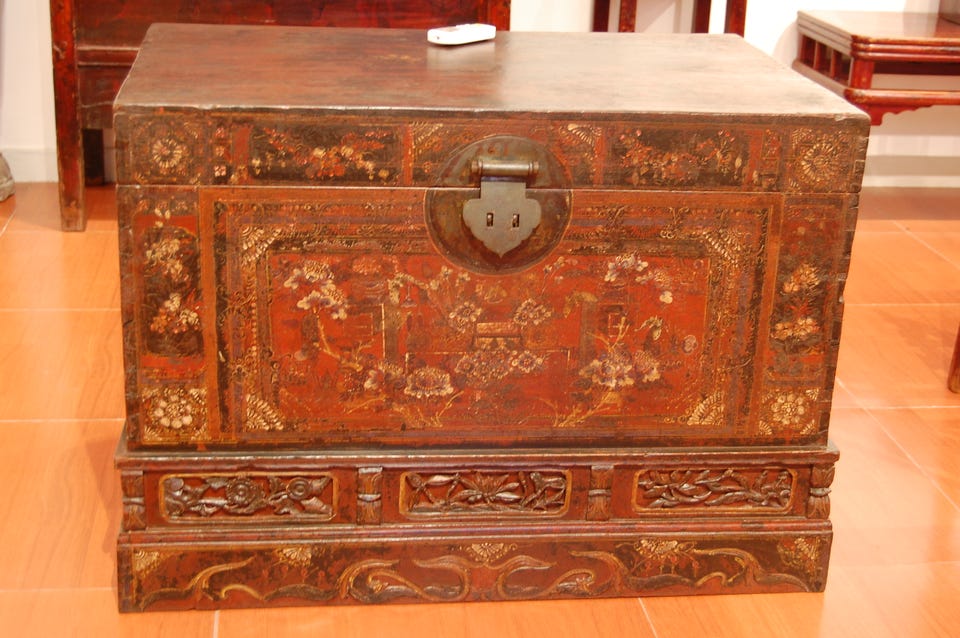
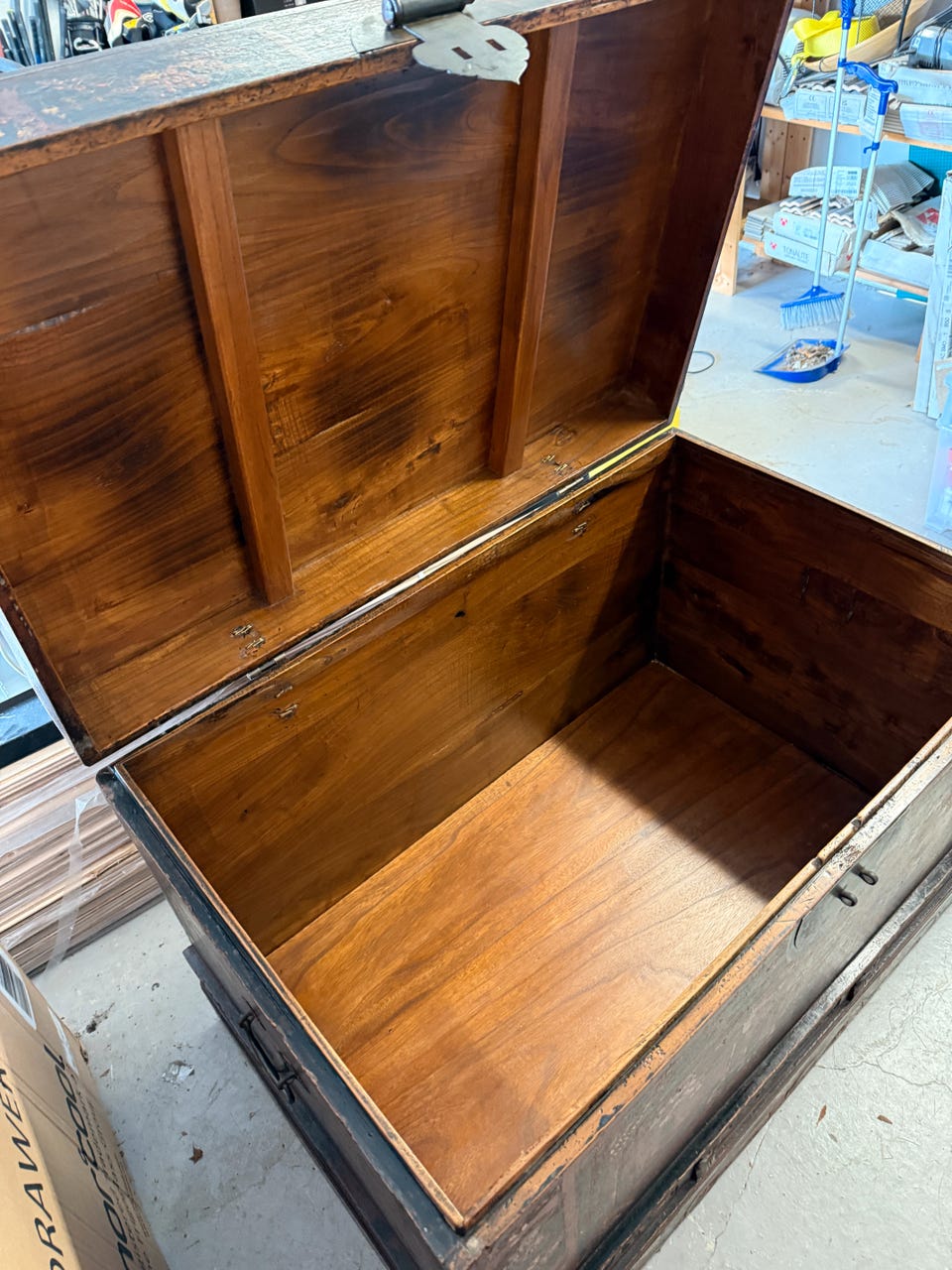
Antikk kleskiste fra Kina
Til salgs
10 000 kr
Beskrivelse av varen
Tilstand: Pent brukt - I god stand
Kisten er kjøpt i Kina i 2010, fra en anerkjent antikvitetsforhandler anbefalt av ansatte hos den norske ambassaden, med utsalg utenfor Beijing og i Australia (https://www.humblehouse.com.au/)
Se beskrivelse som følgte med ved kjøpet:
Clothes chest on base
Origin: Shandong Province
Period: 19th Century
Timber: Catalpa
The chest was the first form of storage with its origins as small boxes going back over 2,000 years. The basic form of the chest appears to have continued until the advent of the chair and a more sophisticated mode of living, perhaps around the Song dynasty (1127A.D. – 1279A.D.). With the addition of doors and then feet, chests evolved to cabinets and reflected a different way of storing articles.
Chests were primarily used for storing quilts and clothing. Most chests were fitted with an in-built base, which keeps the bottom of the chest away from damp and so to protect the contents.
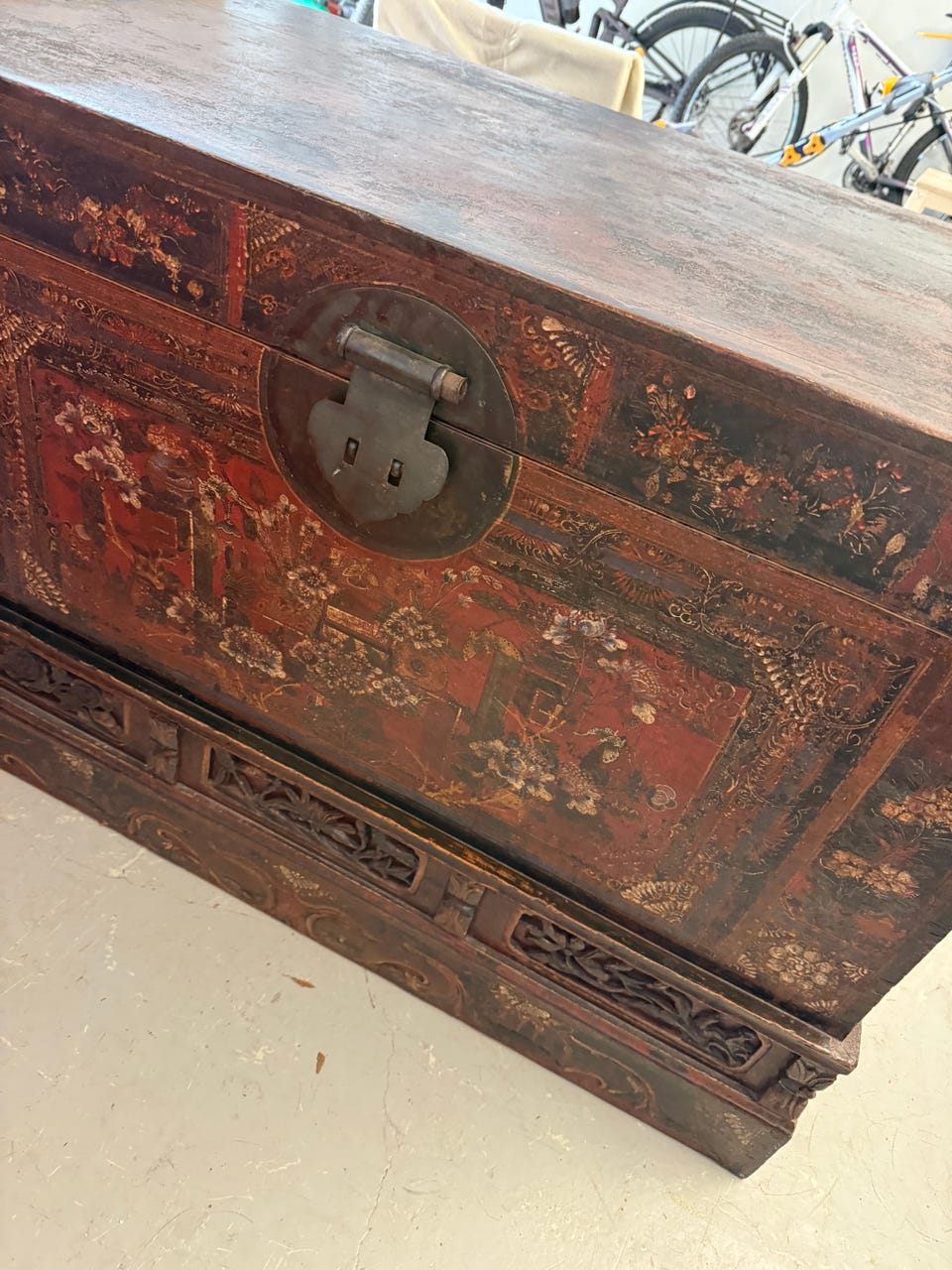
This particular chest is lacquered and beautifully painted with floral motifs. Such a presentation is indicative of the piece being crafted for propitious events such as a wedding. On the other hand the lacquer work effectively protects the timber.
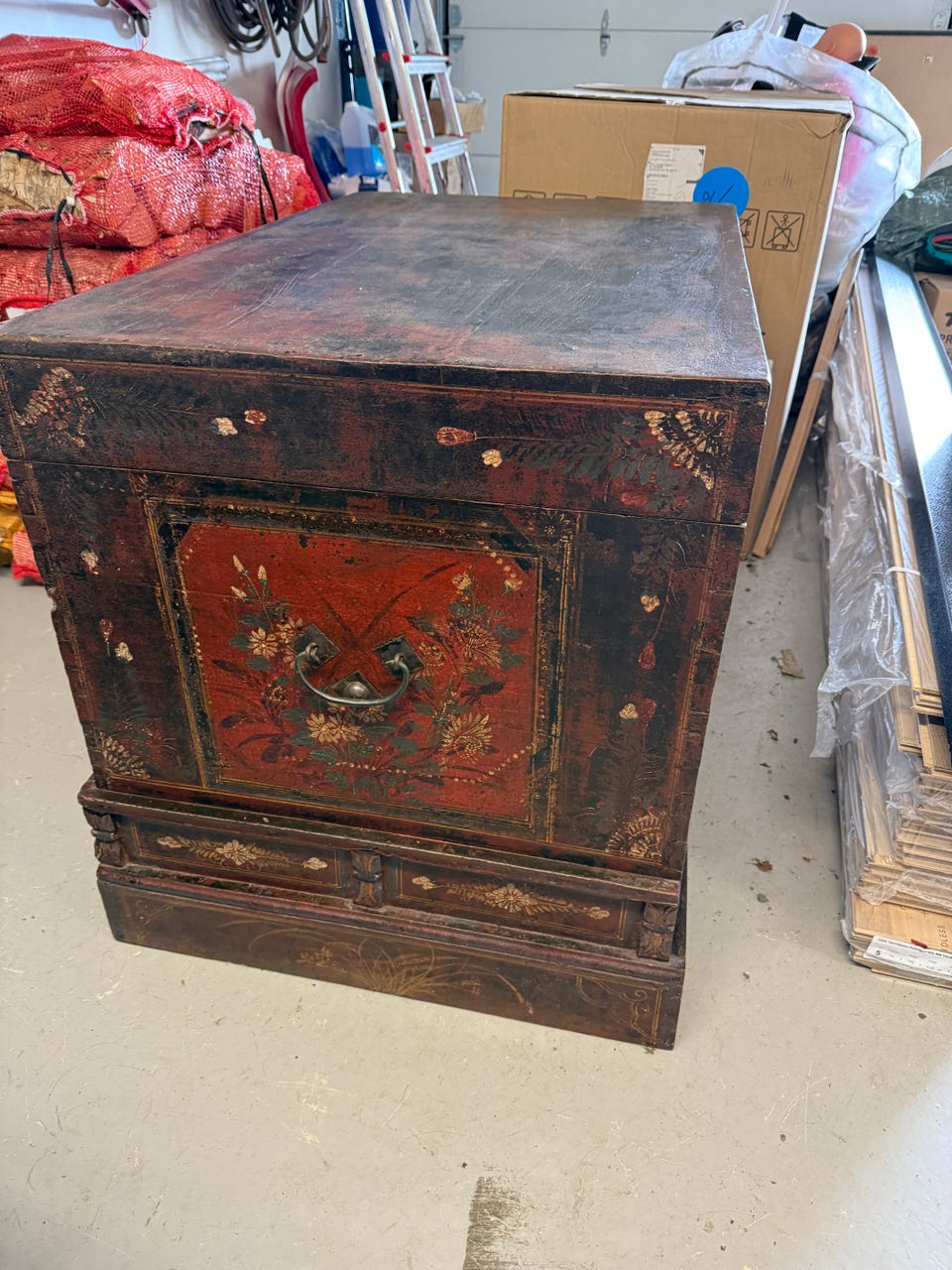
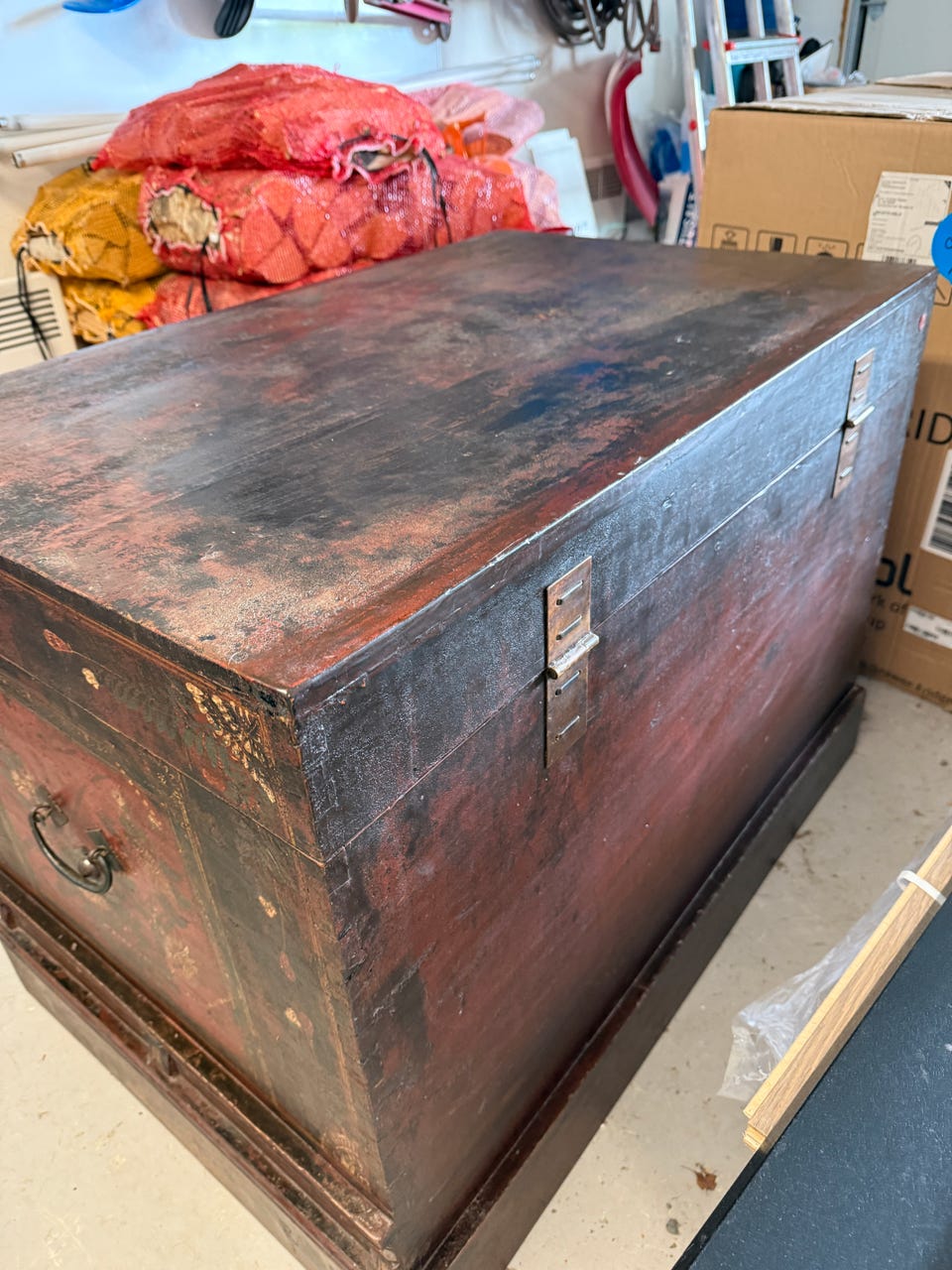
The painting covers four facets of the chest, the front, the sides and the lid.
The main theme on the front is a scholar’s painting table with books, vases, butterflies and the dominant flowers of peony and chrysanthemum.
The butterfly is pronounced as “hu die”. It is a symbol of happiness and longevity. The happiness symbolism stems from a story of the daoist philosopher Zhuangzi who once dreamed he was a butterfly flying about in a carefree manner. When he woke he wondered whether he dreamed he was a butterfly or whether he is a butterfly dreaming he is a man. The word “die” is a homonym of an old word meaning to reach the age of 70 or 80.
Peony presents a wish for wealth and honour in chosen career. Such symbolic meaning comes from its homonym “fu gui”, which are the words in Chinese for wealth and honour.
The chrysanthemum is favoured by the scholars. The most famous poem by Tao Yuanming (365 A.D. - 427 A.D.) titled “Drinking Wine”, is about the chrysanthemum: "Pick a chrysanthemum near a fence and enjoy the mountain in the south at your leisure." This poem was written when he resigned from his high official post and returned to the countryside to live as a farmer.
The plants are in vases. Vase is pronounced “ping” and, being the same as the word for peace, means a wish for a life of peace.
The sides are painted with peony, chrysanthemum and orchards. The orchid has multiple symbolic representations including: love, beauty and friendship.
There are also carved motifs of lotus and chrysanthemum on the front. The lotus is a plant closely associated with Buddhism. Living in mud, the flower rises beautiful and clean and this is a metaphor for the person of pure mind whose thoughts are not distracted by the clamours of daily life. The lotus is also a symbol of long life.
The base of the chest carved with cloud motif. The word for cloud is pronounced “yun”, the same as the word for luck. The cloud is therefore a symbol of good luck.
The metal fittings are very strong, especially the carriers on the sides.
Insurance value (2010): USD 900.00
Brukerprofil

Du må være logget inn for å se brukerprofiler og sende meldinger.
Logg innAnnonsens metadata
Sist endret: 24.6.2025 kl. 10:28 ・ FINN-kode: 414008226