Fiks ferdig
250 kr
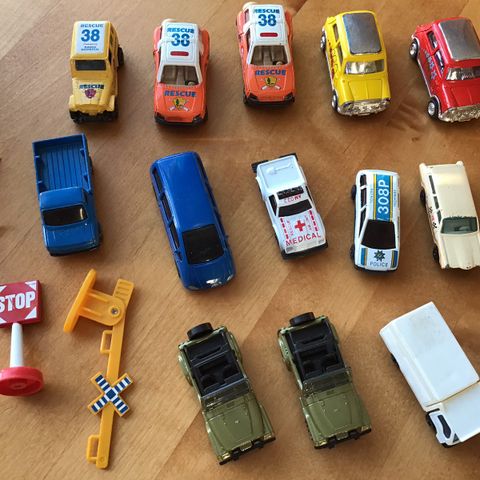
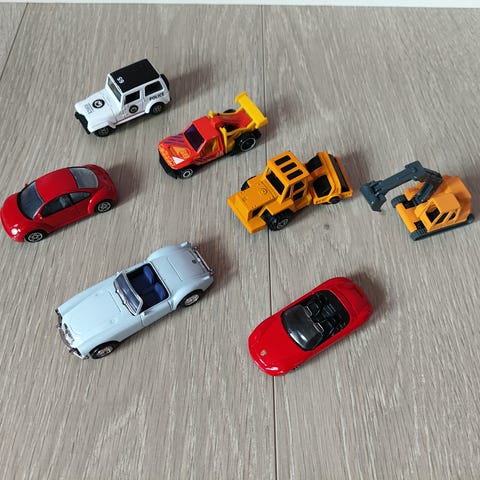
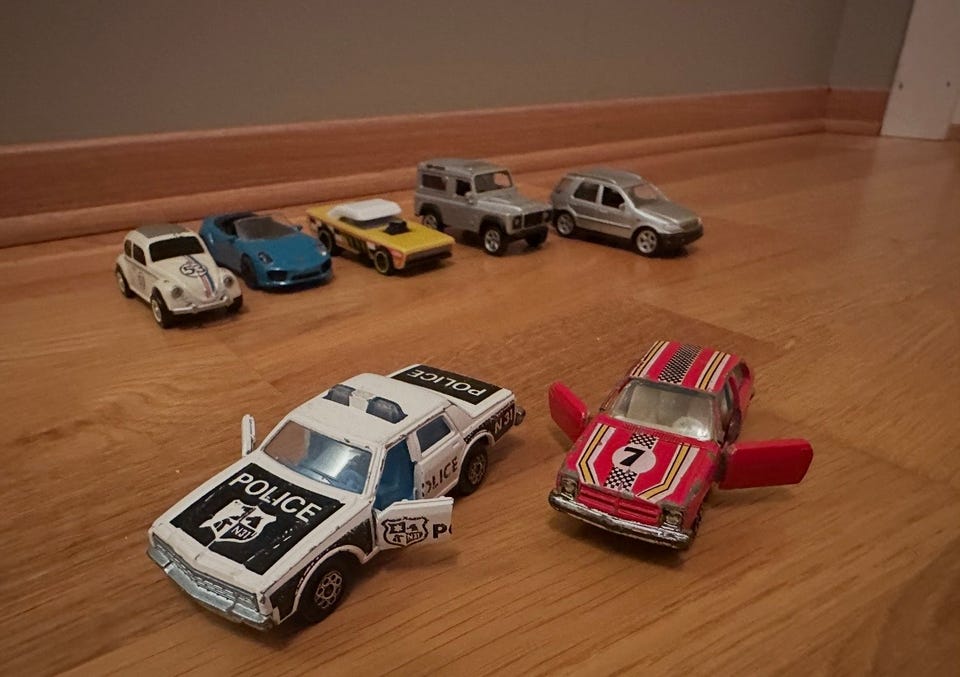
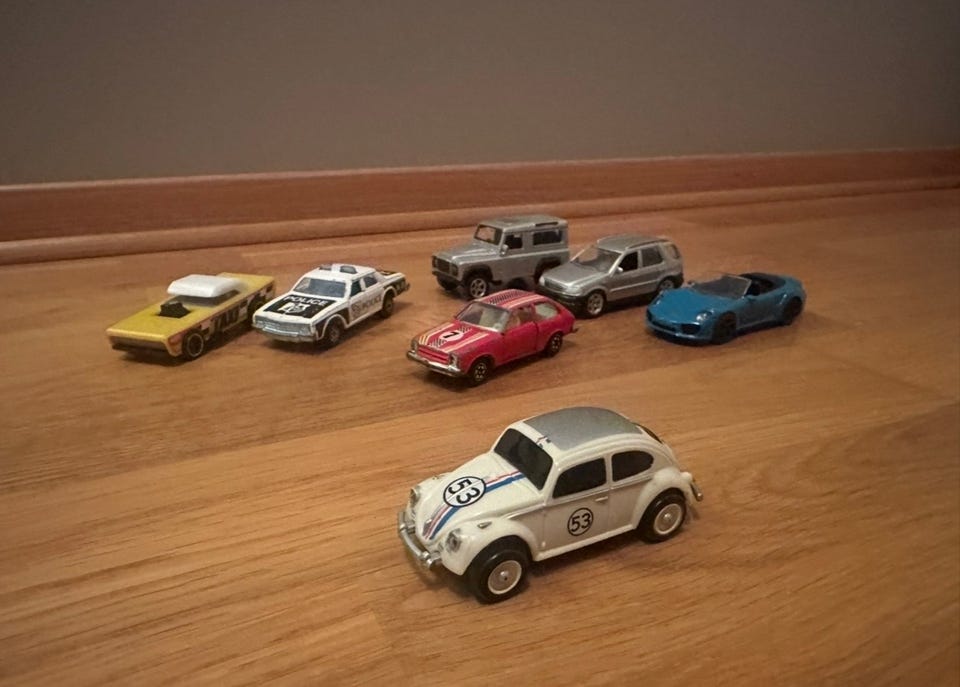
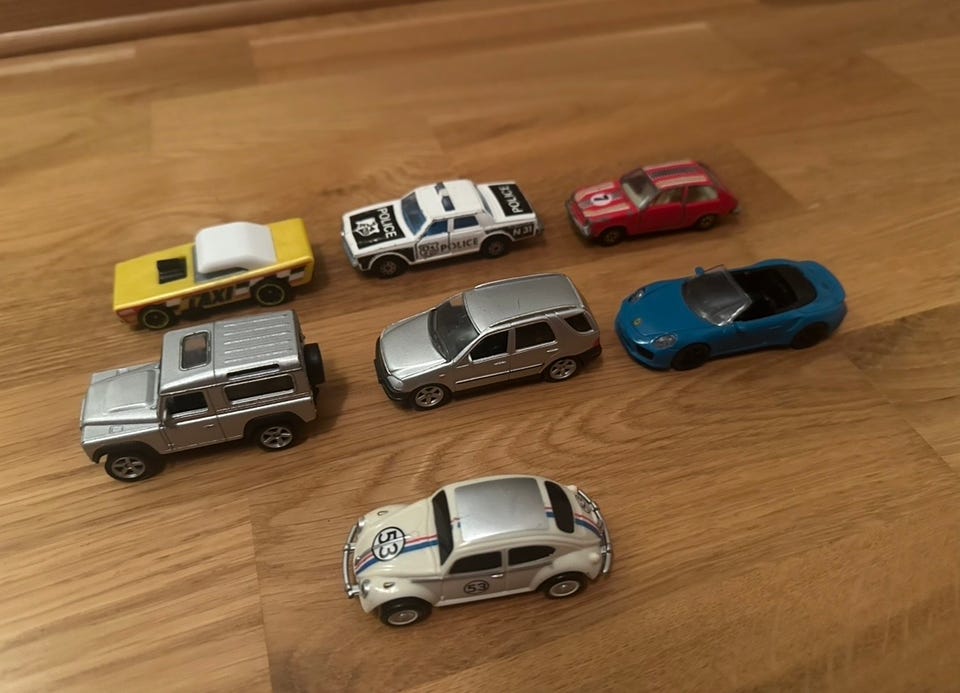
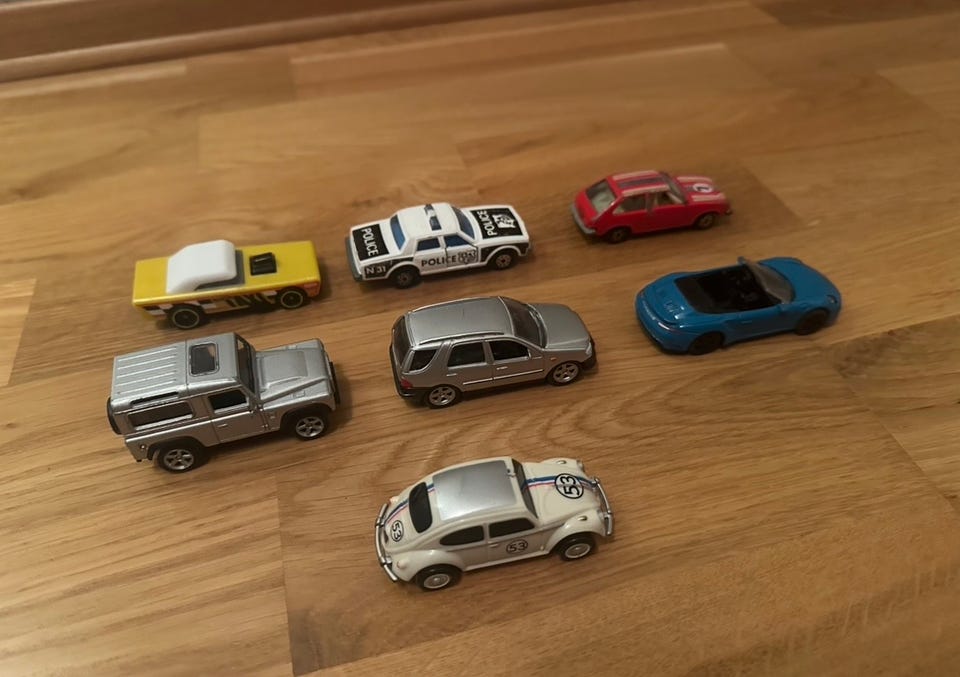
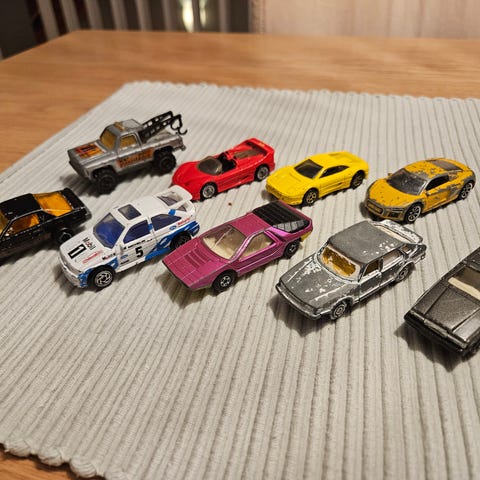
Selger 7 stykk biler.
Selges samlet for kr 250,-
Kan hentes 7584 Selbustrand, eller sendes frakt med sporing kr 70,-
Tror dette er riktig navn på modellene :
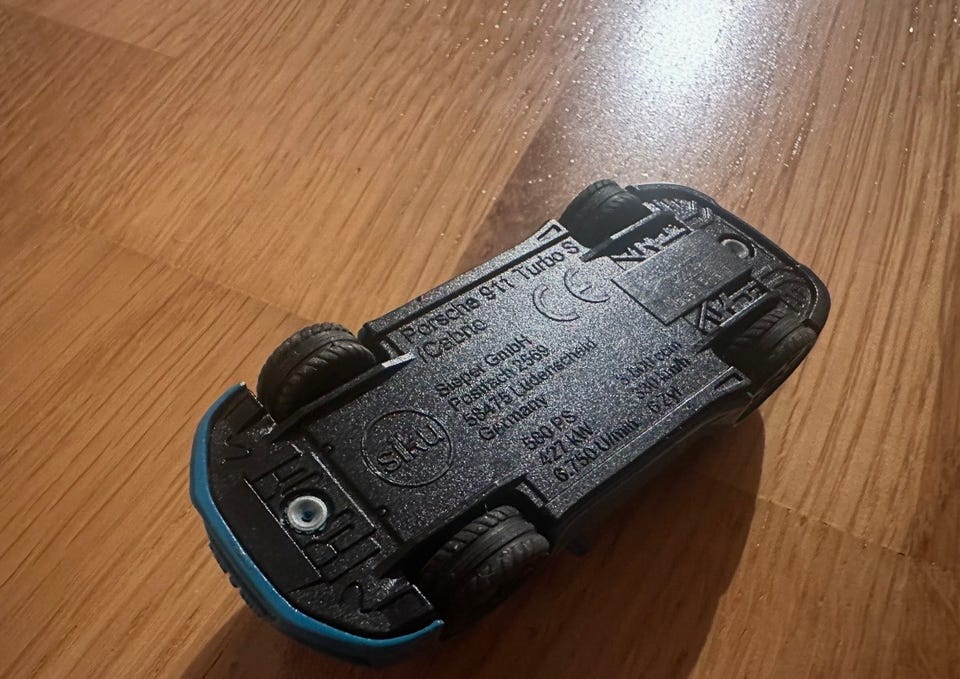
1 : Siku Porsche 911 Turbo S
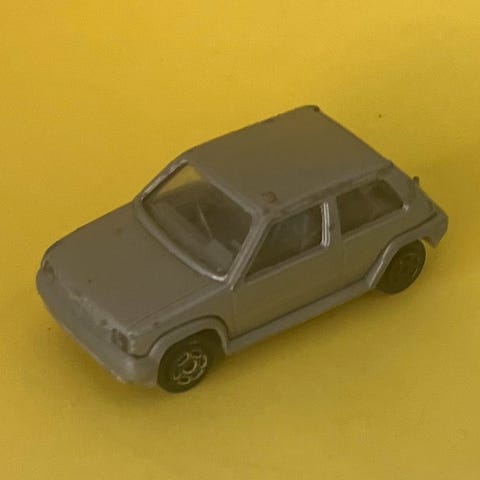
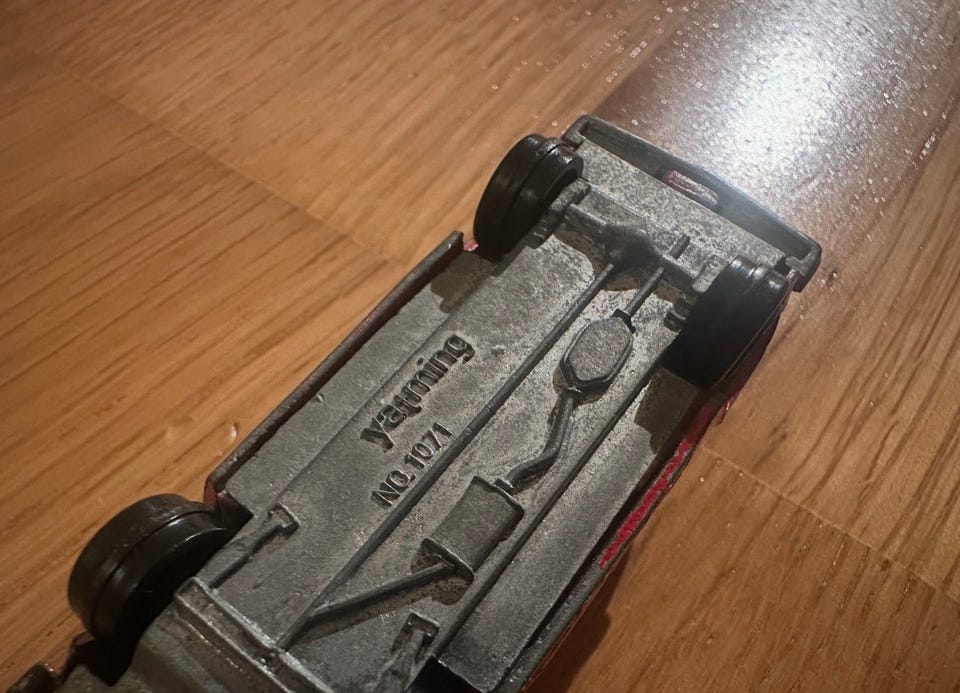
2 : Yatming no 1071 Chevrolet Chevette
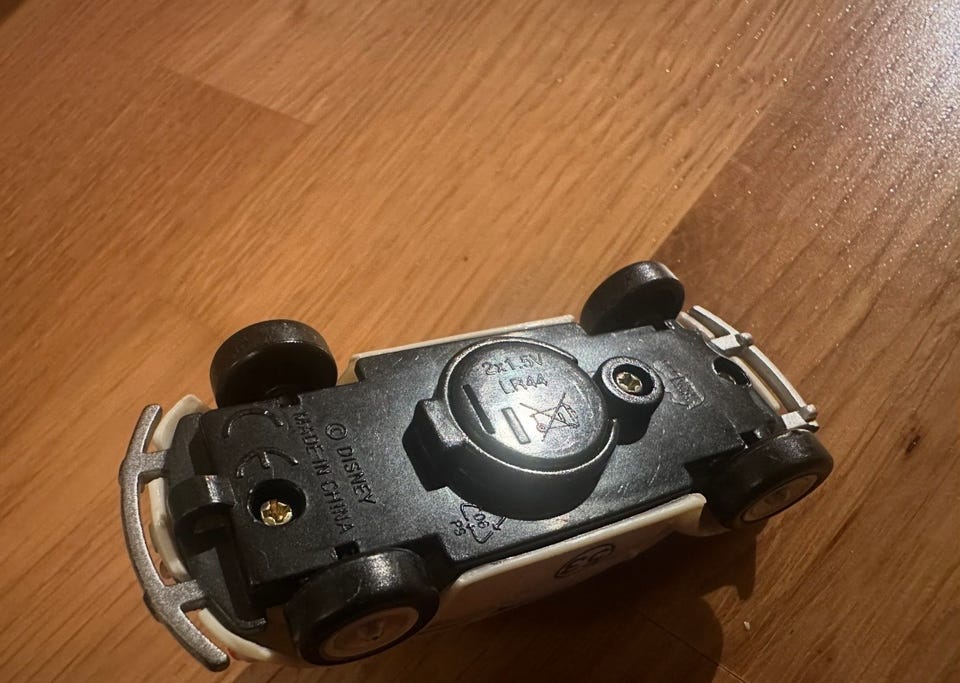
3 : Dickie toys Disney Beetle Herbie 53,
ser ut til å kunne ha batterier for lys men vet ikke om det fungerer.
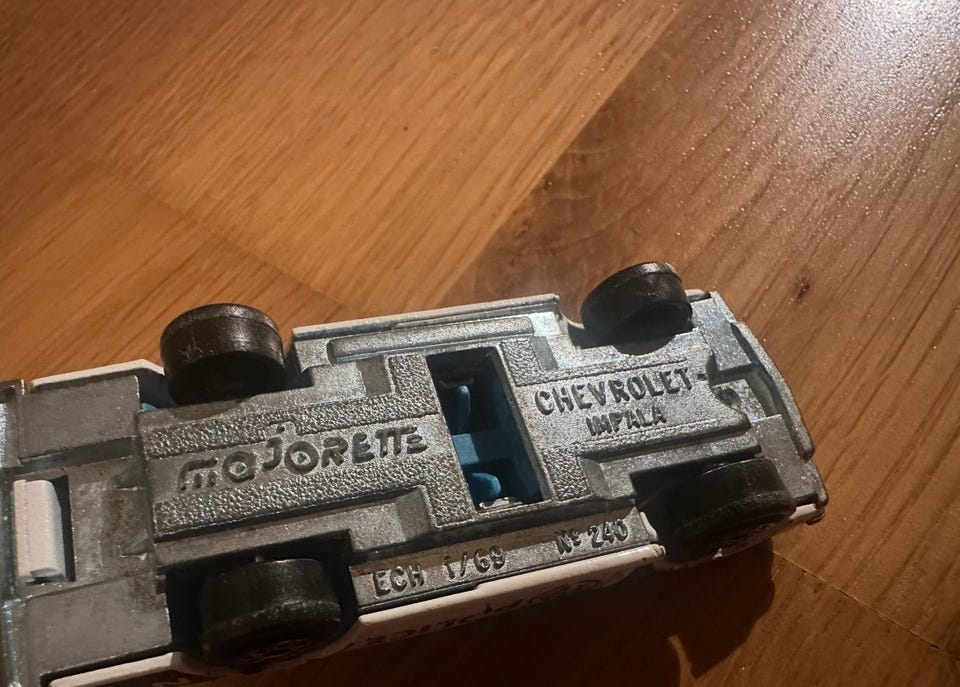
4 : Majorette Chevrolet impala no 240
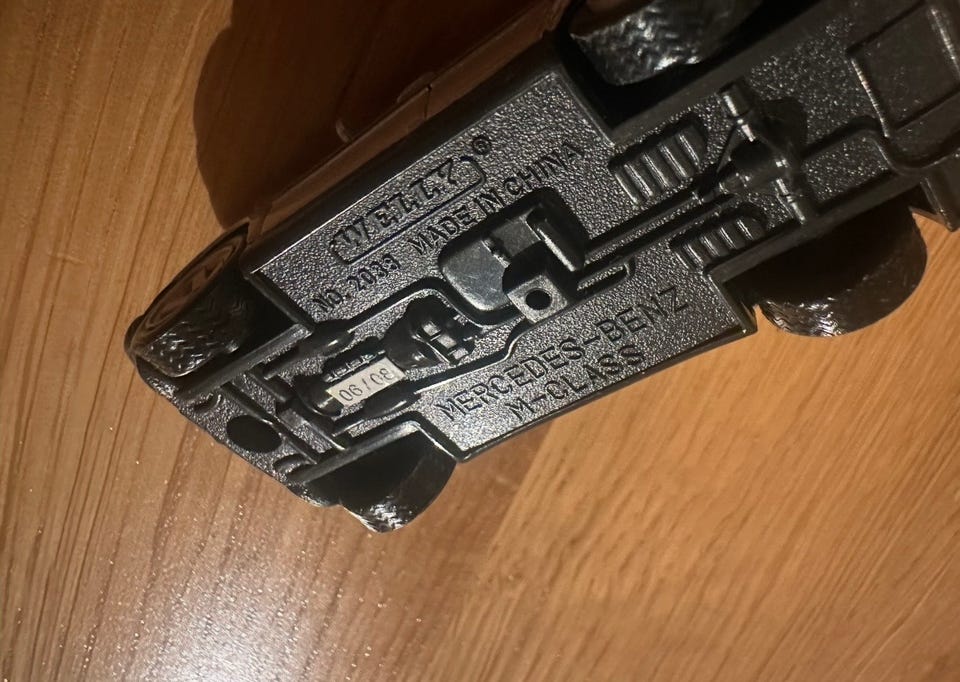
5 : Welly Mercedes-Benz M-class no 2038
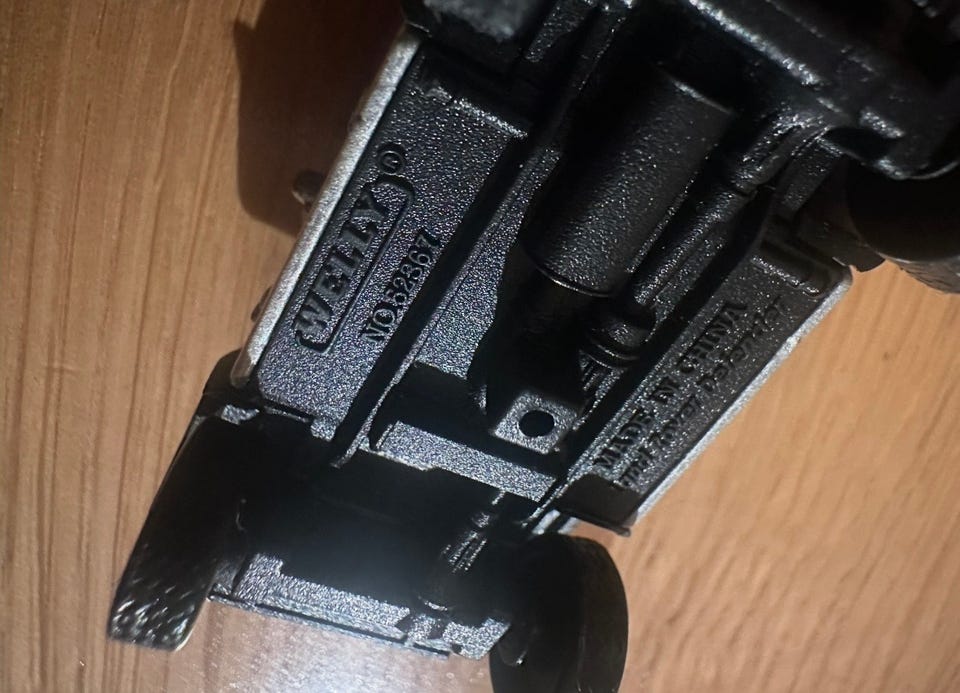
6 : Welly Land Rover Defender no 52367
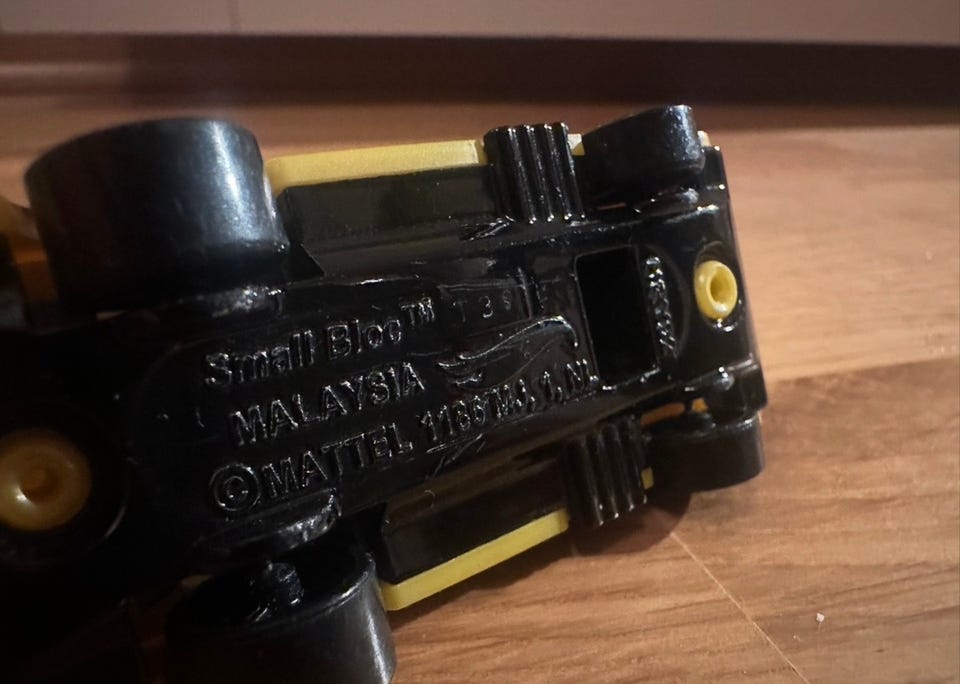
7 : Mattel Hot Wheels small bloc taxi
Søkeord/wikipedia : betle bw boble politi bil model modell modelbil modelbiler bburago mattel BBR Norev Maisto Revell Majorette Minichamps AUTOart Corgi Matchbox MF made by Lesney England Mattel inc lesney products & co ltd leke bil lekebil lekebiler småbil småbiler retro vintage classic consept car 1/64 1:64 1 64 1/69 1:69 1 69 conseptcar gamle Corgi Land Rover 24 hour crash service gammle gammel match box hotwheels racing racerbil sports bil sportsbil cope usa flas made in england corgi juniors deffender suv offroad off road off-road 2 dørs 2dør 2dørs coupe police car policecar highway hiway highway interceptor mercedesbenz amg mklasse m-klasse ml320 ml 320 The Chevrolet Chevette is a front-engine, rear-drive subcompact manufactured and marketed by Chevrolet for model years 1976–1987 as a three-door or five-door hatchback. Introduced in North America in September 1975, the Chevette superseded the Vega as Chevrolet's entry-level subcompact. Production reached 2.8 million over 12 years,[1] and the Chevette was the best-selling small car in the U.S. for model years 1979-1980. It was the first American car built to metric measurements, and also the first American car to feature a diagnostic plug for pinpointing service issues.[2] Overview The Chevette used General Motors' global rear-drive T platform which was co-developed by Opel and Isuzu in 1973. The first to use the T platform was the Brazilian Chevrolet Chevette released in 1973. Six months later the Opel Kadett C was released in Europe. Worldwide, GM manufactured and marketed more than 7 million[1] T-cars – either as rebadged models or locally-built versions in different countries. T-platform variants were marketed internationally as the Pontiac Acadian in Canada; Pontiac T1000/1000 in the United States (1981–1987); K-180 in Argentina; Vauxhall Chevette in the United Kingdom, Austria, France, Germany, New Zealand, Sweden, and Uruguay; Opel Kadett C in Germany; Isuzu Gemini in Japan, Holden Gemini in Australia; AYMESA Cóndor in Ecuador (from 1978); Saehan Gemini and Daewoo Maepsy in South Korea; and as a coupe utility (pickup), the Chevy (or GMC) 500 in Brazil and South America. A T-platform variant remained in production in South America through 1998. The Volkswagen Beetle, officially the Volkswagen Type 1,[a] is a small family car produced by the German company Volkswagen from 1938 to 2003.[b] A global cultural icon known for its bug-like design, the Beetle is widely regarded as one of the most influential cars of the 20th century. Its production period of 65 years is the longest for any single generation of automobile,[c] and its total production of 21.5 million units makes it the most produced car of a single platform in history and the second-highest of all nameplates manufactured in the 20th century. The Beetle was conceived in the early 1930s. The leader of Nazi Germany, Adolf Hitler, decided there was a need for a people's car—an inexpensive, simple, mass-produced car—to serve Germany's new road network, the Reichsautobahn. The German engineer Ferdinand Porsche and his design team began developing and designing the car in the early 1930s, but the fundamental design concept can be attributed to Béla Barényi in 1925, predating Porsche's[d] claims by almost ten years. The result was the Volkswagen Type 1 and the introduction of the Volkswagen brand. Volkswagen initially slated production for the late 1930s, but the outbreak of war in 1939 meant that production was delayed until the war had ended. The car was originally called the Volkswagen Type 1 and marketed simply as the Volkswagen. It was not until 1968 that it was officially named the "Beetle". Volkswagen implemented designations for the Beetle in the 1960s, including 1200, 1300, 1500, 1600, 1302, and 1303. Volkswagen introduced a series of large luxury models throughout the 1960s and 1970s—comprising the Type 3, Type 4 and K70—to supplement the Beetle, but none of these models achieved the level of success that it did. In 1972, it became the best-selling car of all time, a position it retained for nearly three decades. Rapidly changing consumer preferences toward front-wheel drive compact hatchbacks in Europe prompted Volkswagen's gradual shift away from rear-wheel drive, starting with the Golf in 1974. In the late 1970s and '80s, Japanese automakers dominated some markets around the world, which contributed to the Beetle's declining popularity. Mercedes-Benz proposed a plan to replace the G-Class, which at the time had been in production for 11 years. A joint agreement with Mitsubishi Motors to develop and produce a sports-utility vehicle was made in early 1991 and was confirmed publicly that June. Plans were made to base it on the Montero/Pajero platform, with one of them being badged as a Mercedes-Benz and the other a Mitsubishi. In May 1992, these plans were abandoned citing "technical problems" and Mercedes-Benz continued on with in-house development from January 1993.[10][11] In March 1993, a search for a location to build a U.S. manufacturing plant began. By September 1993, a location in the state of Alabama was chosen and construction started in 1994. While plans were being made overseas, in Germany development continued. Design work took place from late 1992 to 1994. A design from Mercedes' Sindelfingen studio was chosen in 1993 and approved by the executive board in February 1994. The design patents were filed in Germany on 13 July 1994, and in the U.S. on 13 January 1995. Prototype testing started with test mules and crash tests using mock-ups in May 1994. First functional prototype's crash test took place in February 1995, with full testing run from March 1995 to December 1996 in various climates and regions of the world. Pilot production began in May 1996. In July 1996, construction on the Mercedes-Benz U.S. International plant in Vance, Alabama concluded, with the very first production M-Class rolling off the assembly line the week of 9 February 1997.[12] The changes in the automobile marketplace resulted in Chevrolet redesigning the Impala for the 1977 model year to meet changing demands. It, as well as the other downsized B-body sedans, went on sale in late September 1976.[36] The new downsized Impalas were shorter in length, taller and narrower than before. The new Impala's frame was a shortened version of the one introduced in 1970 and would be used until 1996 when the B-body production line was shut down. Even with its smaller exterior dimensions, the new Impala featured increased headroom, rear-seat legroom, and trunk space.[37] Production of the downsized model increased substantially over 1976, and the Impala regained the number one U.S. sales position. The redesigned 1977 Impala/Caprice was named Motor Trend's car of the year. Pillarless hardtops were discontinued, the result of rumors of federal rollover standards looming in the near future. The 1977–1979 coupes sported a double-bent, tempered rear window similar to what was later used for the 1987 Chevrolet Monte Carlo Aerocoupe. For the 1980 model year, a mid-cycle refresh replaced this complex backlight in the coupe with a more upright nearer flat glass, although the overall design remained similar. The biggest change to the Land Rover Series came in late 1990, when it became the Land Rover Defender. This was because in 1989 the company had introduced the Discovery model, requiring the original Land Rover to acquire a name.[9] The Discovery also had a new turbodiesel engine, the 200TDi. This was also loosely based on the existing 2.5-litre turbo unit, and was built on the same production line, but had a modern alloy cylinder head, improved turbocharging, intercooling and direct injection. It retained the block, crankshaft, main bearings, cambelt system, and other ancillaries as the Diesel Turbo. The breather system included an oil separator filter to remove oil from the air in the system, thus finally solving the Diesel Turbo's main weakness of re-breathing its own sump oil. The 200Tdi, produced 107 hp (80 kW) and 195 lb⋅ft (264 N⋅m) of torque, which was nearly a 25% improvement on the engine it replaced (although as installed in the Defender the engine was de-tuned slightly from its original Discovery 111 hp (83 kW) specification due to changes associated with the turbo position and exhaust routing).[9] This engine finally allowed the Defender to cruise comfortably at high speeds, as well as tow heavy loads speedily on hills while still being economical. In theory, it only replaced the older Diesel Turbo engine in the range, with the other four-cylinder engines (and the V8 petrol engine) still being available. However, the Tdi's combination of performance and economy meant that it took the vast majority of sales. Exceptions were the British Army and some commercial operators, who continued to buy vehicles with the 2.5-litre naturally aspirated diesel engine (in the army's case, this was because the Tdi was unable to be fitted with a 24-volt generator). Small numbers of V8-engined Defenders were sold to users in countries with low fuel costs or who required as much power as possible (such as in Defenders used as fire engines and ambulances).

Du må være logget inn for å se brukerprofiler og sende meldinger.
Logg innSist endret: 10.3.2026 kl. 20:38 ・ FINN-kode: 454660619