Bildegalleri
(1/1)
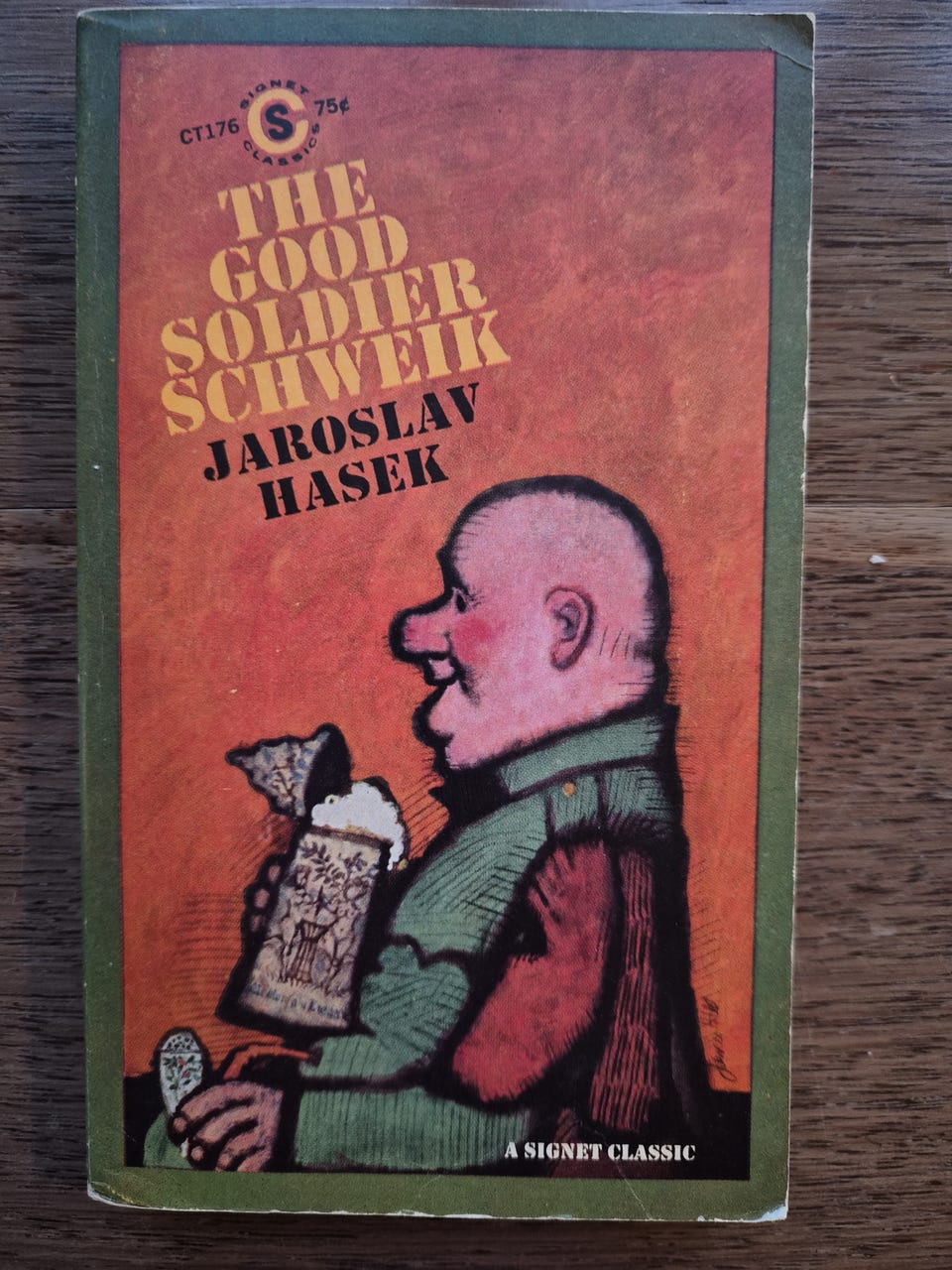
The Good Soldier, Jaroslav Hasek, pocket
Til salgs
100 kr
Frakt fra 38 kr + Trygg betaling 39 kr
Trygg handel med Fiks ferdig
Etter levering har du 24 timer til å se over varen. Hvis det er noe galt med varen, får du pengene dine tilbake.
Beskrivelse av varen
Tilstand: Pent brukt - I god stand
A Signet Classic, 1963
The Good Soldier Švejk[a] (pronounced [ˈʃvɛjk]) is an unfinished satirical, dark comedy novel by Czech writer Jaroslav Hašek, published in 1921–1923, about a good-humored, simple-minded, middle-aged man who appears to be enthusiastic to serve Austria-Hungary in World War I.
The Good Soldier Švejk is the abbreviated title; the original Czech title of the work is Osudy dobrého vojáka Švejka za světové války (The Fateful Adventures of the Good Soldier Švejk During the World War). The book is the most translated novel of Czech literature, having been translated into over 50 languages.
The novel is set during World War I in Austria-Hungary, a multi-ethnic empire full of long-standing ethnic tensions. Fifteen million people died in the war, one million of them Austro-Hungarian soldiers, including around 140,000 who were Czechs. Hašek participated in this conflict and examined it in The Good Soldier Švejk.
Many of the situations and characters seem to have been inspired, at least in part, by Hašek's service in the 91st Infantry Regiment of the Austro-Hungarian Army. The novel also deals with broader anti-war themes: essentially a series of absurdly comic episodes, it explores the pointlessness and futility of conflict in general and of military discipline, Austrian military discipline in particular. Many of its characters, especially the Czechs, are participating in a conflict they do not understand on behalf of an empire to which they have no loyalty.
The character of Josef Švejk is a development of this theme. Through (possibly feigned) idiocy or incompetence, he repeatedly manages to frustrate military authority and expose its stupidity in a form of passive resistance: the reader is left unclear, however, as to whether Švejk is genuinely incompetent, or acting quite deliberately with dumb insolence. These absurd events reach a climax when Švejk, wearing a Russian uniform, is mistakenly taken prisoner by his own side.
In addition to satirising Habsburg authority, Hašek repeatedly sets out corruption and hypocrisy attributed to priests of the Catholic Church.
Første verdenskrig, satire, opposisjon, protest, humor, krig
NB: Knappen for å vise hele beskrivelsen har kun en visuell effekt.
Brukerprofil

Du må være logget inn for å se brukerprofiler og sende meldinger.
Logg innAnnonsens metadata
Sist endret: 8.6.2026 kl. 23:22 ・ FINN-kode: 440527775