Bildegalleri
(1/11)
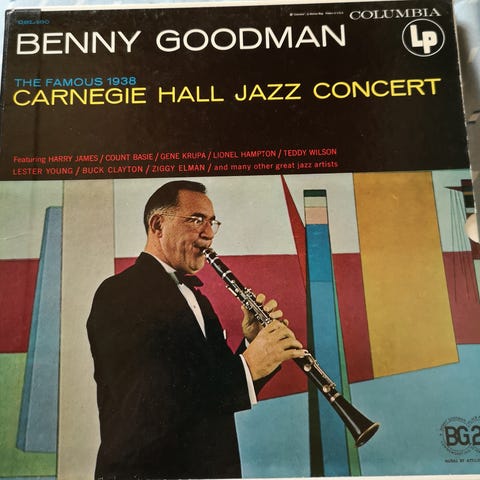
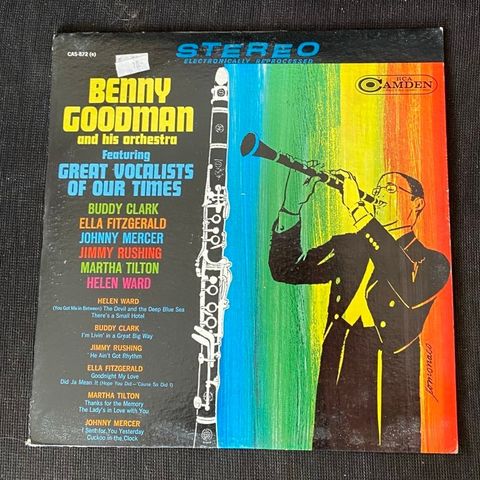
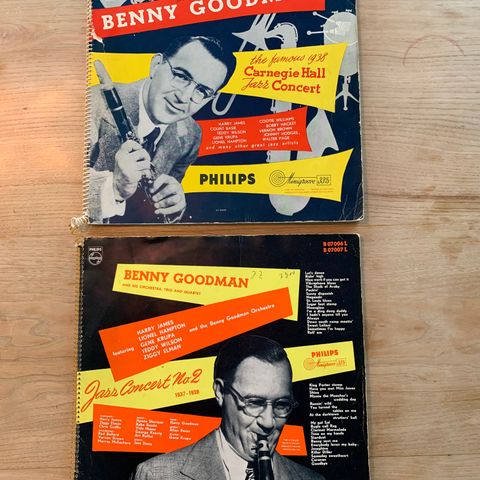
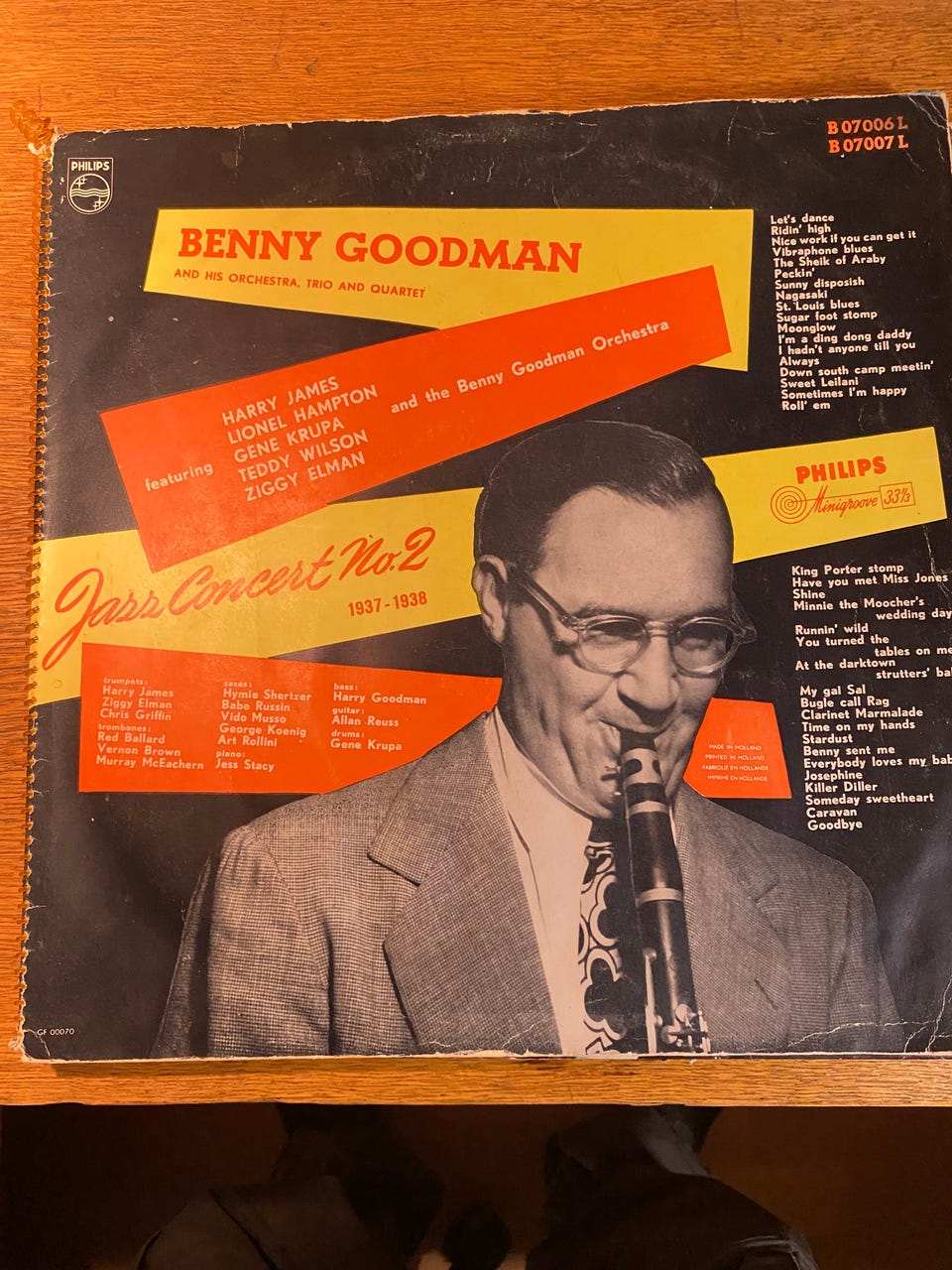
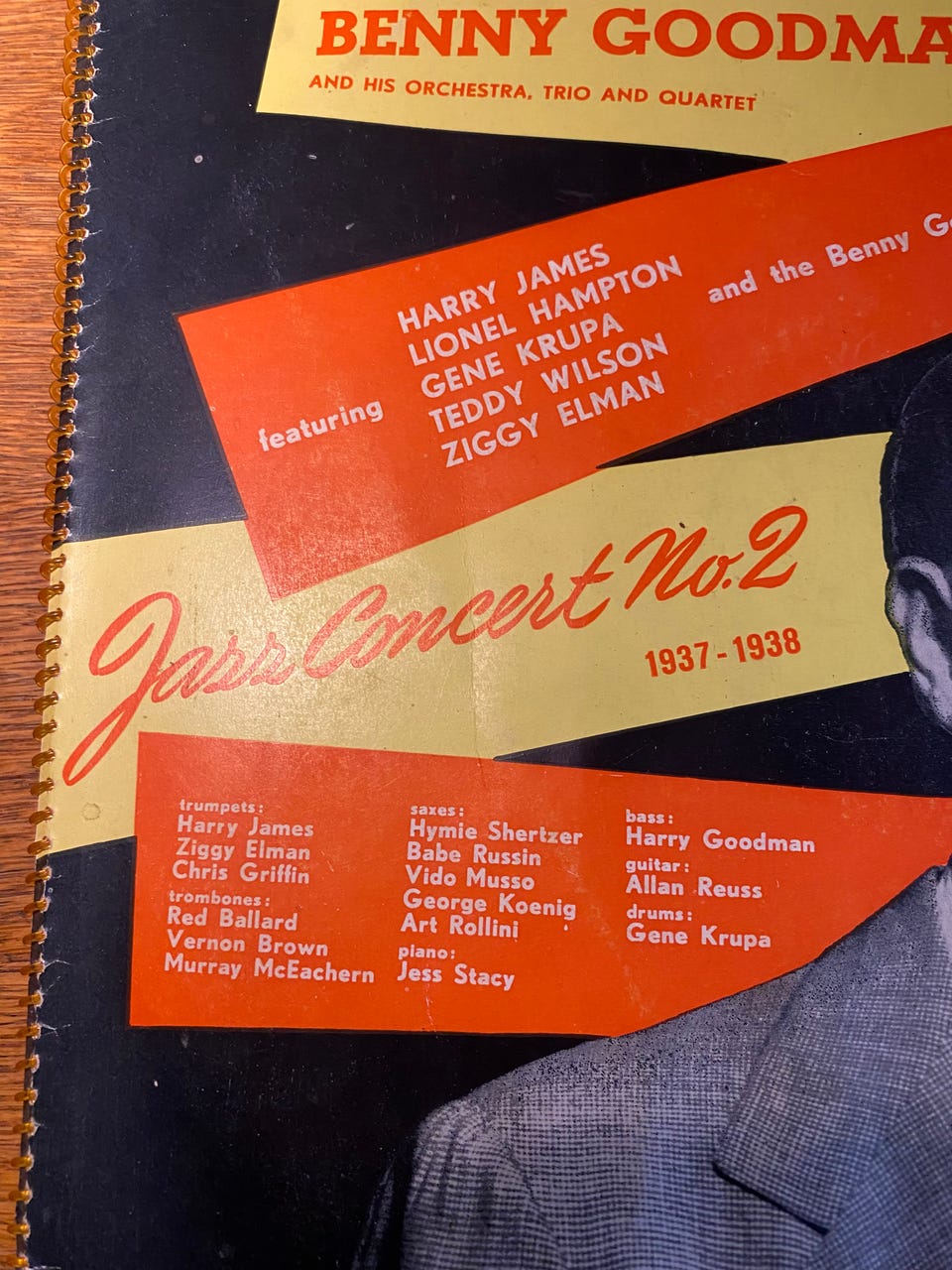
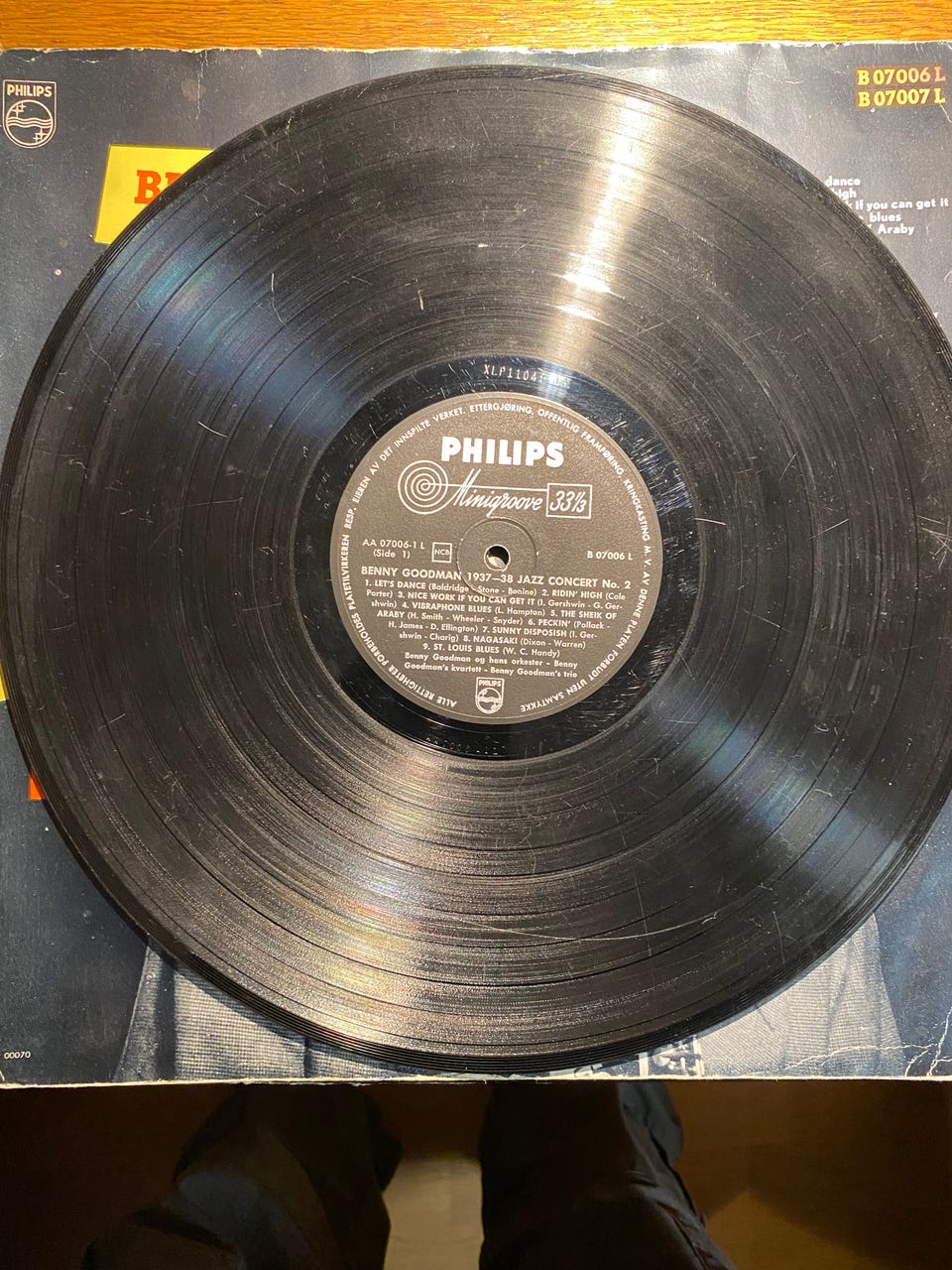
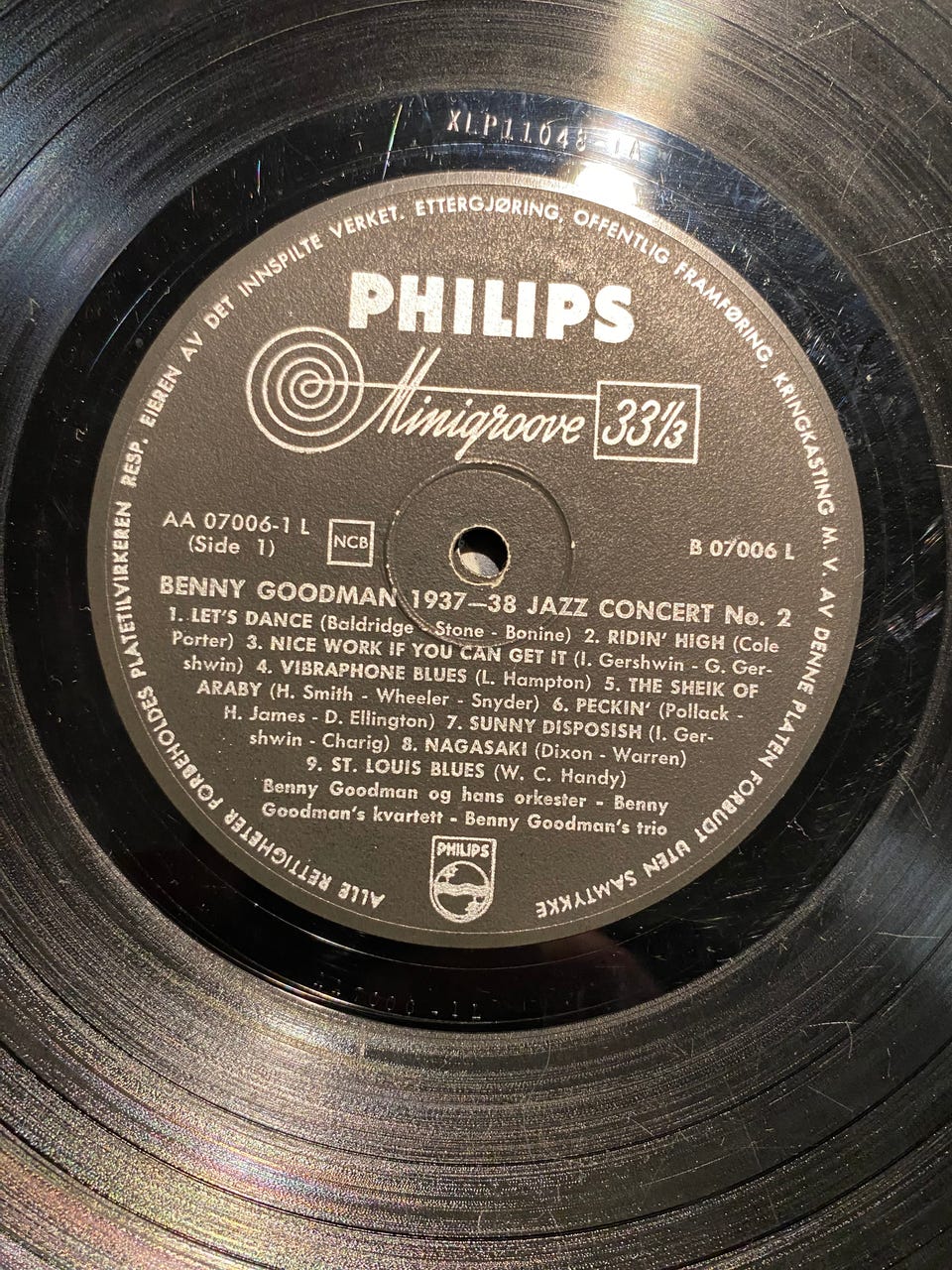
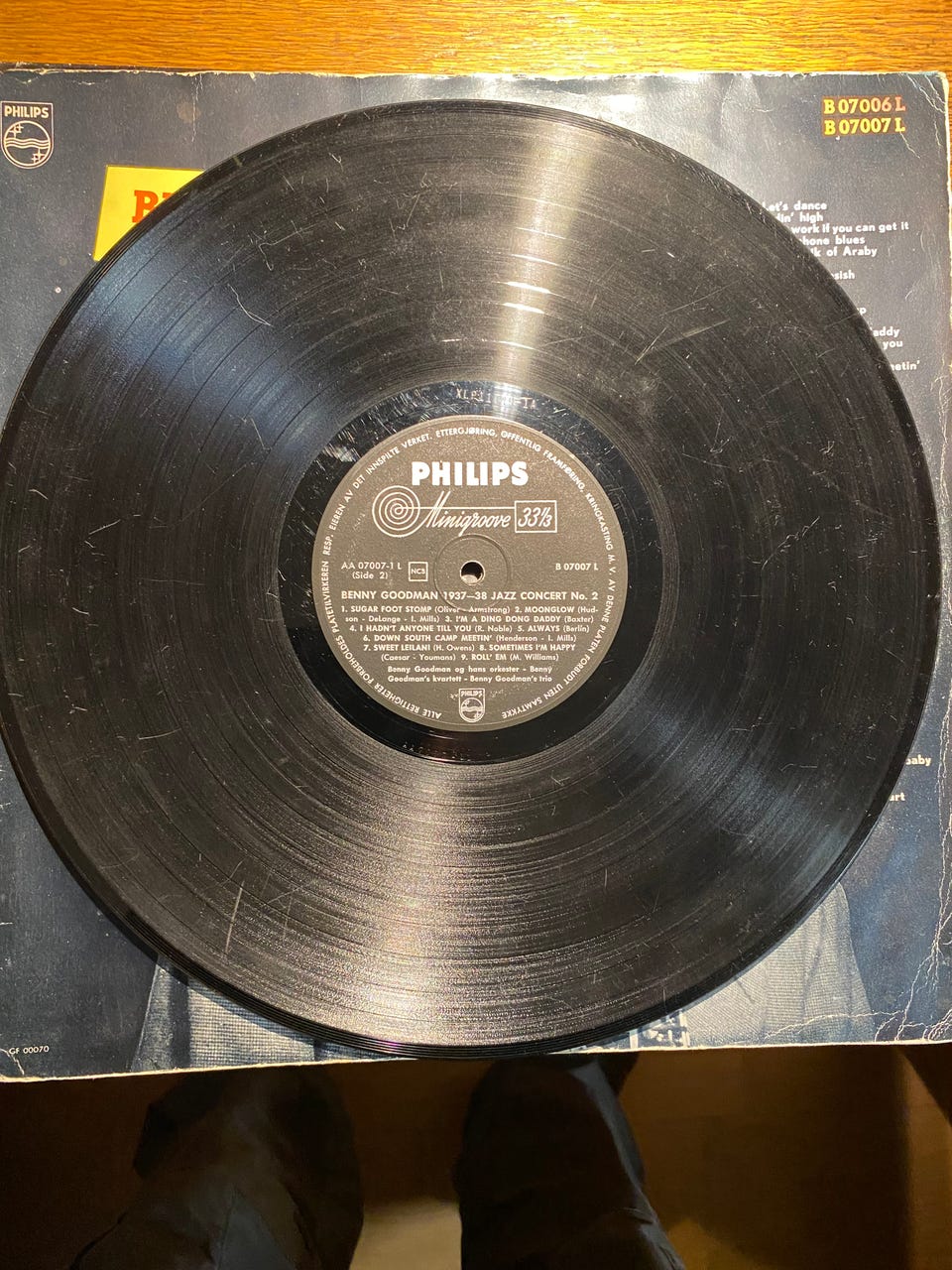
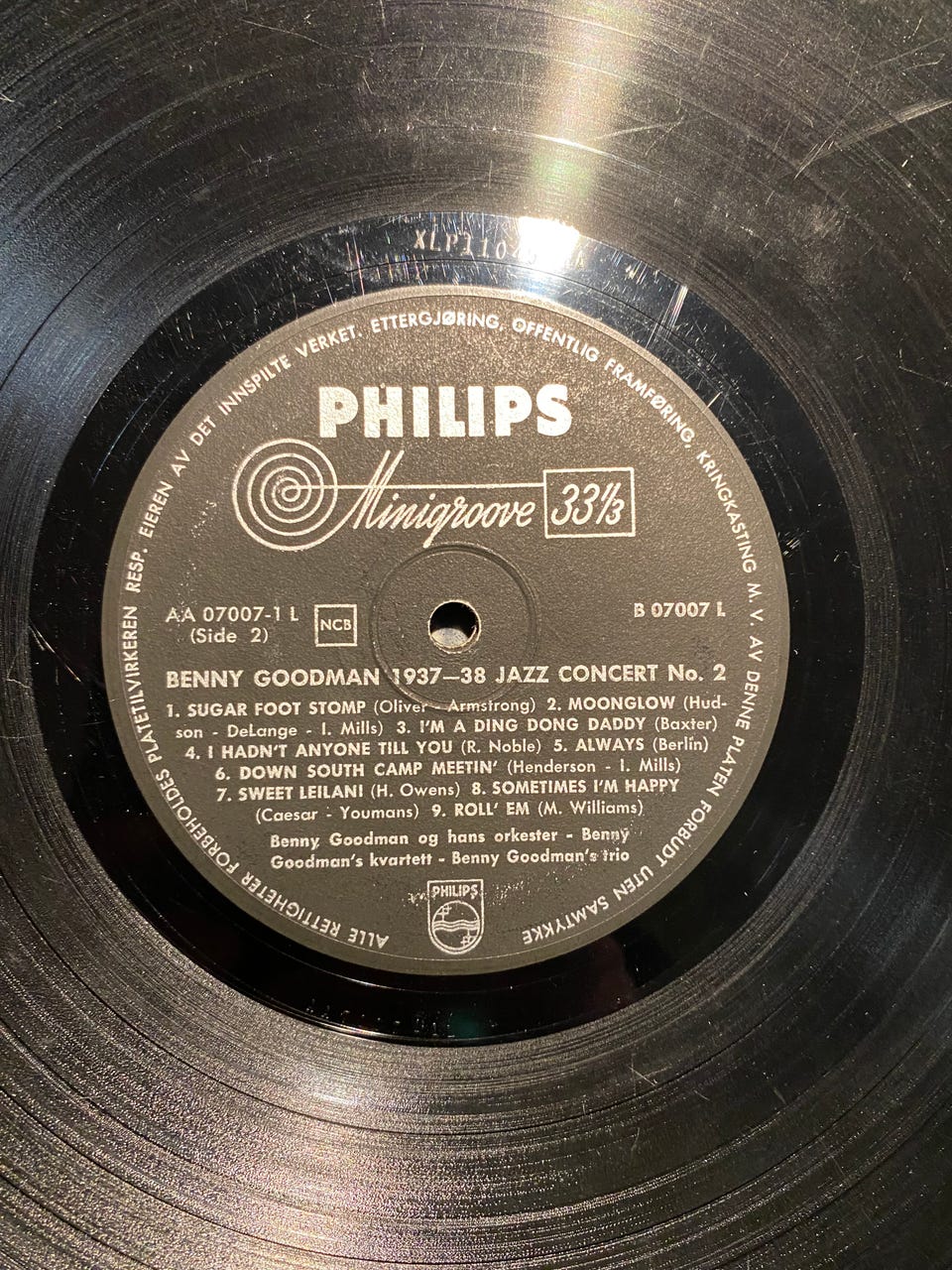
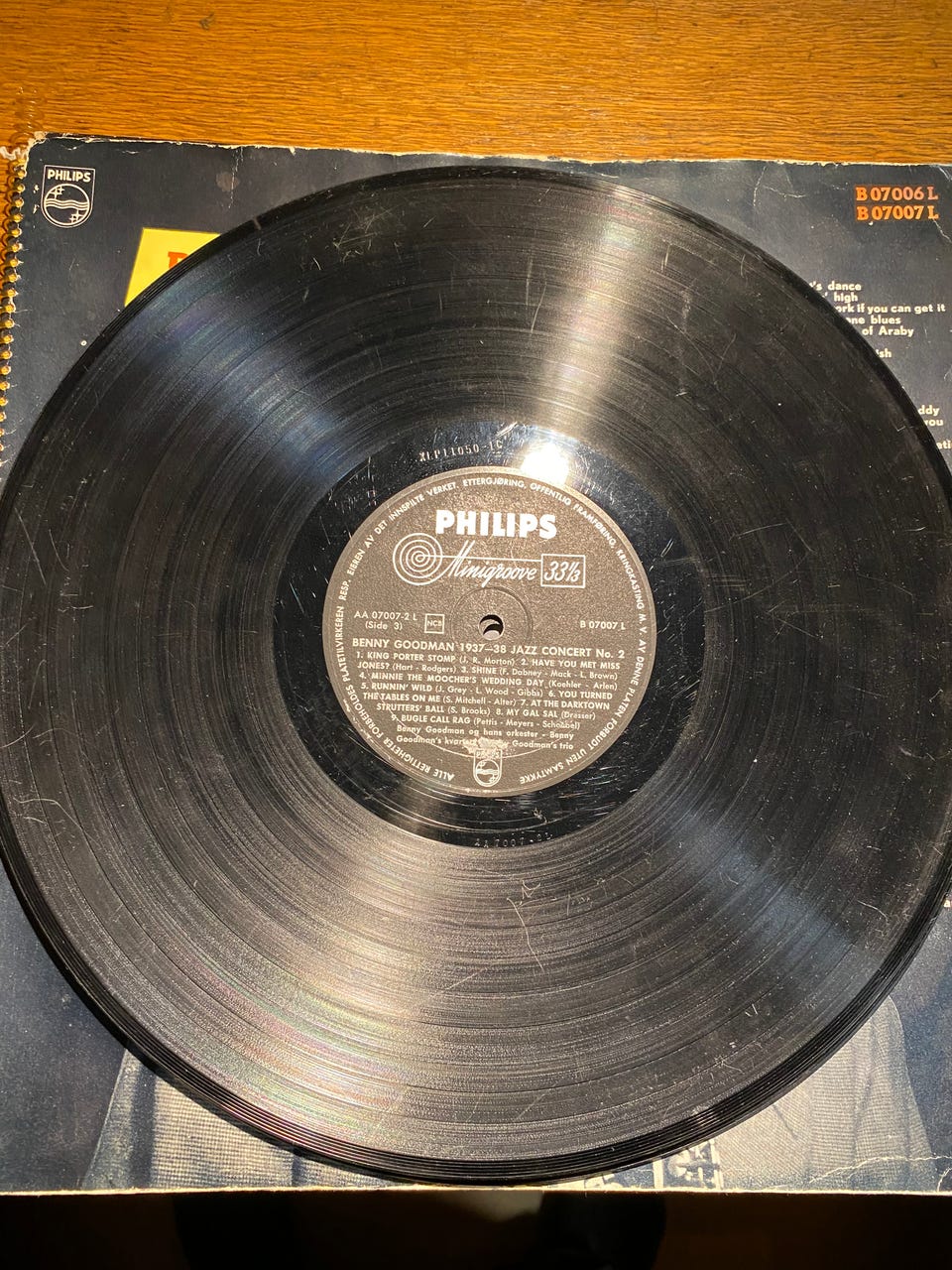
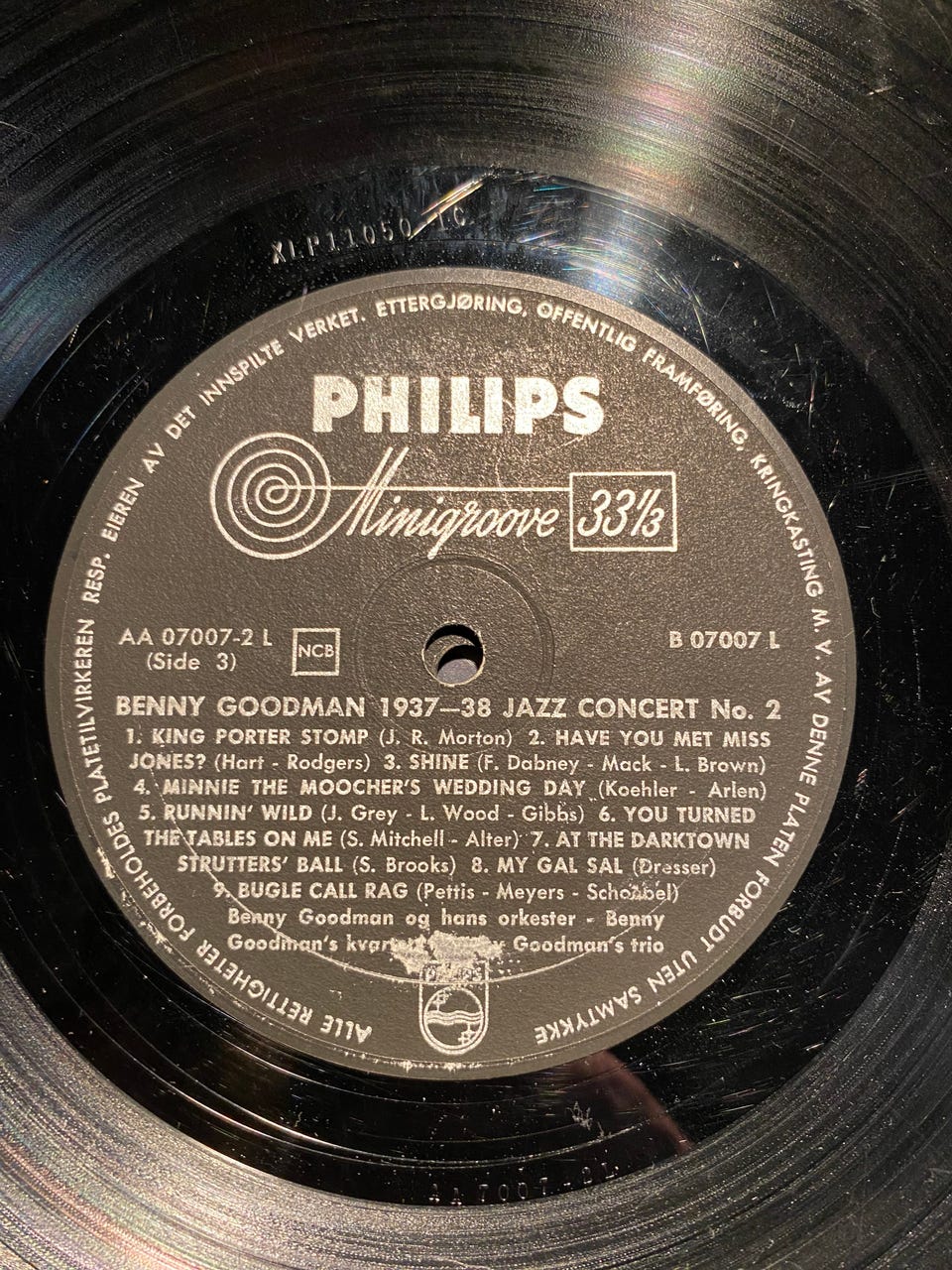
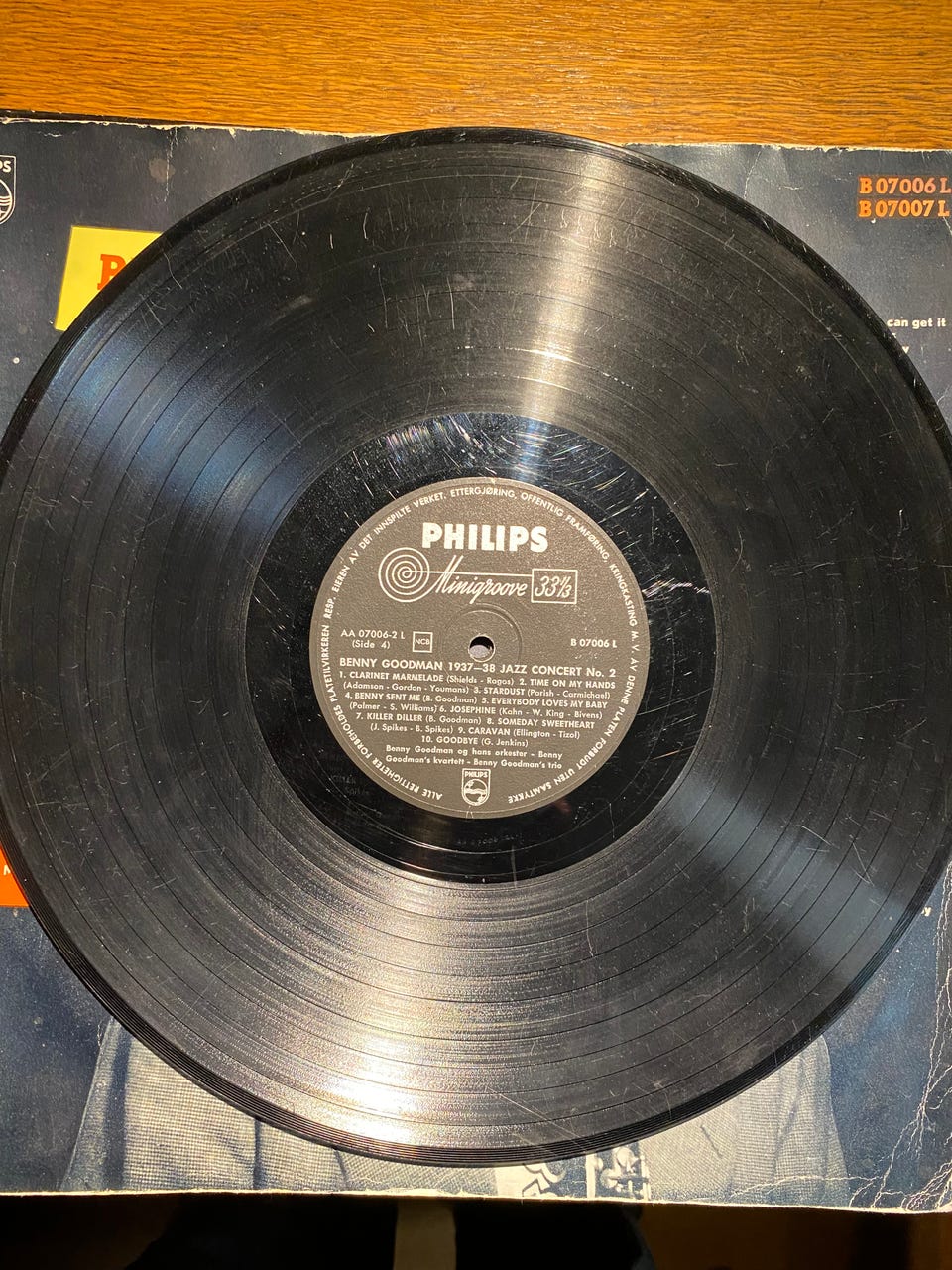
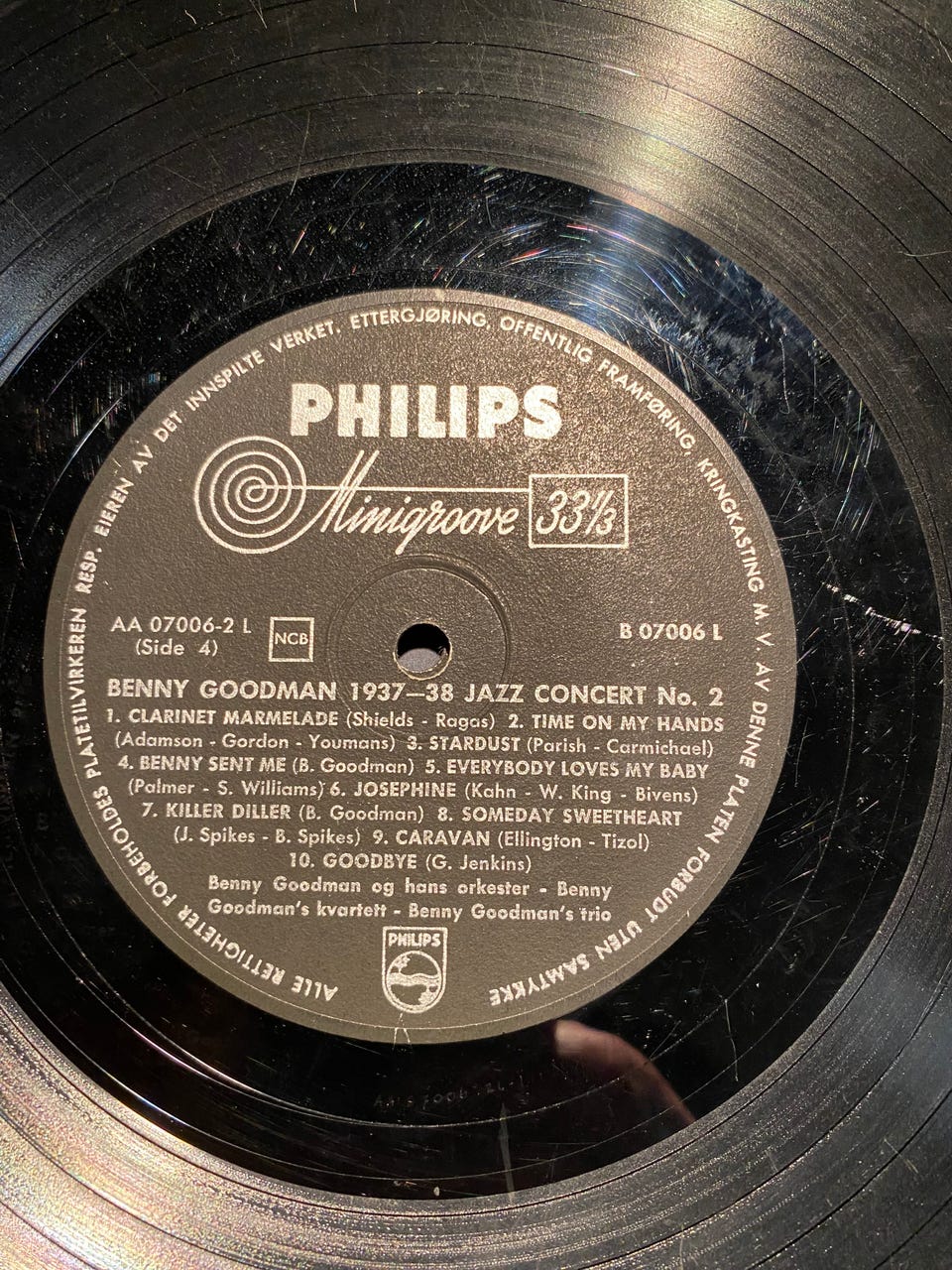
Benny Goodman. Jazz Concert No. 2. Vinyl album. 2 pl.
Til salgs
Fiks ferdig
350 kr
Frakt fra 69 kr + Trygg betaling 43 kr
Trygg handel med Fiks ferdig
Varen sendes til deg, og du har 24 timer til å inspisere den før pengene overføres til selgeren.
Beskrivelse av varen
Tilstand: Godt brukt - Synlig brukt
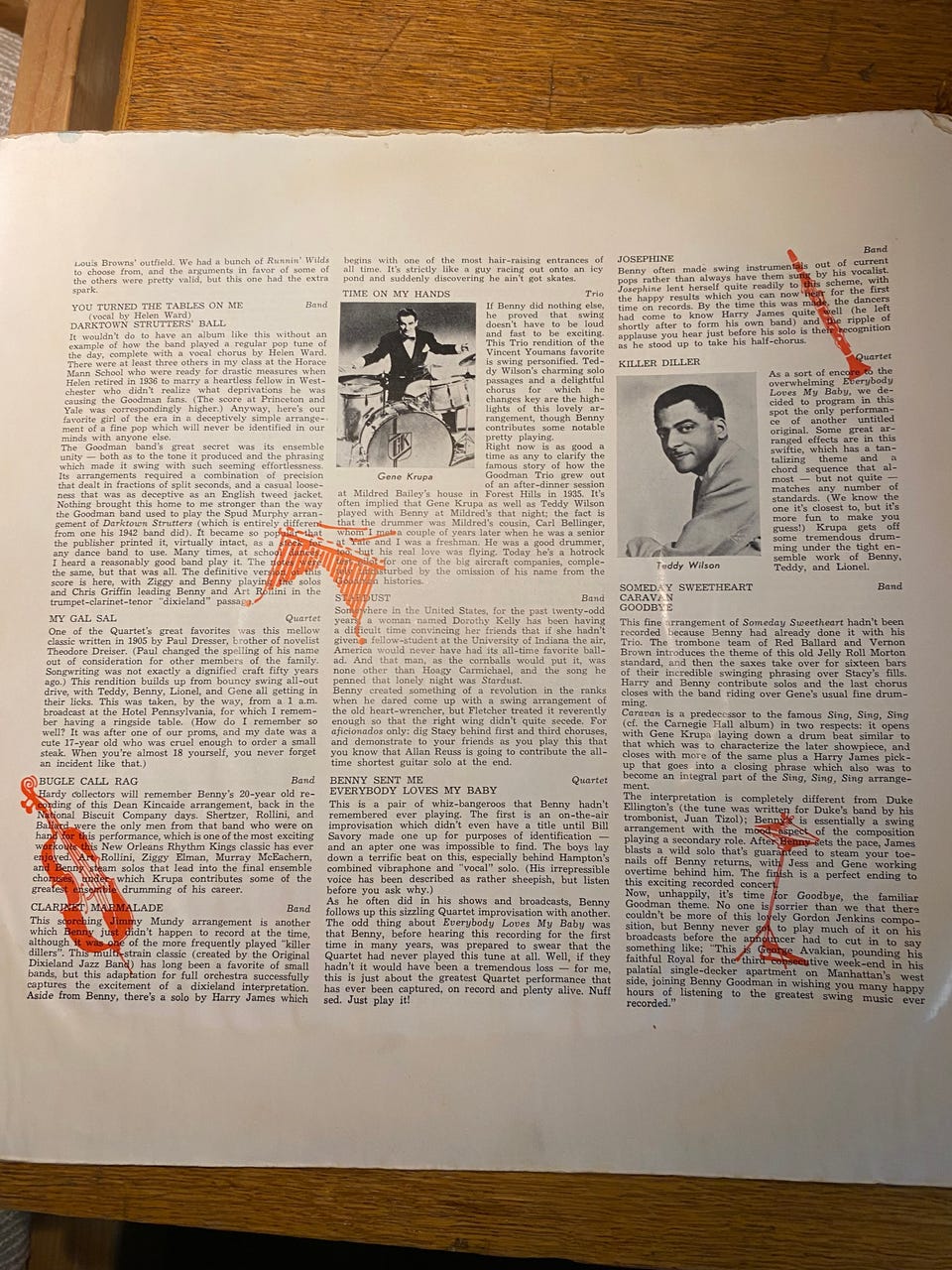
Benny Goodman, and his Orchestra, trio and quartet. Jazzconcert No. 2 . Vinyl album. 2 pl.
Benny Goodman (1909-1986) was a clarinetist and bandleader responsible for multiple hit singles as a band leader before World War II. Goodman left school at 14 to join the American Federation of Musicians. He reached the height of his popularity in the 1930s, when swing was most popular, creating many hits and being the first jazz band to play Carnegie Hall.
Goodman was born on May 30, 1909, in Chicago, Illinois. As an extraordinary clarinetist and bandleader, Goodman helped usher in the swing era in the 1930s — earning him the nickname "the King of Swing." The son of Russian immigrants, he was the ninth child born into the family and eventually he would have a total of 11 siblings. His father worked as a tailor to try to provide for the large family, but money was always tight for the Goodmans.
At the age of 10, Goodman went to study music at Kehelah Jacob Synagogue. He studied the clarinet with Franz Schoepp who was a member of the Chicago Symphony. At Hull-House, a settlement house that provided social services to the community, Goodman joined the band there. He quickly excelled at his instrument and made his professional debut in 1921. Playing with local bands, Goodman became a member of the American Federation of Musicians at the age of 14. He then abandoned his education to pursue his musical ambitions.
Two years later, Goodman moved to Los Angeles to join Ben Pollack's band. He stayed with the band for several years, eventually becoming one of its leading soloists. In 1928, Goodman released his first album, A Jazz Holiday. He then left the band and moved to New York City the following year.
Goodman found work playing on the radio, in recording sessions, and in the orchestras of Broadway shows. During his time there, he worked with such jazz legends as Fats Waller, Ted Lewis, and Bessie Smith. In 1931, Goodman had his first taste of chart success on his own with the song "He's Not Worth Your Tears" with Scrappy Lambert on vocals.
Goodman teamed up with jazz promoter John Hammond in 1933 to make some recordings, including a few tracks with an up-and-coming jazz singer named Billie Holiday. Their work together resulted in the 1934 top 10 hit "Riffin' the Scotch." Other Goodman hits from this time included "Ain't Cha Glad?" and "I Ain't Lazy, I'm Just Dreamin'" with vocals by Jack Teagarden.
Starting his career as a bandleader in 1934, Goodman and his group landed a gig at Billy Rose's Music Hall. The Benny Goodman Orchestra then became a regular act on the NBC radio show, Let's Dance, that same year. Clearly a musician and bandleader on the rise, Goodman had his first number one hit with the instrumental piece "Moonglow."
Making Music History
In 1935, Goodman went on the road with his orchestra, which at the time included trumpeters Ziggy Elman and Harry James, pianists Jess Stacey and Teddy Wilson, and drummer Gene Krupa among others. (Lionel Hampton was added later.) One date on the tour made history: August 21, 1935. That night, the orchestra wowed the audience at the Palomar Ballroom in Los Angeles—an event that many cite as the beginning of the swing era. Goodman also helped break down the color barrier in music at the time by having one of the first integrated bands.
Goodman's popularity continued to accelerate with 15 top 10 hits in 1936, including "Goody-Goody" and "You Turned the Tables on Me." Returning to the radio, he became the host of Camel Caravan that year. The program ran until 1939. Making his film debut, Goodman also appeared as himself in The Big Broadcast of 1937 (1936). He went on to make several films, including Hollywood Hotel (1937), Syncopation (1942) and Sweet and Low-Down (1944).
Making music history again, Goodman's orchestra was one of the first to perform jazz at New York City's famed Carnegie Hall in 1938. Other legendary acts on the same bill included Count Basie and Duke Ellington and their bands. He also released one of his most trademark songs, "Sing, Sing, Sing (with a Swing)," that same year, which was later inducted into the Grammy Hall of Fame. As a bandleader, Goodman was known for being a demanding boss who sought technical perfection from his performers. Many of his players left to start their own groups, including Gene Krupa and Harry James. Around this time, Goodman also faced competition from other popular bandleaders, such as Artie Shaw
Platen/e er kun visuelt besiktiget, det dreier seg om brukte ting, og det kan forekomme feil og hakk som ikke er registrert.
NB: Knappen for å vise hele beskrivelsen har kun en visuell effekt.
Brukerprofil

Du må være logget inn for å se brukerprofiler og sende meldinger.
Logg innAnnonsens metadata
Sist endret: 15.11.2025 kl. 11:11 ・ FINN-kode: 436301262
Utforsk våre nye sider for klær og mote
Ta en titt