

Bildegalleri
(1/8)
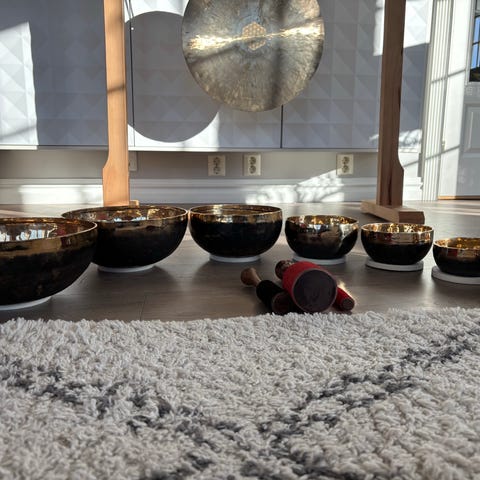
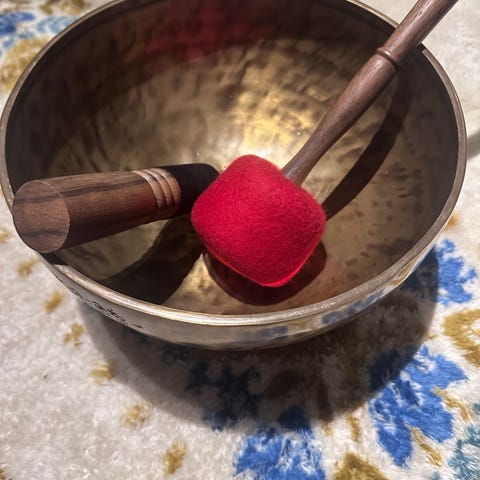
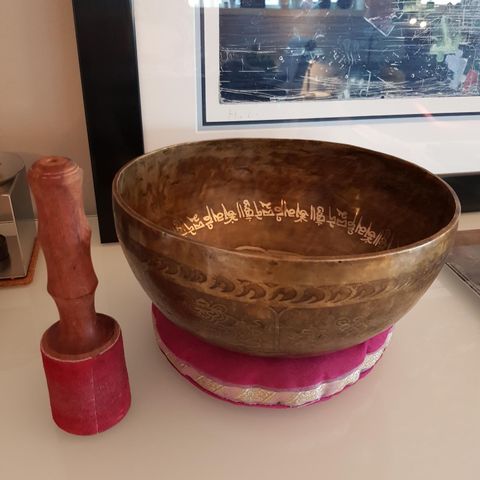
Tibetan Singing Bowls. Metal. Har flere størrelser
Til salgs
898 kr
Be om at selgeren sender med Fiks ferdig! Det er trygt, raskt, og du får varen levert til adressen din. Les mer
Beskrivelse av varen
Tilstand: Helt ny - Uåpnet/med lapp
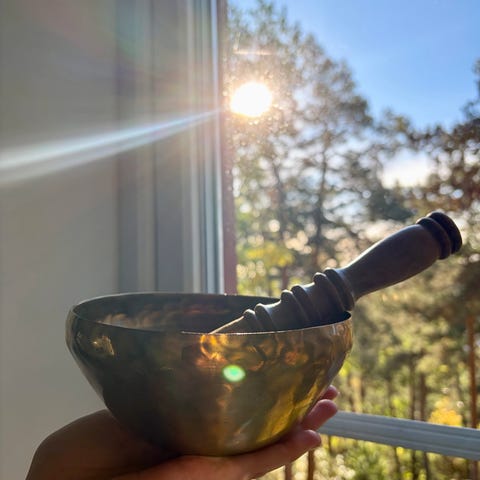
Makes beautiful healing sounds. Special therapeutic sound vibrations.
Velkommen å hente med avtale i Bergen sentrum bak Bryggen.
Nikolaikirkeallmenning 4, 5003 Bergen. (Svart-rød hus)
Mobil: 98008760
Jeg sender ikke singing bowls, det kunne blir ødelakt i post pakke.
Må hentes i Bergen.
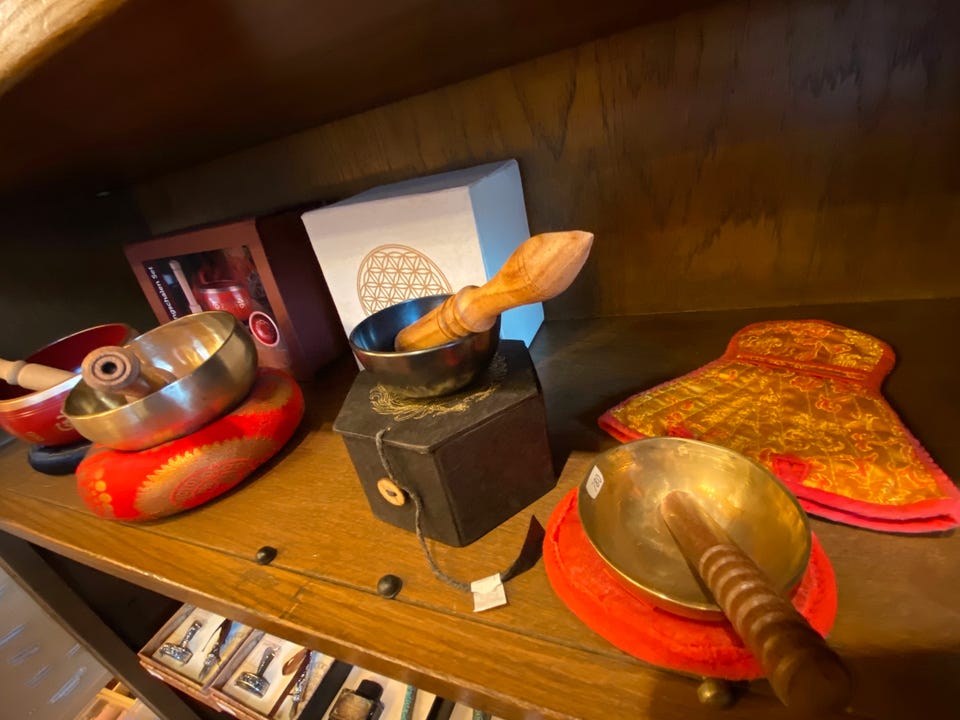
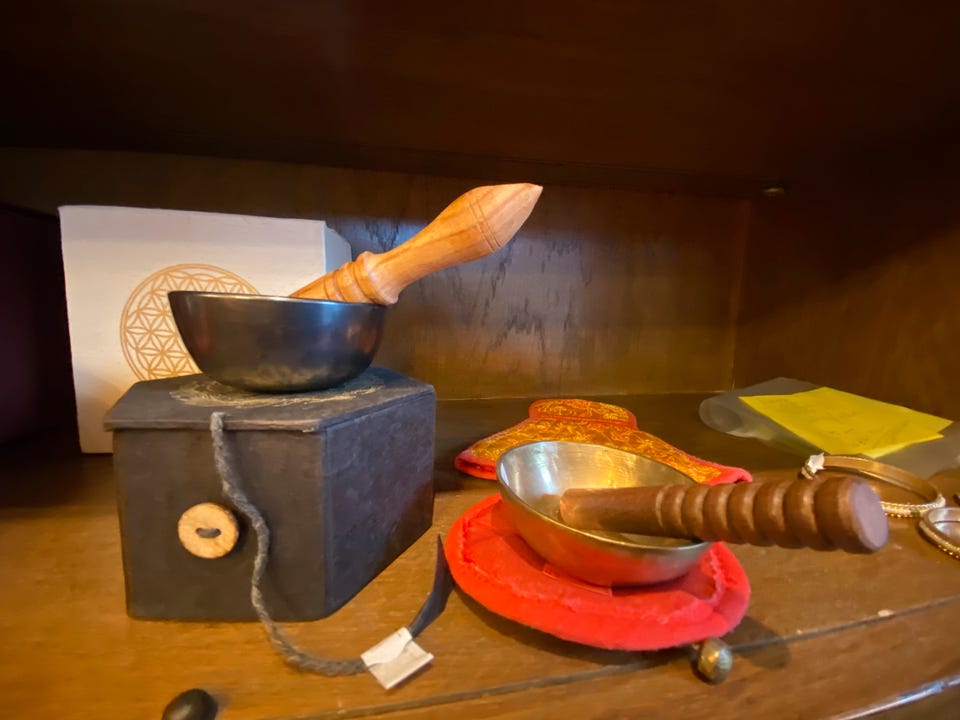
I have few small medium and larger singing bowls.
Price is for each one, not all together. On add just as example, need to check what I hit at time being.
Prices for smallest once start from about 798kr, up to 1900:-
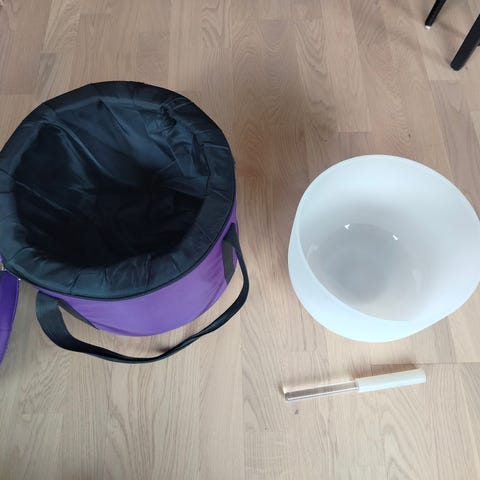
I have also crystal glass bowl 25-28cm .(?) diameter,
I can sell gif 3.800kr.
Stick cost extra from 98kr. to 198kr. each, depending on model.
Vennligst ser andre annonser under min Finn profil.
Singing bowls (also known as Tibetan Singing Bowls, rin gongs, Himalayan bowls or suzu gongs) are a type of bell, specifically classified as a standing bell. Rather than hanging inverted or attached to a handle, singing bowls sit with the bottom surface resting, and the rim vibrates to produce sound characterized by a fundamental frequency (first harmonic) and usually two audible harmonic overtones (second and third harmonic).
Singing bowls are used worldwide for meditation, music, relaxation, and personal well-being. Singing bowls were historically made throughout Asia, especially Nepal, China and Japan. They are closely related to decorative bells made along the Silk Road from the Near East to Western Asia.
In some Buddhist practices, singing bowls are used as a signal to begin and end periods of silent meditation. Some practitioners (for example, Chinese Buddhists) use the singing bowl to accompany the wooden fish during chanting, striking it when a particular phrase is chanted. In Japan and Vietnam, singing bowls are similarly used during chanting and may also mark the passage of time or signal a change in activity, for example changing from sitting to walking meditation. In Japan, singing bowls are used in traditional funeral rites and ancestor worship. Every Japanese temple holds a singing bowl. Singing bowls are found on altars and in meditation rooms worldwide.
There aren't any traditional texts about singing bowls so far as we know. All known references to them are strictly modern. However, a few pieces of art dating from several centuries ago depict singing bowls in detail, including Tibetan paintings and statues. Some Tibetan rinpoches and monks use singing bowls in monasteries and meditation centers today. Singing bowls from at least the 15th century are found in private collections.[citation needed] Bronze bells from Asia have been discovered as early as the 8th–10th century BC and singing bowls are thought to go back in the Himalayas to the 10th–12th century AD.
Singing bowls are played by striking the rim with a padded mallet. They can also be played by the friction of rubbing a wooden, plastic, or leather-wrapped mallet around the rim to emphasize the overtones and a continuous 'singing' sound.
Antique and new bowls are widely used as an aid to meditation. They are also used in yoga, music therapy, sound healing, religious services, performance, and for personal enjoyment.
Brukerprofil

Du må være logget inn for å se brukerprofiler og sende meldinger.
Annonsens metadata
Sist endret: 23.8.2026 kl. 13:04 ・ FINN-kode: 107480783